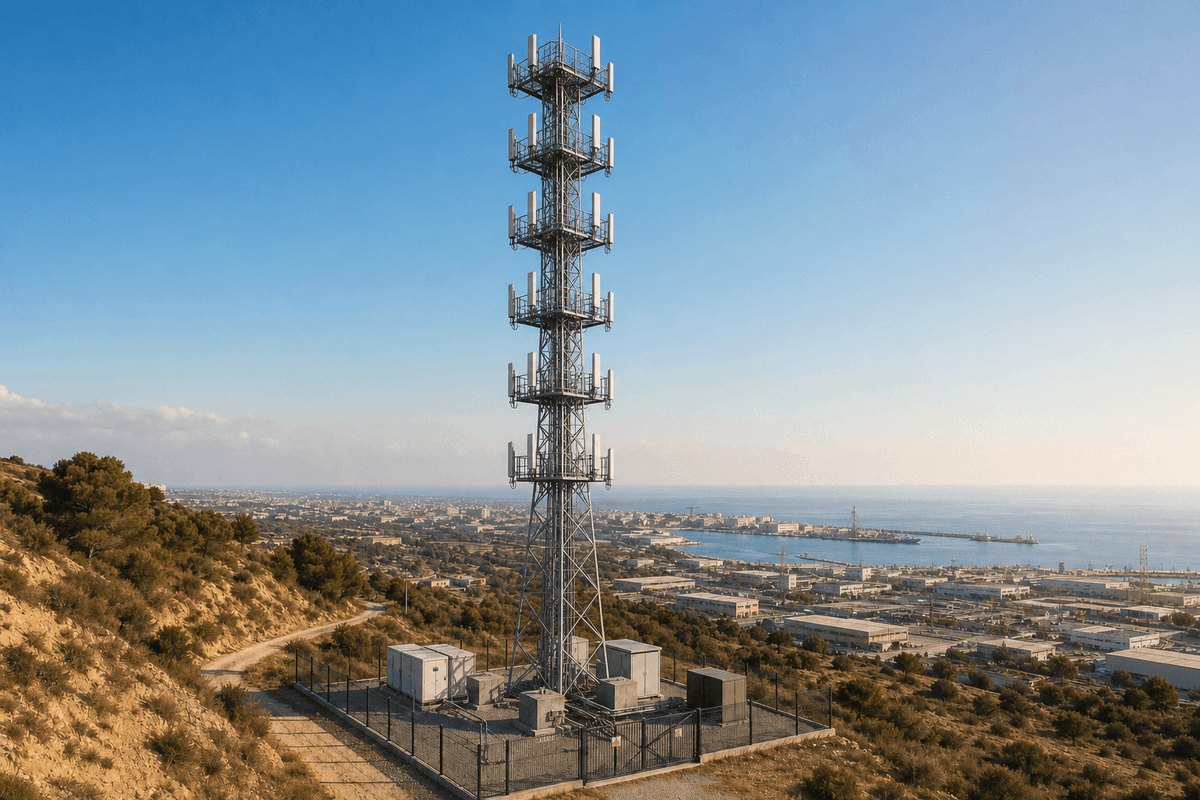
100m Heavy-Duty Lattice Multi-Tenant Tower - Maximum Capacity Hub
Key Features
- 100-meter tower height provides exceptional signal coverage radius exceeding 50 km in flat terrain
- 6 antenna platforms supporting 24+ panel antennas and multiple microwave dishes for multi-tenant co-location
- Heavy-duty Q345/Q420 steel lattice structure engineered for 55 m/s wind loads and 5,000+ kg tip load capacity
- 30-year design life with hot-dip galvanization corrosion protection meeting ISO 1461 standards
- Complete safety system including FRP climbing ladder, fall arrest rail, and IEC 62305-compliant lightning protection
The SOLARTODO 100m Heavy-Duty Lattice Multi-Tenant Tower is designed for telecommunications, featuring a maximum capacity for four tenants. Priced between $150,000 and $200,000, it meets IEC and TÜV certifications. This robust tower is ideal for Mobile Network Operators and Wireless Internet Service Providers, ensuring reliable signal propagation for 4G/LTE and 5G networks.
Description
The SOLARTODO 100m Heavy-Duty Lattice Multi-Tenant Tower is a pinnacle of telecommunications infrastructure, engineered for superior performance in the most demanding network environments. As a flagship product in our telecom tower line, this self-supporting structure is designed to serve as a central hub for up to four tenants, making it an ideal solution for Mobile Network Operators (MNOs), Wireless Internet Service Providers (WISPs), and public safety communications agencies seeking to co-locate equipment and maximize network coverage. Standing at a formidable height of 100 meters, the tower provides an unparalleled vantage point for signal propagation, crucial for deploying next-generation 4G/LTE and 5G networks across vast geographical areas. Its robust lattice design, constructed from high-strength Q345 and Q420 hot-rolled angle steel, offers the highest load-bearing capacity among all tower types, ensuring it can accommodate a dense array of antennas and microwave dishes. The entire structure is protected against corrosion by a hot-dip galvanization process, guaranteeing a design life of over 30 years with minimal maintenance, even in harsh climates. This tower is not merely a structure; it is a strategic asset designed for longevity, scalability, and unparalleled reliability, fully compliant with rigorous international standards such as TIA-222-H and EN 1993-3-1.
The structural integrity of the 100m Lattice Tower is founded on the use of premium-grade materials and precision engineering. The primary framework consists of Q345 and Q420 hot-rolled angle steel, materials renowned for their exceptional tensile strength and durability. These steel components are fabricated into a lattice framework using bolted connections with high-strength Grade 8.8 bolts, which facilitates on-site assembly and ensures a rigid, stable structure. The tower's four-leg base provides a wide stance, distributing the massive vertical and lateral loads efficiently into the foundation. This design is engineered to withstand extreme environmental forces, including design wind speeds of up to 55 m/s (approximately 200 km/h), a critical requirement for ensuring network uptime during severe weather events. The foundation specified for this model is a robust pile foundation system, designed to provide stability in a variety of soil conditions by transferring loads to deeper, more competent soil or rock layers. Every structural element is meticulously analyzed using finite element modeling to comply with the stringent requirements of the TIA-222-H standard, which governs the structural design of antenna supporting structures. The total tip load capacity is engineered to exceed 5,000 kg, accommodating the full weight of antennas, platforms, cabling, and ice loading.
Designed as a premier multi-tenant hub, this tower offers expansive capacity for co-location. It features six distinct antenna platform levels, providing segregated and organized mounting space for up to four independent tenants. These platforms are strategically positioned along the tower's height to optimize signal separation and minimize interference between tenant equipment. The total antenna capacity exceeds 24 panel antennas, in addition to multiple large-diameter microwave dishes for backhaul connectivity. This configuration allows MNOs to deploy multiple frequency bands (e.g., 700 MHz, 2.5 GHz, 3.5 GHz) and technologies (4G, 5G) from a single location, reducing the need for multiple tower sites and lowering operational expenditures. The spacious platforms and high load capacity also future-proof the investment, allowing for the addition of new equipment as network technology evolves. Efficient cable management is handled by a dedicated vertical cable tray system, which can accommodate hundreds of coaxial feeders, fiber optic cables, and power lines, ensuring a clean and maintainable installation.
Safety is a paramount consideration in the design of the SOLARTODO 100m Lattice Tower. The tower is equipped with a comprehensive set of features to ensure the safety of maintenance personnel and to prevent unauthorized access. For vertical access, the tower includes an internal climbing ladder with high-visibility yellow FRP rungs, which are non-conductive and corrosion-resistant. This is paired with a full-length steel safety rail and fall arrest system, compliant with OSHA and international safety standards. To deter unauthorized climbing, a formidable security barrier is installed at a height of 3 meters from the base. The site can be further secured with optional CCTV monitoring systems for remote surveillance. The tower's electrical system is grounded to a resistance of less than 4 ohms, as per IEC 62305 standards, and features a complete lightning protection system. This includes an air terminal at the apex to intercept lightning strikes, a dedicated down conductor to safely channel the electrical charge to the ground, and a robust grounding grid to dissipate the energy, protecting sensitive electronic equipment from damage.
Technical Specifications
| Tower Height | 100m |
| Tower Type | Lattice (Self-Supporting) |
| Material Grade | Q345/Q420 Hot-Rolled Angle Steel |
| Antenna Platforms | 6levels |
| Antenna Capacity | 24+antennas |
| Design Wind Speed | 55m/s |
| Total Tip Load Capacity | 5000+kg |
| Maximum Tenants | 4operators |
| Foundation Type | Pile Foundation |
| Corrosion Protection | Hot-Dip Galvanized (ISO 1461) |
| Design Life | 30+years |
| Lightning Protection | IEC 62305 Compliant, <4Ω Grounding |
| Climbing System | Internal FRP Ladder + Safety Rail |
| Anti-Climbing Height | 3m |
| Standards Compliance | TIA-222-H, EN 1993-3-1, GB 50135 |
Price Breakdown
| Item | Quantity | Unit Price | Subtotal |
|---|---|---|---|
| Q345 Steel Angle Material (55 tons) | 55 tons | $1,800 | $99,000 |
| Hot-Dip Galvanizing Treatment (55 tons) | 55 tons | $400 | $22,000 |
| High-Strength Bolts and Hardware | 1 set | $8,000 | $8,000 |
| Antenna Platforms (Steel Grating, 6 units) | 6 units | $2,500 | $15,000 |
| Internal Climbing Ladder System (FRP, 100m) | 100 m | $120 | $12,000 |
| Cable Tray System (100m) | 100 m | $50 | $5,000 |
| Lightning Protection System (Complete) | 1 system | $3,000 | $3,000 |
| Aircraft Warning Light System | 1 set | $2,500 | $2,500 |
| Anti-Climbing Security Barrier | 1 set | $1,500 | $1,500 |
| Pile Foundation System (Concrete, 120 m³) | 120 m³ | $300 | $36,000 |
| Steel Installation Labor (55 tons) | 55 tons | $800 | $44,000 |
| Engineering Design and Documentation | 1 project | $15,000 | $15,000 |
| Quality Inspection and Testing | 1 project | $5,000 | $5,000 |
| Transportation and Logistics | 1 project | $8,000 | $8,000 |
| Total Price Range | $150,000 - $200,000 | ||
Frequently Asked Questions
What is the design life of the 100m Heavy-Duty Lattice Tower?
What level of customization is possible for antenna and equipment loads?
What is the typical installation timeline for this tower?
How does the tower's lightning protection system work?
What maintenance is required to ensure the tower's longevity?
Certifications & Standards



Data Sources & References
- •TIA-222-H Structural Standards for Antenna Supporting Structures (2018)
- •EN 1993-3-1 Eurocode 3: Design of Steel Structures - Part 3-1: Towers, Masts and Chimneys (2006)
- •IEC 62305 Protection Against Lightning Standard Series (2010)
- •ISO 1461 Hot Dip Galvanized Coatings Specification (2009)
- •SOLARTODO Engineering Database - Telecom Tower Design Parameters (2025)
Interested in this solution?
Contact us for a customized quote based on your specific requirements.
Contact Us