Smart Traffic Pole Installation Guide | SOLAR TODO

SOLAR TODO
Solar Energy & Infrastructure Expert Team
Watch the video
TL;DR
Smart traffic poles perform well only when survey, civil, electrical, and communications designs are coordinated early. Use real soil data for the foundation, set camera geometry around 6-12 m as required, and size solar-LFP systems for 2-3 autonomy days where grid reliability is weak. For larger projects, compare FOB, CIF, and EPC turnkey pricing to reduce installation risk and lifecycle cost.
Smart traffic pole installation depends on 3 controls: site survey, foundation design, and power sizing. Properly configured systems support 6-12 m mounting, 98% plate recognition, and 2-3 days of off-grid autonomy for 24/7 operation.
Summary
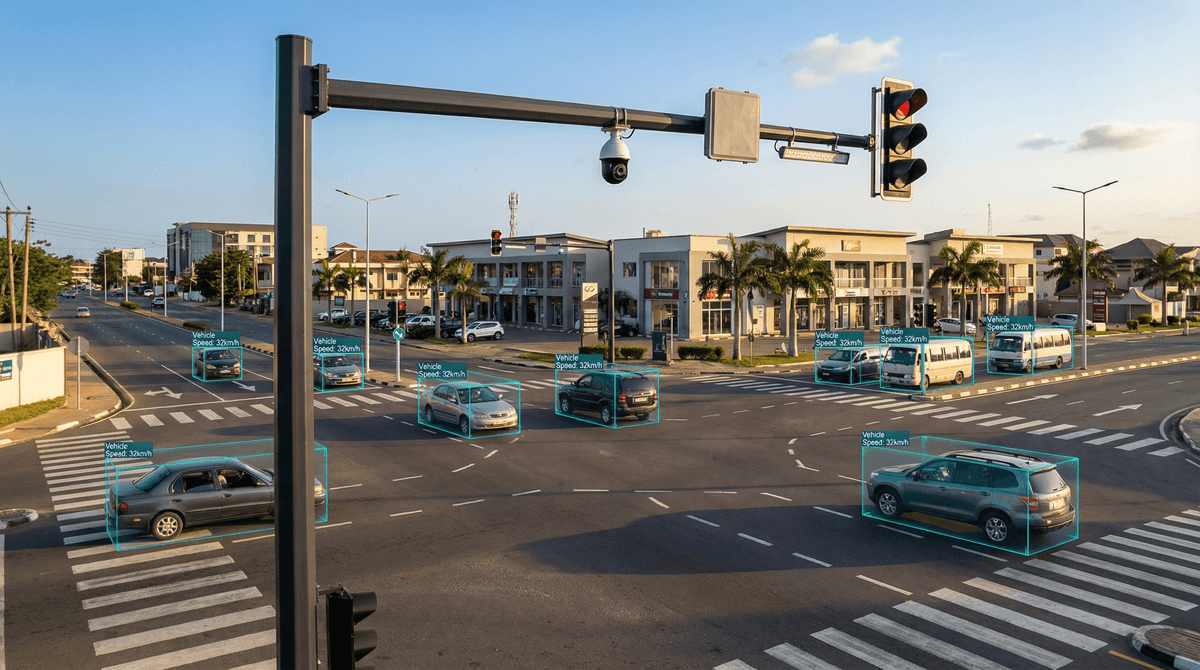
Smart traffic pole installation depends on 3 core controls: geotechnical design, verified power autonomy, and accurate site survey. A properly specified system can detect vehicles at up to 320 km/h, read plates at 98% accuracy, and cut emergency response time by 50% when priority logic is enabled.
Key Takeaways
- Complete a site survey within 7-14 days and record pole offset, lane width, sightline angle, and cable route before freezing drawings.
- Design foundations from actual soil data, using at least 1 geotechnical borehole per representative zone and checking wind loading to IEC 60826 or local code.
- Size solar generation and LFP storage for 24/7 duty, with a minimum 2-3 autonomy days for off-grid intersections in weak-grid regions.
- Verify camera mounting height at 6-12 m and outreach geometry so ANPR, overview, and violation capture meet the required field of view.
- Separate AC, DC, and data circuits in the pole and cabinet, and confirm earthing resistance typically below 5-10 ohms based on local electrical code.
- Compare FOB Supply, CIF Delivered, and EPC Turnkey pricing early, then apply volume discounts of 5% at 50+, 10% at 100+, and 15% at 250+ units.
- Plan network bandwidth and edge processing from the detection load, because 45+ object classes, 98% plate recognition, and video evidence retention increase storage demand.
- Commission every pole with power, grounding, camera alignment, and communications tests, then recheck bolt torque after the first 30-60 days of operation.
Smart Traffic Pole Installation Fundamentals
Smart traffic pole installation succeeds when the pole, foundation, power system, and camera geometry are matched to 6-12 m mounting height, local wind load, and 24/7 operational duty.
For procurement managers and engineers, the installation risk is rarely the pole itself. The main failures come from poor soil assumptions, blocked sightlines, undersized batteries, and incomplete utility coordination. A smart traffic pole may carry cameras, radar, communication devices, LED signs, and solar modules, so the combined dead load, wind area, and service access must be checked before procurement.
SOLAR TODO approaches smart traffic poles as infrastructure, not as a single hardware item. That matters because a pole carrying AI cameras and solar panels behaves differently from a standard lighting pole. The top-mounted solar array increases projected area, the LFP battery adds cabinet mass, and the communications package adds thermal and grounding requirements that should be fixed during design rather than after civil works begin.
According to the International Energy Agency, “Solar PV is today the cheapest source of electricity in many parts of the world.” That statement matters for smart traffic projects in weak-grid corridors, because a solar-assisted pole can keep enforcement, monitoring, and communications online even where utility reliability is below the required 99% uptime target.
From the traffic side, the value case is measurable. Deployment references cited in the category data show travel-time reductions of 10-30% in London, 25% in Pittsburgh, and emergency priority improvements of up to 50%. Those gains depend on correct installation geometry. If the pole is 2 m too low or placed 5 m too close to the stop line, the analytics accuracy and legal evidence quality can drop sharply.
Site Survey and Location Planning
A complete site survey should capture at least 20 core parameters, including lane count, setback distance, power source, network path, and obstruction map, before any foundation drawing is issued.
The survey starts with traffic function. Is the pole intended for ANPR, red-light enforcement, speed capture, adaptive signal support, pedestrian analytics, or multi-sensor monitoring? Each use case changes the preferred offset and mounting angle. ANPR often needs tighter plate angle control, while overview analytics may accept a wider field of view but require higher mounting positions of 8-12 m.
What to record during the site survey
The field team should collect dimensional, electrical, and environmental data in one pass to avoid repeat mobilization. A standard survey sheet should include:
- GPS coordinates with sub-meter accuracy where possible
- Carriageway width, lane width, median width, and shoulder width
- Pole setback from curb, edge line, or barrier, usually 0.6-2.0 m depending on road type
- Existing utility poles, ducts, chambers, and overhead lines within 10-30 m
- Available grid supply voltage, service point distance, and spare breaker capacity
- Solar shading profile from 08:00 to 16:00, especially for winter months
- Drainage path, flood marks, and standing water depth after rain events
- Existing signboards, trees, gantries, and building corners that block sightlines
- Safe cabinet position and maintenance access width, often at least 0.8-1.0 m
- Cellular signal strength or fiber route availability for backhaul
A useful rule is to photograph every approach from 30 m, 60 m, and 100 m. Those images help validate whether a 6 m, 8 m, or 10 m pole is needed. For multi-lane corridors with motorcycles and e-bikes forming more than 60% of traffic, the camera angle should also support helmet and lane-intrusion analytics, not only four-wheel vehicle counting.
Survey outputs that affect procurement
The survey should end with a layout drawing, a single-line power concept, and a preliminary bill of materials. These three outputs determine whether the project needs a straight pole, a cantilever pole, a cabinet plinth, solar brackets, or a hybrid AC-DC architecture. If these items are left open, the civil scope and imported hardware scope can diverge by 10-20% in cost.
SOLAR TODO typically recommends freezing four items before order release: mounting height, foundation type, power architecture, and communication method. Once those four are fixed, camera brackets, battery cabinet size, conduit count, and anchor bolt pattern can be standardized across 50-100 intersections, which reduces installation variation and spare-part complexity.
Foundation Design and Structural Requirements
Foundation design should be based on actual soil bearing data, pole overturning moment, and code-based wind load, with checks to IEC 60826, ASCE 74, or the applicable local structural standard.
A smart traffic pole foundation is not only a concrete block. It is the element that resists overturning from wind, eccentric equipment loads, cable pull, and occasional impact conditions. When the pole carries solar modules, the wind-exposed area rises, and the foundation often needs a larger base or deeper embedment than a conventional CCTV pole of the same height.
Core inputs for foundation sizing
At minimum, the civil designer needs these inputs:
- Pole height: commonly 6 m, 8 m, 10 m, or 12 m
- Pole type: straight, tapered, octagonal, or cantilever
- Equipment mass: cameras, radar, junction box, solar modules, batteries, and brackets
- Projected wind area in square meters
- Basic wind speed from local code map
- Soil allowable bearing pressure from geotechnical report
- Frost depth, scour risk, and groundwater level
- Anchor bolt grade, bolt circle, and base plate dimensions
For urban intersections with compacted soil and moderate wind, a direct-buried solution may be possible for lighter poles. For higher equipment loads, anchor-bolt-mounted reinforced concrete foundations are more common because they simplify leveling and future replacement. In coastal or cyclone-prone zones, corrosion allowance and higher design wind speeds should be included from the start.
Geotechnical and drainage checks
One borehole does not represent an entire city corridor. A practical approach is at least one geotechnical investigation per representative soil zone, with more points where fill material, drainage channels, or reclaimed land are present. If the water table is high, the designer should check buoyancy, concrete durability class, and cable entry sealing to prevent long-term cabinet flooding.
According to NREL (2024), solar resource and system performance estimates are sensitive to local conditions, and the same principle applies to pole autonomy design: poor drainage and shading can reduce available energy and service life. A pole foundation that settles 10-20 mm unevenly can also change camera targeting enough to affect plate capture and violation evidence.
Materials and structural details
For steel poles, common material choices include structural steel grades aligned with ASTM A572 or equivalent local grades, with hot-dip galvanizing for corrosion resistance. Anchor bolts should be specified with embedment depth, projection, template tolerance, and torque values. The designer should also define conduit sleeves, earthing conductor route, and cabinet plinth interface before the concrete pour.
The Institute of Electrical and Electronics Engineers states in IEEE 80 that grounding design must control touch and step voltages for personnel safety. For roadside poles, that means the structural and electrical designs cannot be separated. The earthing conductor, foundation reinforcement, and equipment bonding should be coordinated in one drawing set.
Power Requirements, Solar Sizing, and Communications
Power design for a smart traffic pole must match the actual 24-hour load profile, and off-grid systems usually need 2-3 autonomy days with LFP storage to maintain enforcement and communications during low-irradiance periods.
The first step is to build a load list by device and duty cycle. A typical pole may include AI cameras, ANPR cameras, edge processor, industrial switch, 4G/5G router, radar, LED illuminator, and cabinet cooling. The design load is not the nameplate sum. It is the average and peak load over 24 hours, including nighttime infrared or illuminator demand, startup current, and communication bursts.
Sample power architecture options
A project usually falls into one of three power models:
| Power model | Typical use case | Key design point | Main risk |
|---|---|---|---|
| Grid-connected AC | Urban intersections with stable utility | Add UPS or small battery for 2-8 hours backup | Utility outages stop enforcement |
| Hybrid AC + solar | Cities with unstable grid | Solar reduces energy cost and extends uptime | Control logic complexity |
| Off-grid solar + LFP | Rural highways, developing regions | Size for 2-3 autonomy days and worst-month irradiance | Undersized array in rainy season |
SOLAR TODO has a practical advantage here because the smart traffic pole can use top-mounted solar modules from the company’s core renewable-energy supply chain. That allows one integrated design for structure, PV bracket, MPPT controller, and LFP battery enclosure instead of mixing separate vendors after civil works are complete.
Solar and battery sizing logic
A simple sizing method is:
- Calculate daily load in Wh/day.
- Apply system losses, usually 15-25% for controller, battery, temperature, and cable losses.
- Divide by worst-month peak sun hours.
- Add battery capacity for 2-3 days autonomy at the allowed depth of discharge.
Sample deployment scenario (illustrative): a pole with 650 Wh/day average demand and 20% system losses needs about 780 Wh/day net generation. If the worst-month solar resource is 3.5 peak sun hours, the PV array should be roughly 223 W before design margin; in practice, engineers may select 300-400 W to cover aging, dust, and cloudy periods. Battery capacity for 3 days autonomy at 80% usable depth would be about 2.9 kWh.
According to IRENA (2024), renewable power costs remain competitive across many markets, and distributed solar improves resilience where grid extension is expensive. For smart traffic poles, that means the power decision should compare not only utility tariffs but also trenching cost, outage frequency, and the cost of lost enforcement or traffic data.
Communications and evidence chain requirements
Power and communications should be designed together. A 98% license plate recognition target and video evidence retention policy drive storage, bandwidth, and edge-compute requirements. If the system supports blockchain-secured evidence chain and end-to-end encryption, the cabinet must include processing headroom, secure networking, and thermal management.
The International Electrotechnical Commission notes in IEC 61439 that low-voltage switchgear assemblies must be designed for safe operation under defined thermal and electrical conditions. In practice, a smart traffic cabinet should specify IP rating, internal temperature range, surge protection, MCB/DC isolator arrangement, and spare DIN rail capacity for future devices.
EPC Investment Analysis and Pricing Structure
For smart traffic pole projects, EPC turnkey delivery reduces interface risk by combining civil works, pole erection, power integration, and commissioning into one scope with measurable schedule and warranty responsibility.
EPC means Engineering, Procurement, and Construction. In this category, that usually includes site survey, structural calculation, foundation drawings, pole and bracket supply, solar and battery integration where required, cable and cabinet installation, camera mounting, communication setup, testing, and handover documentation. For projects above 50 poles, EPC often lowers rework because one contractor owns the interface between civil, electrical, and ITS equipment.
Three-tier commercial structure
Buyers typically compare three commercial levels:
| Commercial level | Scope included | Best for | Cost profile |
|---|---|---|---|
| FOB Supply | Pole, brackets, cabinet, power kit ex-factory | Experienced local contractors | Lowest unit price, highest local coordination burden |
| CIF Delivered | Equipment delivered to destination port | Importers managing local installation | Better logistics visibility, civil scope still local |
| EPC Turnkey | Design, supply, civil works, installation, commissioning | Municipal or corridor packages | Highest upfront price, lowest interface risk |
Volume guidance should be transparent during budgeting. Standard project discounts can follow this structure: 50+ units at 5%, 100+ units at 10%, and 250+ units at 15%, subject to final configuration and delivery terms. Payment terms commonly used are 30% T/T plus 70% against B/L, or 100% L/C at sight. Financing is available for large projects above $1,000K. For quotations, EPC discussion, or financing review, contact [email protected].
ROI and operating economics
The ROI case depends on whether the pole supports enforcement, adaptive traffic control, or both. Category deployment data shows green-wave coordination can reduce stops by 40%, emergency priority can reduce response time by 50%, and major city deployments have reported 10-30% travel-time reduction. Those operational gains can justify higher-capacity poles because the value comes from traffic performance and legal evidence, not only from hardware life.
For off-grid or hybrid poles, solar also offsets grid energy and trenching cost. Sample deployment scenario (illustrative): if grid extension to one rural site costs $4,000-$8,000 and the solar-LFP package adds $1,500-$3,000, the autonomous design may shorten payback to 2-4 years depending on maintenance access and outage cost. SOLAR TODO can structure this comparison at quotation stage so procurement teams can compare total installed cost instead of only pole price.
Comparison and Selection Guide
The right smart traffic pole specification depends on 4 variables—height, load, power model, and evidence requirement—and choosing the wrong combination can raise civil and retrofit cost by 15-25%.
A practical selection process starts with the application, then checks structure and power. If the project needs only overview monitoring, a lighter pole and simpler cabinet may be enough. If the project needs ANPR, speed, helmet, wrong-way, and overloading detection from one location, the pole should be sized for higher equipment count, more precise geometry, and larger power reserve.
| Selection factor | Option A | Option B | Decision trigger |
|---|---|---|---|
| Pole height | 6-8 m | 10-12 m | Use higher poles for wider intersections and multi-lane coverage |
| Foundation type | Direct bury | Anchor-bolt concrete base | Use anchor bolts for heavier loads and easier replacement |
| Power source | Grid/hybrid | Off-grid solar + LFP | Use off-grid where utility uptime is poor or trenching is expensive |
| Backhaul | 4G/5G | Fiber/Ethernet | Use fiber for high camera density and long retention periods |
| Evidence mode | Monitoring only | Enforcement-grade | Use enforcement-grade where legal chain-of-custody is required |
The International Energy Agency states, “Digitalisation can make energy systems more connected, intelligent, efficient, reliable and sustainable.” For smart traffic poles, that means the installation guide should not stop at steel and concrete. The power, data, and evidence layers must be specified together. SOLAR TODO uses this integrated approach to reduce redesign between survey, procurement, and commissioning.
FAQ
A well-planned smart traffic pole project usually needs 4 design packages—survey, structural, electrical, and communications—and most installation delays come from missing one of these packages before civil work starts.
Q: What is the recommended height for a smart traffic pole? A: Most smart traffic poles are installed at 6-12 m depending on lane width, camera task, and obstruction risk. ANPR and violation capture often work well at 6-8 m, while overview analytics across wider intersections may need 8-12 m. The final height should be confirmed from field-of-view calculations and a site survey.
Q: How do I determine the correct foundation size for a traffic pole? A: Foundation size is determined from pole height, equipment load, wind area, soil bearing capacity, and local code. Engineers should use geotechnical data, not assumptions, and check overturning, sliding, and bolt tension. A solar-equipped pole usually needs a larger foundation than a basic CCTV pole because wind area is higher.
Q: When should I choose an anchor-bolt foundation instead of direct burial? A: Use an anchor-bolt concrete foundation when the pole carries heavier equipment, needs precise leveling, or may require future replacement. This approach is common for 8-12 m poles with cameras, solar modules, and cabinets. Direct burial can work for lighter poles, but it gives less flexibility for maintenance and retrofit.
Q: What site survey data is mandatory before procurement? A: At minimum, record coordinates, lane geometry, setback distance, utility access, shading, drainage, network availability, and maintenance access. Photos from 30 m, 60 m, and 100 m are also useful for checking sightlines. Without this data, bracket design, power sizing, and foundation drawings can all be wrong.
Q: How much power does a smart traffic pole usually need? A: The load depends on the sensor package, but a pole with cameras, router, edge processor, and illuminator is commonly designed from a few hundred watt-hours per day to several kilowatt-hours per day. Engineers should calculate average and peak loads separately. Nighttime infrared demand and communication equipment often drive the final battery size.
Q: How many autonomy days should an off-grid solar traffic pole have? A: A practical design target is 2-3 autonomy days for off-grid or weak-grid sites. That margin helps maintain operation during cloudy weather, dust loss, or short maintenance delays. In rainy regions or mission-critical corridors, designers may increase storage further after checking worst-month irradiance and battery depth of discharge.
Q: What grounding and surge protection should be included? A: Every pole should include bonded metalwork, a defined earthing conductor path, and surge protection for power and data lines. Many projects target earth resistance below 5-10 ohms, subject to local code and soil conditions. The cabinet should also include AC/DC isolation, breaker coordination, and lightning protection where exposure is high.
Q: Can a smart traffic pole operate without grid electricity? A: Yes. With solar modules, MPPT charging, and LFP battery storage, the pole can run 24/7 without grid supply when the load and solar resource are correctly sized. This is useful on rural highways, border roads, and developing regions where trenching cost or utility reliability makes grid dependence impractical.
Q: What communications options are typical for smart traffic poles? A: Common backhaul options are 4G, 5G, fiber, and point-to-point wireless. Cellular works well for distributed sites and pilot deployments of 3-5 intersections, while fiber is better for dense corridors with higher video retention needs. The choice should be based on bandwidth, latency, cybersecurity policy, and local service availability.
Q: How is pricing structured for supply versus EPC projects? A: Pricing usually follows three levels: FOB Supply, CIF Delivered, and EPC Turnkey. Volume discounts often start at 5% for 50+ units, 10% for 100+, and 15% for 250+. Standard payment terms are 30% T/T plus 70% against B/L, or 100% L/C at sight, with financing available above $1,000K.
Q: What warranty and maintenance items should buyers confirm? A: Buyers should confirm warranty by subsystem: pole structure, coating, cabinet, power electronics, battery, and installed devices. Maintenance scope should include bolt torque checks, cleaning, grounding inspection, battery health review, and camera alignment verification. A first inspection after 30-60 days helps catch settlement, loosening, or aiming drift.
Q: How long does deployment usually take from pilot to scale-up? A: Category implementation guidance suggests 1-3 months for a pilot of 3-5 intersections, 3-9 months for 50-100 intersections, and 9-18 months for city-wide rollout. The schedule depends on permits, utility coordination, and civil access. Standardizing foundation, cabinet, and bracket designs shortens procurement and installation time.
References
A well-specified smart traffic pole should align with recognized standards such as IEC 60826, IEEE 80, and IEC 61439 while using solar-resource and energy-cost references from NREL, IEA, and IRENA.
- NREL (2024): PVWatts Calculator methodology and solar resource modeling used to estimate PV energy yield and system losses.
- IEC 60826 (2017): Design criteria of overhead transmission lines, widely referenced for structural loading methodology and environmental actions.
- IEEE 80 (2013): Guide for safety in AC substation grounding, used as a grounding design reference for touch and step voltage control.
- IEC 61439-1 (2020): Low-voltage switchgear and controlgear assemblies, general rules for safe cabinet design and thermal performance.
- IEA (2024): Energy Technology and digitalisation publications describing efficiency, reliability, and system integration benefits.
- IRENA (2024): Renewable Power Generation Costs report covering renewable competitiveness and distributed energy economics.
- UL 1741 (latest applicable edition): Safety standard for inverters, converters, controllers, and interconnection system equipment for distributed energy resources.
- ASTM A572 (latest applicable edition): Standard specification for high-strength low-alloy structural steel used in poles, brackets, and structural members.
Conclusion
Smart traffic pole installation is a multidisciplinary job where 6-12 m pole geometry, code-based foundation design, and 2-3 day power autonomy determine whether analytics and enforcement perform as specified.
Bottom line: if the site survey is complete, the foundation is based on real soil data, and the power system is sized from actual 24-hour load, a SOLAR TODO smart traffic pole can deliver 24/7 operation, 98% plate recognition support, and lower lifecycle risk than ad hoc field assembly. For corridor or city packages above 50 units, compare EPC turnkey against supply-only pricing before release.
About SOLARTODO
SOLARTODO is a global integrated solution provider specializing in solar power generation systems, energy-storage products, smart street-lighting and solar street-lighting, intelligent security & IoT linkage systems, power transmission towers, telecom communication towers, and smart-agriculture solutions for worldwide B2B customers.
About the Author

SOLAR TODO
Solar Energy & Infrastructure Expert Team
SOLAR TODO is a professional supplier of solar energy, energy storage, smart lighting, smart agriculture, security systems, communication towers, and power tower equipment.
Our technical team has over 15 years of experience in renewable energy and infrastructure, providing high-quality products and solutions to B2B customers worldwide.
Expertise: PV system design, energy storage optimization, smart lighting integration, smart agriculture monitoring, security system integration, communication and power tower supply.
Cite This Article
SOLAR TODO. (2026). Smart Traffic Pole Installation Guide | SOLAR TODO. SOLAR TODO. Retrieved from https://solartodo.com/knowledge/smart-traffic-pole-installation-guide-foundation-design-site-survey-and-power-requirements
@article{solartodo_smart_traffic_pole_installation_guide_foundation_design_site_survey_and_power_requirements,
  title = {Smart Traffic Pole Installation Guide | SOLAR TODO},
  author = {SOLAR TODO},
  journal = {SOLAR TODO Knowledge Base},
  year = {2026},
  url = {https://solartodo.com/knowledge/smart-traffic-pole-installation-guide-foundation-design-site-survey-and-power-requirements},
  note = {Accessed: 2026-05-02}
}
Published: May 2, 2026 | Available at: https://solartodo.com/knowledge/smart-traffic-pole-installation-guide-foundation-design-site-survey-and-power-requirements
Subscribe to Our Newsletter
Get the latest solar energy news and insights delivered to your inbox.
View All Articles