Smart Irrigation System ROI Report 2026: Water Savings…

SOLARTODO Editorial Team
Solar Energy & Infrastructure Expert Team
Watch the video
TL;DR
Smart irrigation systems in Latin America usually make financial sense first in orchards, vegetables, vineyards, and greenhouse crops. Most projects save 20-50% water and 15-30% pumping energy, with typical payback of 2-5 years when soil sensors, weather data, and automated control are combined. Buyers should compare crop value, hectare size, communications method, and EPC scope before procurement.
Smart irrigation in Latin America cuts agricultural water use by 20-50%, lowers pumping energy by 15-30%, and typically reaches payback in 2-5 years in high-value crops such as fruit, citrus, tea, and export horticulture, based on 2024-2026 regional and global datasets.
Summary
Smart irrigation in Latin America cuts agricultural water use by 20-50%, lowers pumping energy by 15-30%, and typically reaches payback in 2-5 years in high-value crops such as fruit, citrus, tea, and export horticulture, based on 2024-2026 regional and global datasets.
Key Takeaways
- Prioritize smart irrigation in orchards and horticulture where water savings of 25-45% and payback of 2-4 years are more common than in low-margin field crops.
- Use soil moisture, weather, and flow monitoring together because combined control typically improves irrigation efficiency by 10-20 percentage points versus timer-based irrigation.
- Benchmark Latin America by crop type: fruit and vegetables often save 20-40% water, sugarcane 15-25%, and row crops 10-20% under monitored scheduling.
- Size communications and power for field reality; LoRaWAN nodes with 10-minute intervals and solar-powered IP67 devices reduce wiring cost across 30-50 ha blocks.
- Compare ROI using water, energy, labor, and yield effects together because pumping energy often drops 15-30% while yield gains can add 5-20% in stressed zones.
- Specify sensors by agronomic depth; root-zone probes at 20-60 cm and weather stations tracking 8-10 parameters improve irrigation timing during critical growth stages.
- Buy through three pricing layers—FOB Supply, CIF Delivered, and EPC Turnkey—and expect volume discounts of 5% at 50+ units, 10% at 100+, and 15% at 250+.
- Verify standards and interoperability, including ISO 11783 data practice, IP67/IP68 outdoor protection, and utility-grade solar power design where off-grid pumping or remote telemetry is required.
Latin America Smart Irrigation Market Snapshot
Smart irrigation in Latin America is moving from pilot scale to mainstream deployment in 2026, with water savings of 20-50% and project payback commonly landing between 2 and 6 years depending on crop value and pumping cost.
Water stress is no longer a seasonal issue for many Latin American growers. According to FAO AQUASTAT and regional water agencies, agriculture still accounts for roughly 70% of freshwater withdrawals in many countries, while drought cycles in Brazil, Mexico, Chile, Peru, and Argentina have increased irrigation risk over the last 5 years. For procurement teams, the key question is no longer whether to digitize irrigation, but where the return is fastest by crop, hectare, and water source.
According to IEA (2024), electricity demand from water pumping and agricultural loads continues to rise in emerging markets as groundwater dependence increases. According to IRENA (2024), solar-powered and digitally controlled pumping systems can materially reduce diesel and grid exposure in remote agriculture, especially where daytime irrigation aligns with solar generation. In Latin America, this matters because irrigation energy costs can represent 10-30% of variable operating cost in pumped systems.
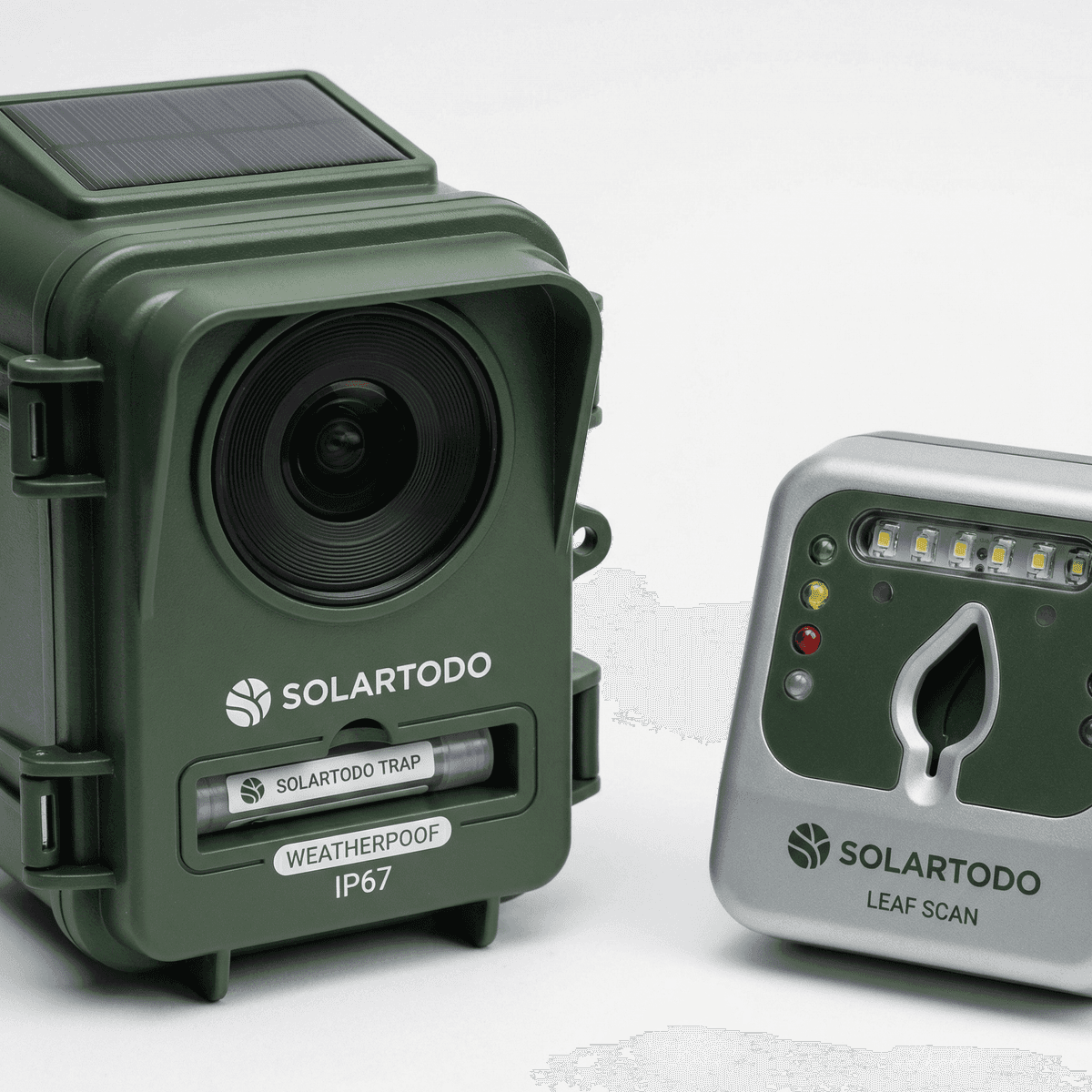
SOLAR TODO addresses this use case through smart agriculture monitoring packages that combine weather stations, soil moisture-temperature probes, gateways, cloud analytics, and optional automated irrigation control. In the current portfolio, the Desert Reclamation Solar+Agriculture 50ha package includes 20 sensors, 10-minute data intervals, 4G LTE communications, 12 soil probes, 4 water-quality points, and automated drip-irrigation control over 50 ha. For plantation-style deployments, the Tea Garden Precision Monitoring 30ha package supports 15 sensors/devices, LoRaWAN communication, and AI disease control over 30 ha.
Regional market indicators by 2026
Latin America shows uneven adoption, but the strongest demand is concentrated in export agriculture, water-scarce basins, and farms above 20 ha where telemetry and automation spread fixed costs over larger blocks.
According to MarketsandMarkets and regional precision-agriculture trackers cited in 2024-2025 industry reviews, precision irrigation adoption remains below 20% in many Latin American field-crop segments, but exceeds 30% in some export fruit and greenhouse clusters. Chile, Mexico, Brazil, and Peru lead in commercial deployments because water pricing, labor cost, and export quality requirements create faster ROI.
| Region | 2025-2026 adoption trend | Typical water savings | Typical payback |
|---|---|---|---|
| Latin America | Fastest in orchards, vineyards, export vegetables | 20-50% | 2-6 years |
| North America | Mature in high-value crops and pivots | 15-35% | 3-7 years |
| Europe | Strong under water regulation and subsidy programs | 15-30% | 4-8 years |
| Asia-Pacific | Rapid in water-stressed zones and plantation crops | 20-40% | 2-5 years |
| Middle East/Africa | High value where pumping and desalinated water costs are high | 25-45% | 2-5 years |
Water Savings Data by Crop Type
By crop type, smart irrigation delivers the highest ROI in Latin America when water savings exceed 25% and yield or quality gains add another 5-15%, which is most common in orchards, vegetables, and plantation crops.
The practical reason is simple: high-value crops are more sensitive to under- and over-irrigation, and their gross margin per hectare is high enough to justify sensors, gateways, cloud software, and valve automation. Lower-value row crops can still benefit, but the ROI often depends more on scale above 50-100 ha and lower hardware cost per hectare.
According to FAO (2024), precision irrigation methods can reduce water application by 20-30% under proper scheduling versus conventional calendar irrigation. According to World Bank and IDB-aligned regional water efficiency studies published between 2023 and 2025, drip systems combined with sensor-based control can cut water use by 30-50% in orchard and vegetable systems under deficit-prone conditions.
| Crop type | Typical smart irrigation water savings | Typical yield/quality effect | Typical ROI/payback in Latin America |
|---|---|---|---|
| Citrus and orchard fruit | 25-45% | 5-15% yield or grade improvement | 2-4 years |
| Grapes and vineyards | 20-35% | 5-12% quality and uniformity gain | 2.5-5 years |
| Vegetables and horticulture | 25-40% | 8-20% marketable yield gain | 1.5-4 years |
| Tea and plantation crops | 15-30% | 5-12% consistency improvement | 2-5 years |
| Sugarcane | 15-25% | 3-8% productivity gain | 3-6 years |
| Soybean, maize, row crops | 10-20% | 2-8% yield stabilization | 4-8 years |
| Greenhouse crops | 30-50% | 10-20% quality gain | 1.5-3 years |
Crop-specific Latin America interpretation
Orchards in Mexico, Chile, Peru, and Brazil often show the strongest business case because irrigation errors during flowering, fruit set, and fruit fill can reduce pack-out within 1-3 weeks. A 30 ha orchard using 5,000-7,000 m3/ha/year can save 37,500-94,500 m3 annually at 25-45% reduction. If pumping energy is $0.08-0.18/kWh, energy savings alone can materially shorten payback.
Vegetable systems often outperform field crops on ROI because irrigation frequency is higher and quality penalties are immediate. A 20 ha export vegetable block using 4,000-6,000 m3/ha/year can save 20,000-48,000 m3 per season at 25-40% reduction. When labor for valve operation and field scouting is also reduced by 10-20%, the economics improve further.
Tea and plantation crops benefit from microclimate monitoring rather than water savings alone. SOLAR TODO's Tea Garden Precision Monitoring 30ha package uses 10-minute intervals and 15 devices across 30 ha, which is useful where elevation changes of 10-500 m create different moisture regimes. In these cases, irrigation timing and disease prevention together often matter more than water volume alone.
Technology Stack and Technical Benchmarks
A bankable smart irrigation system in 2026 usually combines 8-10 weather parameters, root-zone soil sensing at 20-60 cm, 10-minute telemetry, and automated control that can reduce water use by 20-50% versus manual scheduling.
A complete field architecture typically includes four layers: sensing, communication, control, and analytics. Sensing covers soil moisture, soil temperature, rainfall, air temperature, humidity, solar radiation, wind, and flow or pressure. Communication is usually LoRaWAN for 10-50 ha blocks or 4G LTE where backhaul is easier than gateway installation. Control includes pump start/stop, valve automation, and fertigation or drip scheduling. Analytics convert evapotranspiration, soil depletion, and weather forecast data into irrigation decisions.
According to NREL (2024), solar-powered remote monitoring is increasingly cost-effective where trenching or grid extension is expensive. According to ISO 11783 practice and common IP67/IP68 field design, interoperability and ingress protection are basic procurement requirements for outdoor agriculture electronics. For B2B buyers, the issue is less about app design and more about sensor placement density, calibration, and maintenance interval.
| Technical element | 2026 benchmark | Why it matters for ROI |
|---|---|---|
| Data interval | 10 minutes | Faster response to heat, wind, and irrigation events |
| Soil probe depth | 20-60 cm typical | Matches active root zone in many crops |
| Weather parameters | 8-10 parameters | Improves ET-based scheduling accuracy |
| Communications | LoRaWAN or 4G LTE | Reduces wiring cost across 30-50 ha |
| Power supply | Solar + LFP battery | Cuts service visits in remote fields |
| Protection | IP67/IP68 | Supports year-round outdoor use |
| Control outputs | Pump and valve automation | Converts data into measurable savings |
SOLAR TODO system fit for Latin America
SOLAR TODO offers package structures that match common Latin American deployment sizes. The Desert Reclamation Solar+Agriculture 50ha system combines 500 kW solar PV, 20 sensors, 12 soil probes, 4 water-quality points, 2 gateways, and automated drip-irrigation control across 50 ha. The package is useful where grid power is unstable and evapotranspiration can exceed 5-10 mm/day.
For more compact plantation or specialty-crop sites, SOLAR TODO also provides the Tea Garden Precision Monitoring 30ha package with 15 sensors/devices, LoRaWAN communication, and one professional cloud tier. Buyers comparing different hectare ranges can review View all Smart Agriculture IoT Monitoring System products or Configure your system online.
The International Energy Agency states, "Solar PV has become the cheapest source of electricity in most countries." For irrigation buyers, that quote matters because daytime pumping and daytime solar output align well, especially in 20-50 ha remote agriculture blocks. IRENA also states that renewable power can improve resilience where diesel logistics and grid reliability are weak.
ROI Model, Year-Over-Year Trends, and Latin America Outlook
From 2021 to 2026, smart irrigation economics improved as sensor prices fell, cloud tools matured, and drought-driven water costs rose, pushing payback in many Latin American orchard projects from 4-7 years down to 2-5 years.
The last 5 years show a clear pattern. Hardware costs for telemetry, gateways, and cloud monitoring have moderated, while the cost of water scarcity, pumping energy, and labor has increased. That means the value of each avoided cubic meter and each avoided field visit is higher in 2026 than it was in 2021.
According to BloombergNEF (2024), digitalization and electrification of agriculture are advancing as distributed solar and battery costs decline. According to Wood Mackenzie (2024), irrigation automation and water analytics are becoming standard in high-value agriculture because input volatility makes manual scheduling less acceptable. According to Fraunhofer ISE (2024), solar generation economics remain favorable for daytime agricultural loads in high-irradiance regions.
| Year | Market/technology trend | ROI impact |
|---|---|---|
| 2021-2022 | More pilot projects, limited integration | Payback often 4-7 years |
| 2023-2024 | Better cloud analytics and lower device cost | Payback improved to 3-6 years |
| 2025-2026 | Wider automation, stronger drought response spending | Payback often 2-5 years in high-value crops |
| 2027-2030 | Forecast expansion to basin-scale data integration | ROI improves with predictive control |
| 2030-2040 | AI scheduling, digital twins, water-market integration | ROI depends on regulation and water pricing |
Sample deployment scenario (illustrative)
A 50 ha drip-irrigated fruit farm in Latin America using 6,000 m3/ha/year consumes 300,000 m3 annually. At 30% water savings, the site saves 90,000 m3/year. If pumping and labor savings total $18,000-$30,000/year and quality gains add $20,000-$40,000/year, a $70,000-$120,000 smart irrigation package can pay back in about 2-4 years.
Long-term outlook 2030-2040
By 2030, more systems will use forecast-driven irrigation, satellite layers, and AI anomaly detection. By 2040, the differentiator may be not just saving 20-40% water, but proving water productivity per kilogram of crop for lenders, insurers, and export buyers. That is relevant in Latin America where traceability and climate disclosure requirements are tightening.
EPC Investment Analysis and Pricing Structure
For Latin American farms above 20-50 ha, EPC-style smart irrigation delivery usually combines supply, field commissioning, and automation into one contract, while ROI depends on 20-50% water savings and 2-5 year payback in higher-value crops.
EPC means Engineering, Procurement, and Construction or turnkey delivery. In practice, this includes site survey, bill of materials, sensor layout, gateway planning, solar power sizing where needed, valve and pump control integration, commissioning, and operator training. For remote agriculture, EPC also reduces interface risk between irrigation contractor, electrical contractor, and software provider.
A practical three-tier pricing structure for B2B buyers is:
- FOB Supply: hardware only, ex-port shipment, suitable for buyers with local installers
- CIF Delivered: hardware plus freight and insurance to destination port
- EPC Turnkey: delivered system plus installation, commissioning, and training
Typical volume guidance used in project quotation is:
- 50+ units or equivalent node volume: 5% discount
- 100+ units: 10% discount
- 250+ units: 15% discount
Payment terms commonly used are:
- 30% T/T deposit + 70% against B/L
- 100% L/C at sight
Financing is available for larger projects above $1,000K, especially where smart irrigation is bundled with solar pumping, storage, or wider farm electrification. For quotation support, EPC scope review, or financing discussion, contact [email protected] or call +6585559114.
ROI components buyers should calculate
The most accurate ROI model includes at least four cash-flow lines, not just water savings.
- Water savings: 20-50% depending on crop and baseline control
- Energy savings: 15-30% where pumping hours decline or pressure is optimized
- Labor savings: 10-20% from fewer manual inspections and valve operations
- Yield/quality uplift: 3-20% depending on crop sensitivity and baseline stress
SOLAR TODO is relevant here because the company can combine monitoring, solar power, storage, and field communications in one procurement path rather than splitting the project across 3-4 vendors. That matters for Latin America where remote sites often need both irrigation intelligence and power resilience.
FAQ
Smart irrigation buyers in Latin America usually ask about payback, crop fit, sensor density, and EPC scope because ROI depends on 20-50% water savings plus energy and labor reductions.
Q: What is the typical ROI for a smart irrigation system in Latin America? A: Typical ROI is 2-5 years for orchards, vegetables, and greenhouse crops, and 4-8 years for lower-margin row crops. The range depends on water price, pumping energy, labor cost, and whether yield or quality improves by 5-15% after better scheduling.
Q: Which crop types usually get the fastest payback? A: Fruit, citrus, grapes, vegetables, and greenhouse crops usually pay back fastest because they can save 25-45% water and protect higher crop value per hectare. Row crops such as maize or soybean often need larger scale, often above 50-100 ha, to match that return.
Q: How much water can smart irrigation actually save? A: Most monitored systems save 20-50% water compared with calendar-based irrigation when sensors, weather data, and automation are used together. In orchards and vegetables, 25-40% is a realistic planning range, while row crops often land closer to 10-20%.
Q: What sensors are required for a bankable system? A: A bankable system usually includes soil moisture probes, soil temperature, a weather station tracking 8-10 parameters, and flow or pressure monitoring. For most crops, root-zone sensing at 20-60 cm and 10-minute data intervals are sufficient for operational control.
Q: Is LoRaWAN or 4G LTE better for agricultural irrigation sites? A: LoRaWAN is usually better for 30-50 ha blocks where low power and long range reduce wiring and SIM costs. 4G LTE is often better where cellular coverage is stable and the site needs simpler backhaul without installing a local gateway network.
Q: Can smart irrigation reduce pumping energy costs too? A: Yes, pumping energy often falls by 15-30% when irrigation duration, pressure, and timing are optimized. The savings are stronger where groundwater pumping depth is high or where diesel pumping is replaced by solar-powered daytime operation.
Q: What does EPC turnkey delivery include for smart irrigation? A: EPC turnkey delivery usually includes engineering design, procurement, installation, commissioning, control integration, and operator training. It reduces coordination risk across irrigation, electrical, telemetry, and software contractors, which is important on 20-50 ha remote sites.
Q: How are SOLAR TODO projects priced and paid? A: SOLAR TODO generally supports FOB Supply, CIF Delivered, and EPC Turnkey quotation structures. Standard payment terms are 30% T/T plus 70% against B/L, or 100% L/C at sight, with financing available for projects above $1,000K.
Q: What volume discounts are typical for larger projects? A: A common quotation structure is 5% discount for 50+ units, 10% for 100+, and 15% for 250+ equivalent volume. Buyers should confirm whether the discount applies to sensor nodes only or to the full project bill of materials.
Q: How much maintenance does a smart irrigation system need? A: Most systems need seasonal probe inspection, sensor cleaning, battery checks, and calibration review every 6-12 months. IP67/IP68 field devices reduce service frequency, but flow meters, valves, and weather sensors still need periodic verification to protect data quality.
Q: Is solar power useful for remote irrigation monitoring sites? A: Yes, solar power is useful where trenching or grid extension is expensive and where data nodes are spread across 30-50 ha. Solar-powered telemetry with LFP battery backup can keep gateways and field sensors online year-round with low maintenance.
Q: How should buyers compare vendors in 2026? A: Buyers should compare water savings assumptions, sensor density per hectare, communications architecture, control capability, and after-sales support. A low hardware price is less useful if the system lacks flow verification, root-zone sensing, or local commissioning support.
References
- IEA (2024): World Energy Outlook and energy demand analysis relevant to agricultural electrification and pumping loads.
- IRENA (2024): Renewable power cost and deployment data supporting solar-powered agricultural operations and remote energy resilience.
- NREL (2024): Solar resource and remote power methodology relevant to off-grid monitoring, PV-powered telemetry, and agricultural energy analysis.
- FAO (2024): AQUASTAT and irrigation efficiency datasets covering agricultural water withdrawals and precision irrigation performance.
- BloombergNEF (2024): Energy transition and distributed energy cost trends affecting solar-powered irrigation and digital agriculture economics.
- Wood Mackenzie (2024): Market intelligence on automation, distributed energy, and agritech investment trends.
- Fraunhofer ISE (2024): Photovoltaic and electricity cost benchmarks relevant to daytime agricultural pumping economics.
- ISO 11783 (current practice reference): Agricultural electronics interoperability framework relevant to data exchange and machine communication.
Conclusion
Smart irrigation in Latin America is financially strongest where farms can save 25-45% water, 15-30% pumping energy, and recover investment in 2-5 years, especially in orchards, vegetables, and plantation crops.
For B2B buyers above 20 ha, the bottom line is clear: combine soil sensing, weather monitoring, and automated control in one procurement package, and evaluate SOLAR TODO where irrigation, solar power, and remote communications must work together under one project scope.
About SOLARTODO
SOLARTODO is a global integrated solution provider specializing in solar power generation systems, energy-storage products, smart street-lighting and solar street-lighting, intelligent security & IoT linkage systems, power transmission towers, telecom communication towers, and smart-agriculture solutions for worldwide B2B customers.
Further Reading
Procurement paths
About the Author

SOLARTODO Editorial Team
Solar Energy & Infrastructure Expert Team
SOLAR TODO is a professional supplier of solar energy, energy storage, smart lighting, smart agriculture, security systems, communication towers, and power tower equipment.
Our technical team has over 15 years of experience in renewable energy and infrastructure, providing high-quality products and solutions to B2B customers worldwide.
Expertise: PV system design, energy storage optimization, smart lighting integration, smart agriculture monitoring, security system integration, communication and power tower supply.
Cite This Article
SOLARTODO Editorial Team. (2026). Smart Irrigation System ROI Report 2026: Water Savings…. SOLARTODO. Retrieved from https://solartodo.com/knowledge/smart-irrigation-system-roi-report-2026-water-savings-data-by-crop-type-latin-america
@article{solartodo_smart_irrigation_system_roi_report_2026_water_savings_data_by_crop_type_latin_america,
  title = {Smart Irrigation System ROI Report 2026: Water Savings…},
  author = {SOLARTODO Editorial Team},
  journal = {SOLARTODO Knowledge Base},
  year = {2026},
  url = {https://solartodo.com/knowledge/smart-irrigation-system-roi-report-2026-water-savings-data-by-crop-type-latin-america},
  note = {Accessed: 2026-09-19}
}
Published: July 5, 2026 | Available at: https://solartodo.com/knowledge/smart-irrigation-system-roi-report-2026-water-savings-data-by-crop-type-latin-america
Subscribe to Our Newsletter
Get the latest solar energy news and insights delivered to your inbox.
View All Articles