LFP Battery Energy Storage Systems ROI Analysis: backup vs…

Cinn Song
Founder & Chief Solutions Architect
Watch the video
TL;DR
For short-duration backup and flexible grid participation, LFP battery energy storage systems usually beat diesel-only backup on total ROI. A 500kW-class BESS can respond in under 10ms, cycle 6,000+ times, and earn about $30-90/kW-year in VPP revenue, while diesel adds fuel use of roughly 0.24-0.30 liters/kWh and usually generates no normal-operation income.
LFP battery energy storage systems can cut backup power cost by 20-45% versus diesel over 10 years, while adding VPP revenue of $30-90/kW-year. For 500kW sites, 90% DoD, 6,000+ cycles, and <10ms response materially improve ROI.
Summary
LFP battery energy storage systems can cut backup power cost by 20-45% versus diesel over 10 years, while adding VPP revenue of $30-90/kW-year. For 500kW sites, 90% DoD, 6,000+ cycles, and <10ms response materially improve ROI.
Key Takeaways
- Compare 10-year lifecycle cost, not capex alone: diesel backup often adds fuel, maintenance, and testing costs that push total cost 20-45% above LFP BESS in high-runtime sites.
- Size backup autonomy to the critical load: a 500kW / 500kWh LFP system supports about 1 hour at full load or nearly 2 hours at 250kW, depending on reserve settings.
- Use LFP chemistry with 90% depth of discharge and 6,000+ cycles when the asset must serve both backup duty and 1-2 daily VPP dispatch events.
- Quantify diesel fuel exposure: generator consumption of roughly 0.24-0.30 liters/kWh can materially raise OPEX when outages exceed 100-200 hours per year.
- Capture stacked revenue: VPP aggregation can add about $30-90/kW-year for flexible 1C-capable systems, improving payback by 1-3 years in suitable markets.
- Verify fast transfer performance: sites with UPS-sensitive loads should target battery response below 10ms, versus diesel start times commonly measured in 10-60 seconds.
- Model tariff and resilience value together: peak shaving of 60kW-500kW plus outage avoidance often produces 3-7 year payback depending on demand charges and dispatch rules.
- Buy against standards and warranty terms: require IEEE 1547 alignment, UL 9540/9540A pathway, and a 10-year or longer performance warranty with 70% retained capacity.
Why LFP BESS ROI Now Favors Backup Plus VPP
LFP battery energy storage systems often outperform diesel-only backup when sites need sub-10ms response, 6,000+ cycles, and stacked VPP revenue of $30-90/kW-year over a 10-year horizon.
The core ROI question is no longer battery versus generator as a single-function purchase. B2B buyers now compare a multi-use asset against a single-use asset. A diesel set may still offer long-duration runtime if fuel is available, but it usually earns $0 in grid services during normal operation. An LFP battery energy storage system can support backup, peak shaving, demand management, and VPP aggregation from the same 500kW-class platform.
According to NREL (2024), storage value increases when operators stack resilience and tariff savings instead of evaluating backup duty in isolation. According to IEA (2024), battery storage deployment is accelerating because flexibility services and renewable balancing are becoming standard grid requirements. For procurement teams, that means the correct KPI is blended annual value per installed kW, not only emergency runtime cost.
The International Energy Agency states, "Battery storage is a key technology for short-term flexibility in power systems." That matters because most backup events at commercial and digital infrastructure sites last minutes to a few hours, not 24 hours. In that operating window, LFP chemistry with 90% usable depth of discharge and liquid cooling above 100kWh often produces a stronger total-cost case than diesel-only architecture.
SOLARTODO sees this most clearly in telecom hubs, data centers, hotels, and mixed commercial facilities where the battery is dispatched 100-300 times per year for economic events and still reserved for outage support. In those cases, the asset is not idle. It is monetized.
Technical Cost Drivers: LFP Backup vs Diesel Backup
The main cost difference is that LFP BESS converts one asset into 2-4 value streams, while diesel backup usually remains a standby asset with fuel consumption near 0.24-0.30 liters/kWh during operation.
A practical comparison starts with the duty cycle. Diesel generators are usually selected for infrequent outages and long-duration support. Batteries are selected for fast response, power quality, and repeated dispatch. If the site needs ride-through in less than 10ms, diesel alone cannot do that without a UPS layer. That means many buyers already pay for both generator and UPS battery infrastructure, which raises lifecycle cost.
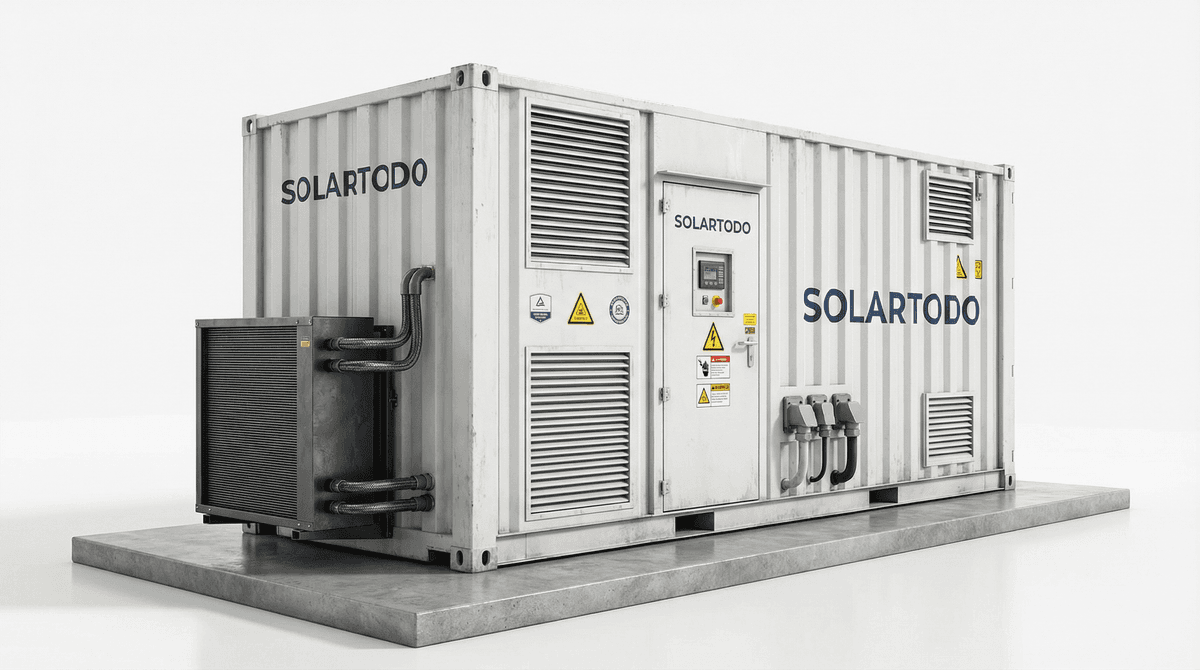
For example, the SOLARTODO 500kWh Data Center UPS LFP is rated at 500kW / 500kWh with <10ms response, 90% depth of discharge, and a 10-year / 70% capacity warranty. A comparable diesel-only backup design for a 500kW critical load may need a generator, transfer switch, fuel system, acoustic treatment, emissions compliance, and a separate UPS battery layer. The battery-first architecture removes several maintenance-heavy subsystems.
Cost categories buyers should model
- Capex per kW and per kWh
- Fuel cost at 0.24-0.30 liters/kWh for diesel runtime
- Preventive maintenance every 250-500 operating hours for generators
- Battery augmentation or degradation reserve after year 8-10
- HVAC load for legacy VRLA rooms versus liquid-cooled LFP cabinets
- Compliance cost for emissions, fire safety, interconnection, and testing
- Revenue from VPP, demand response, frequency support, or peak shaving
According to IRENA (2024), battery systems continue to improve in bankability where cycling value is monetized. According to NREL (2024), resilience valuation remains site-specific, but avoided outage cost can dominate economics for digital infrastructure and telecom assets. A single 1-hour outage at a mission-critical site can exceed the annual maintenance cost of the storage system.
The U.S. Department of Energy states, "Energy storage can provide resilience, reliability, and economic value when multiple services are stacked." That quote aligns with current BESS procurement logic: if the battery can discharge for backup and also earn revenue 150-250 days per year, the ROI case strengthens materially.
EPC Investment Analysis and Pricing Structure
EPC buyers should compare FOB supply, CIF delivered, and EPC turnkey pricing because logistics, installation scope, and interconnection work can shift project cost by 15-35% on 500kW to 10MW systems.
For B2B procurement, pricing must be tied to scope. A battery quoted ex-works is not comparable to a commissioned plant with PCS, EMS, fire suppression, grid studies, civil works, and acceptance testing. SOLARTODO typically structures projects in three commercial layers so procurement managers can align budget with internal capability.
What EPC turnkey delivery includes
A full EPC package usually includes:
- Battery enclosures or containers with LFP modules and BMS
- PCS/inverter, transformer, switchgear, EMS, and SCADA interface
- Fire detection and suppression pathway aligned with UL 9540/9540A or local code
- Civil foundation, cable routing, grounding, and commissioning tests
- Grid interconnection support under IEEE 1547-related utility requirements
- Training, O&M manuals, and warranty documentation
Three-tier pricing structure
| Pricing model | What is included | Typical buyer profile |
|---|---|---|
| FOB Supply | Battery system, core components, factory test | EPC contractor with local installation team |
| CIF Delivered | FOB scope plus sea freight and insurance | Importer or developer managing local works |
| EPC Turnkey | Delivered system plus installation, commissioning, and handover | End user seeking single-point responsibility |
Volume pricing guidance
| Order volume | Indicative discount |
|---|---|
| 50+ units or equivalent project blocks | 5% |
| 100+ units or equivalent project blocks | 10% |
| 250+ units or equivalent project blocks | 15% |
Payment terms and financing
Standard payment terms are typically 30% T/T with 70% against B/L, or 100% L/C at sight. Financing is available for larger projects above $1,000K, subject to project profile, jurisdiction, and offtake quality. For pricing, EPC scope review, and commercial discussion, contact [email protected] or +6585559114.
ROI analysis framework
A useful ROI model compares annualized battery cost against diesel fuel, maintenance, UPS replacement, demand-charge reduction, and VPP revenue. In many commercial cases, payback falls in the 3-7 year range when annual demand savings exceed $7,000-$50,000 and VPP participation adds another $15,000-$45,000 for a 500kW flexible asset. Diesel-only systems rarely generate equivalent normal-operation cash flow.
VPP Aggregation Economics for LFP Systems
VPP aggregation improves BESS ROI because a 250kW-500kW flexible asset can earn $30-90/kW-year in suitable markets while remaining available for backup under defined state-of-charge rules.
A virtual power plant pools distributed batteries and dispatches them as one controllable resource. The site owner is paid for availability, capacity, demand response, frequency support, or energy shifting, depending on market design. This matters because backup assets sit idle most of the year. VPP participation converts idle capacity into recurring revenue.
For a 500kW battery, annual VPP income at $30-90/kW-year equates to about $15,000-$45,000. If the same system also reduces peak demand by 100-300kW for 12 billing months, the combined annual value can materially exceed diesel maintenance and test-run savings. The battery then shifts from a resilience expense to a revenue-linked infrastructure asset.
Operational constraints buyers must define
- Minimum reserve state of charge, often 20-40%, to preserve outage support
- Maximum daily cycles, often 1-2 for commercial assets
- Dispatch window, such as 15-minute peak shaving or 4-second frequency response
- Interconnection and telemetry requirements for aggregators
- Battery degradation budget over 10 years and 6,000+ cycles
According to IEA (2024), flexibility markets are expanding as renewable penetration rises. According to NREL (2023), distributed storage aggregation can improve customer economics when dispatch rights, settlement rules, and battery wear are clearly contracted. Buyers should therefore require a dispatch hierarchy in the EMS: backup first, tariff optimization second, VPP third, unless the site can tolerate deeper market participation.
SOLARTODO generally recommends that critical-load operators lock a resilience reserve before exposing capacity to market dispatch. For example, a 500kWh system supporting a 250kW critical load may reserve 200kWh for outage coverage and release the remaining capacity for VPP events. That reduces revenue slightly but protects uptime.
Use Cases and Selection Guide
The best-fit applications are sites with 100-500 outage hours risk, 60kW-500kW peak demand reduction potential, or critical loads that need under 10ms response and cannot rely on diesel start time alone.
Three use cases stand out. First, data centers and edge facilities need UPS-grade response and often value battery replacement savings versus VRLA banks every 3-5 years. Second, telecom and digital infrastructure sites benefit from reduced truck rolls, remote monitoring, and fuel logistics reduction. Third, hotels and commercial buildings gain from demand-charge management plus outage support.
Sample deployment scenario (illustrative): a 500kW facility installs a 500kWh LFP BESS instead of replacing an aging UPS battery room and adding a new diesel set for short outages. If the site avoids $25,000 per year in demand and maintenance costs and earns $20,000 per year from VPP participation, annual gross value reaches about $45,000 before battery degradation allowance. Under those conditions, payback can move into the mid-single-digit years depending on delivered project cost.
Comparison table: LFP BESS vs diesel for backup plus grid value
| Metric | LFP BESS | Diesel generator |
|---|---|---|
| Response time | <10ms to <100ms | 10-60 seconds typical start |
| Runtime economics | No fuel; cycle-based degradation | Fuel at 0.24-0.30 liters/kWh |
| Daily monetization | Yes, VPP and peak shaving | Usually no |
| Maintenance profile | Lower routine mechanical maintenance | Regular engine service and testing |
| Emissions on site | None during discharge | Local NOx, PM, CO2 emissions |
| Best duration | Minutes to 2 hours typical | Multi-hour if fuel supply is secure |
| UPS replacement potential | Yes in some architectures | No, separate UPS still needed |
| Warranty basis | Often 10 years / 70% capacity | Engine warranty by hours and years |
Selection checklist for procurement teams
- Match power rating to critical load in kW, not only energy in kWh
- Confirm autonomy target at 100%, 50%, and 25% load points
- Require cycle life, warranty throughput, and retained capacity terms
- Review local market access for demand response or VPP aggregation
- Verify fire safety pathway, interconnection studies, and acceptance tests
- Compare 10-year NPV with diesel, not first-cost only
FAQ
A practical ROI comparison should include capex, fuel, maintenance, cycling value, and reserve policy because LFP BESS can earn $30-90/kW-year while diesel backup generally earns no operating revenue.
Q: What makes LFP BESS more attractive than diesel for backup ROI? A: LFP BESS is more attractive when the same asset can serve backup and daily grid services. A diesel system is usually idle until an outage, while a battery can reduce demand charges, support VPP dispatch, and respond in under 10ms. That stacked value often shortens payback by 1-3 years.
Q: How do I compare diesel fuel cost with battery operating cost? A: Start with generator fuel use of roughly 0.24-0.30 liters/kWh and add maintenance, testing, and emissions-related compliance. Then compare that with battery degradation cost per cycle, auxiliary consumption, and inverter losses. Over 10 years, high-runtime sites often see lower total cost from LFP, especially above 100 outage hours annually.
Q: When does VPP aggregation materially improve battery ROI? A: VPP aggregation materially improves ROI when the site can release 100-500kW of flexible capacity for 50-200 events per year. Revenue of about $30-90/kW-year can add $3,000-$45,000 annually depending on system size and market rules. That extra income is often enough to move a project from marginal to financeable.
Q: Can a battery fully replace a diesel generator? A: A battery can replace diesel for short-duration outages, power quality support, and UPS-grade ride-through, but not always for long-duration backup. If outages regularly exceed 2-4 hours, many sites use a hybrid design with battery first and generator second. That approach reduces fuel use while preserving resilience.
Q: What battery size is suitable for a 500kW critical load? A: A 500kW critical load typically needs at least 500kWh for about 1 hour of autonomy at full output. If the protected load is only 250kW, the same 500kWh system can approach 2 hours depending on reserve margin and inverter settings. The correct size depends on outage profile and VPP reserve policy.
Q: How does LFP compare with VRLA in backup applications? A: LFP usually offers 6,000+ cycles, around 90% usable depth of discharge, and lower replacement frequency than VRLA. VRLA banks often need replacement every 3-5 years and provide less usable energy. For sites combining backup with daily dispatch, LFP is usually the stronger lifecycle option.
Q: What standards should buyers check before procurement? A: Buyers should review UL 9540 and UL 9540A pathways for system and fire-test compliance, IEEE 1547 for interconnection, and IEC battery and safety standards relevant to the jurisdiction. Also confirm local utility requirements, EMS cybersecurity expectations, and warranty terms such as 10 years or 70% retained capacity.
Q: What is the typical payback period for LFP backup plus VPP projects? A: Many commercial projects land in the 3-7 year range when they combine backup value, demand-charge reduction, and VPP revenue. Payback depends on delivered EPC cost, annual dispatch frequency, tariff structure, and outage risk. Sites using the battery only for rare emergencies usually see longer payback than multi-use sites.
Q: How should reserve state of charge be managed for backup and VPP together? A: Most operators set a minimum reserve state of charge between 20% and 40% to protect resilience. The exact number depends on critical load, expected outage duration, and contractual dispatch obligations. A clear EMS hierarchy should prioritize backup first and release only surplus capacity to VPP events.
Q: What maintenance does an LFP BESS require compared with diesel? A: LFP BESS maintenance is mainly inspection, firmware review, thermal management checks, and periodic functional testing. Diesel systems also need oil changes, filters, coolant checks, fuel polishing in some cases, and regular load-bank tests. The battery usually has lower routine mechanical maintenance and fewer site visits.
Q: What commercial terms should EPC buyers request from SOLARTODO? A: EPC buyers should request scope by FOB Supply, CIF Delivered, and EPC Turnkey, plus warranty, commissioning, and spare-parts terms. Standard payment is typically 30% T/T with 70% against B/L, or 100% L/C at sight. Financing may be available for projects above $1,000K through offline quotation review.
Q: Is hybrid battery-plus-diesel the best compromise for some sites? A: Yes, hybrid architecture is often the best compromise when outage duration is uncertain but fast response is mandatory. The battery handles the first seconds to hours, peak shaving, and VPP dispatch, while diesel covers extended events. This can reduce generator runtime, fuel cost, and maintenance without sacrificing resilience.
Related Reading
- LFP Battery Energy Storage Systems Cost-Benefit: power…
- Designing LFP Battery Energy Storage Systems: backup power…
- Solving diesel generator OPEX: LFP Battery Energy Storage…
- Complete Guide to LFP Battery Energy Storage Systems for…
- LFP BESS Cost-Benefit for Industrial Backup Power
- 🔗 Energy Storage Products
References
A 10-year ROI model that includes 6,000+ cycles, 90% DoD, and $30-90/kW-year VPP revenue gives a more accurate procurement decision than comparing battery and diesel on capex alone.
- NREL (2024): Storage Futures and distributed energy valuation methodologies for stacked resilience and tariff savings.
- NREL (2023): Research on distributed storage aggregation, customer economics, and grid service participation.
- IEA (2024): Battery storage and power-system flexibility analysis in global electricity market outlooks.
- IRENA (2024): Renewable power and storage cost trends, including battery competitiveness in flexibility applications.
- IEEE 1547-2018 (2018): Standard for interconnection and interoperability of distributed energy resources with electric power systems.
- UL 9540 (2023): Standard for energy storage systems and equipment safety evaluation.
- UL 9540A (2019): Test method for evaluating thermal runaway fire propagation in battery energy storage systems.
- U.S. Department of Energy (2024): Energy storage value stacking and resilience guidance for commercial and grid applications.
Conclusion
LFP BESS delivers the strongest ROI when backup, peak shaving, and VPP revenue are stacked, with 3-7 year payback common and diesel lifecycle cost often 20-45% higher in short-duration, high-value applications.
For buyers comparing 500kW-class backup options, SOLARTODO recommends a 10-year NPV model with reserve SOC, outage hours, and VPP revenue explicitly defined; that method gives a more bankable answer than capex-only comparison.
About SOLARTODO
SOLARTODO is a global integrated solution provider specializing in solar power generation systems, energy-storage products, smart street-lighting and solar street-lighting, intelligent security & IoT linkage systems, power transmission towers, telecom communication towers, and smart-agriculture solutions for worldwide B2B customers.
Procurement paths
About the Author

Cinn Song
Founder & Chief Solutions Architect
Cinn Song founded SOLARTODO LIMITED and leads its smart-city infrastructure engineering — from solar, storage and integrated smart poles to the company's push into physical-AI city edge nodes: pole-mounted edge computing, vertical LLMs for smart cities, drone-based O&M with autonomous battery swapping, robotic maintenance, and high-speed counter-UAS interception. Since 2010, he has directed turnkey EPC + BOT delivery across 50+ countries, including telecom monopole supply for national grid operators, off-grid solar street-lighting for African municipalities, and integrated smart-pole programs for Gulf smart cities.
Cite This Article
Cinn Song. (2026). LFP Battery Energy Storage Systems ROI Analysis: backup vs…. SOLARTODO. Retrieved from https://solartodo.com/knowledge/lfp-battery-energy-storage-systems-roi-analysis-backup-vs-diesel-cost-for-vpp-aggregation
@article{solartodo_lfp_battery_energy_storage_systems_roi_analysis_backup_vs_diesel_cost_for_vpp_aggregation,
  title = {LFP Battery Energy Storage Systems ROI Analysis: backup vs…},
  author = {Cinn Song},
  journal = {SOLARTODO Knowledge Base},
  year = {2026},
  url = {https://solartodo.com/knowledge/lfp-battery-energy-storage-systems-roi-analysis-backup-vs-diesel-cost-for-vpp-aggregation},
  note = {Accessed: 2026-09-19}
}
Published: June 14, 2026 | Available at: https://solartodo.com/knowledge/lfp-battery-energy-storage-systems-roi-analysis-backup-vs-diesel-cost-for-vpp-aggregation
Subscribe to Our Newsletter
Get the latest solar energy news and insights delivered to your inbox.
View All Articles