irrigation control in Smart Agriculture Monitoring…

SOLAR TODO
Solar Energy & Infrastructure Expert Team
Watch the video
TL;DR
For orchards and vineyards, the best irrigation control approach is one integrated platform that combines soil moisture, weather, flow, pressure, and valve automation every 10 minutes. Compared with timer-based irrigation, it can reduce water use by 15-35%, lower pump energy by 10-25%, and often pay back in 2-5 seasons when zoning, communications, and hydraulic feedback are designed correctly.
Integrated irrigation control platforms for orchards and vineyards can cut water use by 15-35%, reduce pump energy by 10-25%, and improve response time from 24 hours to 10-minute intervals using soil, weather, and valve automation data.
Summary
Integrated irrigation control platforms for orchards and vineyards can cut water use by 15-35%, reduce pump energy by 10-25%, and improve response time from 24 hours to 10-minute intervals using soil, weather, and valve automation data.
Key Takeaways
- Deploy 10-minute monitoring intervals to detect soil moisture drift early and reduce irrigation response delays from 1 day to less than 30 minutes.
- Size sensing density at 1 node per 3-5 ha in mixed orchard or vineyard blocks to capture slope, soil, and canopy variability.
- Use ET-based irrigation logic with 7-10 weather parameters to lower seasonal water use by 15-35% versus fixed timer schedules.
- Segment valves into 2-4 hydraulic zones per 10 ha block to improve pressure stability and keep distribution uniformity above 85%.
- Select LoRaWAN for 2-10 km field communication where orchards need low-power sensor links and limited trenching cost.
- Add pump, flow, and pressure feedback with alarms at ±10-15% deviation to identify leaks, clogging, or failed valves before yield loss expands.
- Compare FOB Supply, CIF Delivered, and EPC Turnkey pricing, then apply 5%, 10%, or 15% volume discounts at 50+, 100+, and 250+ units.
- Verify IEC 62443, IEEE 1547, ISO 11783, and IP67/IP68 field protection requirements before procurement to reduce integration and maintenance risk.
Why irrigation control platform integration matters
Integrated irrigation control in orchards and vineyards works best when 10-minute field data, 2-4 hydraulic zones, and automated valve logic are managed on one platform instead of separate weather, soil, and pump systems.
Orchards and vineyards rarely behave as uniform fields. A 30 ha vineyard can include elevation changes of 10 m to 80 m, different rootstocks, and 2 to 5 soil texture classes. Under these conditions, fixed-time irrigation often overwaters one zone while stressing another. Platform integration matters because irrigation decisions depend on more than one signal: soil moisture, air temperature, evapotranspiration, line pressure, flow rate, rainfall, and valve status all affect the correct run time.
For B2B operators, the issue is not only agronomy. It is also labor, power, and risk control. A disconnected setup may require 3 to 6 manual checks per week, separate logins, and delayed fault detection. When one cloud platform receives sensor data every 10 minutes and sends commands to controllers in the same environment, managers can move from reactive irrigation to rules-based scheduling with traceable records.
According to FAO guidance used across irrigated agriculture, agriculture accounts for roughly 70% of global freshwater withdrawals, so even a 15% efficiency gain matters at portfolio scale. According to IEA (2023), digitalization and control systems can improve operational efficiency across energy-consuming infrastructure, which is directly relevant where irrigation pumps run 5 kW to 75 kW motors. For orchards and vineyards, that means platform integration affects both water productivity and electricity cost.
The International Energy Agency states, "Digital technologies can make energy systems more connected, intelligent, efficient, reliable and sustainable." In irrigation control, that translates into fewer blind irrigation cycles and faster correction when weather shifts within 2 to 6 hours.
SOLAR TODO applies this approach in smart agriculture projects by combining weather monitoring, soil probes, communications, cloud dashboards, and field control logic into one procurement scope. For buyers comparing separate vendors against one integrated supplier, the main decision is whether data and control are closed in one platform with clear alarm thresholds, API options, and maintenance responsibilities.
System architecture and technical integration logic
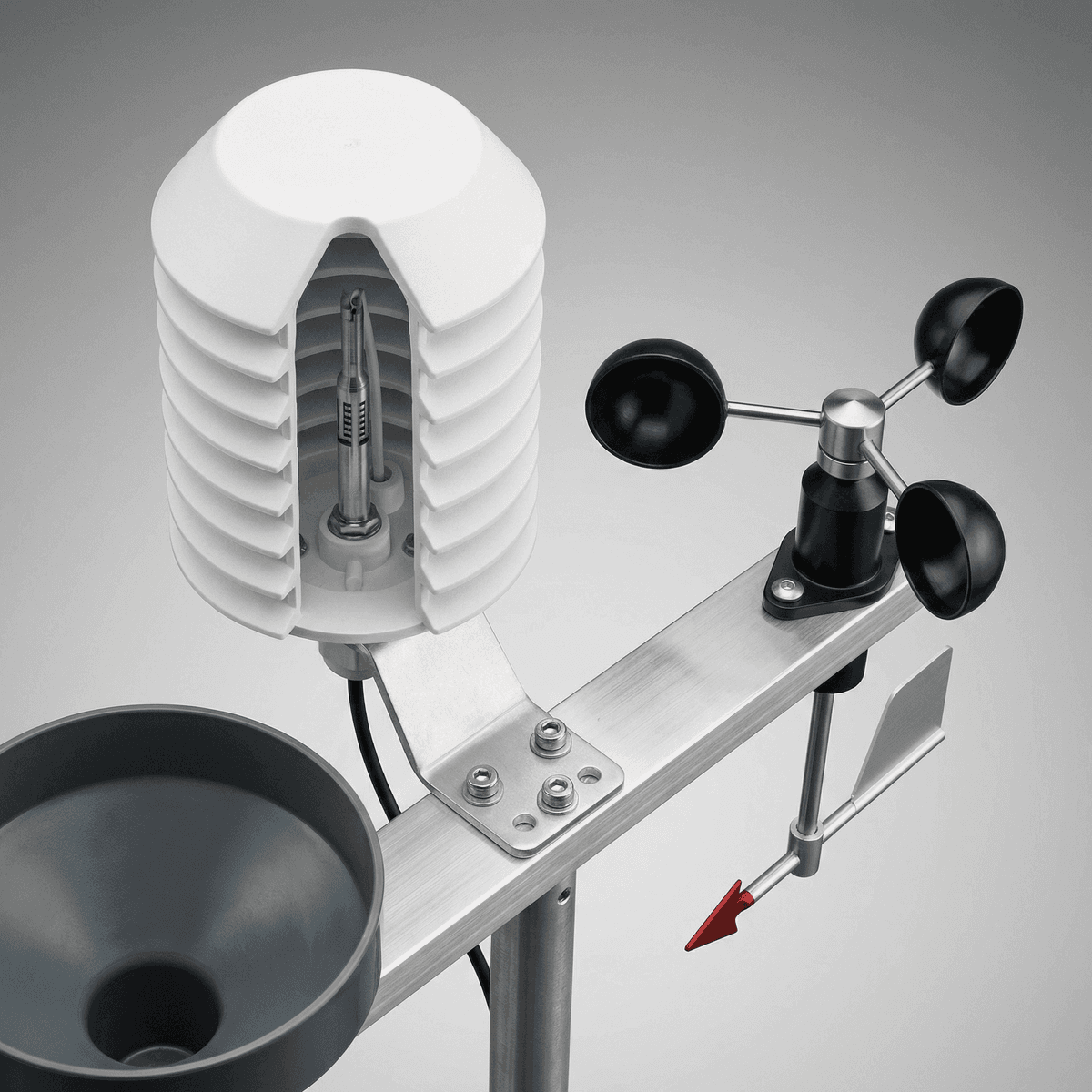
A practical orchard or vineyard irrigation platform usually combines 1 weather station, 4-12 soil sensing points, 1-2 gateways, and multiple valve or pump controllers to manage 10 ha to 50 ha blocks with 10-minute data intervals.
A complete architecture has four layers: sensing, communications, control, and analytics. The sensing layer includes soil moisture and temperature probes at root-zone depth, weather stations measuring 7 to 10 parameters, flow meters, pressure transducers, tank level sensors, and optional water-quality instruments. For orchards and vineyards, sensor depth is commonly 20 cm, 40 cm, and 60 cm depending on crop age and soil profile.
The communications layer often uses LoRaWAN for low-power field nodes over 2 km to 10 km line-of-sight coverage, while 4G LTE or Ethernet backhauls data to the cloud. LoRaWAN reduces trenching and cable failure risk, especially where rows extend 300 m to 800 m from the pump house. In dense canopy or hilly sites, gateway placement and antenna height matter; a 6 m to 12 m mast often improves packet reliability.
The control layer links cloud logic to local PLCs, RTUs, or irrigation controllers. This is where platform integration becomes operational. If soil moisture falls below a threshold, such as 18% volumetric water content in one block, and no rainfall above 3 mm is forecast or detected, the controller can open the assigned valve group and start the pump if line pressure is within the acceptable band. If pressure drops 15% below baseline, the system can stop the cycle and issue an alarm for leak inspection.
Core data points for irrigation decisions
A useful control logic stack for orchards and vineyards usually combines at least 6 data types and 3 decision layers rather than relying on one moisture threshold.
The first layer is agronomic demand. This uses evapotranspiration, solar radiation, temperature, humidity, wind, and crop coefficient. The second layer is root-zone verification from soil moisture and temperature. The third layer is hydraulic confirmation from flow and pressure. Without the third layer, the system may report irrigation as complete even when a clogged filter or failed solenoid prevented water delivery.
According to NREL (2024), remote monitoring and controls improve visibility of distributed energy assets, and the same principle applies to solar-powered irrigation sites where pump status and battery state-of-charge affect water delivery. According to IRENA (2022), digitalization supports renewable-powered agriculture by improving asset utilization and reducing operating uncertainty. These findings matter when irrigation pumps are supplied by 20 kW to 500 kW solar PV systems in off-grid or weak-grid farms.
Comparison of control approaches
Structured comparison helps procurement teams decide whether to upgrade from timer irrigation to integrated platform control.
| Control approach | Typical inputs | Response interval | Water efficiency impact | Fault visibility | Best use case |
|---|---|---|---|---|---|
| Fixed timer control | Time only | 1-7 days manual adjustment | Baseline | Low | Small uniform blocks under 5 ha |
| Soil-threshold control | Soil moisture only | 10-60 minutes | 10-20% savings | Medium | Stable soils with simple hydraulics |
| Weather + soil control | ET, rainfall, soil moisture | 10-30 minutes | 15-30% savings | Medium | Orchards and vineyards with variable microclimate |
| Integrated platform control | ET, soil, flow, pressure, valve, pump | 1-10 minutes local, 10-minute cloud | 15-35% savings | High | Multi-zone sites from 10 ha to 50 ha |
The table shows why integrated platforms are preferred in commercial fruit operations. The water-saving range is not only a software result; it depends on correct zoning, calibrated probes, and stable hydraulics. A platform with poor field execution will not deliver the expected 15-35% reduction.
Optimization strategies for orchards and vineyards
Orchard and vineyard irrigation optimization usually starts with zoning, then adds ET-based scheduling, pressure verification, and exception alarms to keep water application aligned with root demand within each 2-5 ha block.
The first optimization step is zoning by agronomic and hydraulic similarity. A common mistake is grouping 8 ha to 12 ha under one valve because installation is simpler. In practice, a south-facing slope with lighter soil may need 20-30% different runtime than a lower clay section. Splitting these into 2 to 4 zones improves control precision and pressure balance.
The second step is sensor placement. One probe in a representative location is rarely enough for perennial crops. For a 20 ha orchard, 4 to 6 soil monitoring points are often the minimum practical level, while 30 ha to 40 ha projects may need 8 to 10 points. The goal is to capture variability from soil texture, elevation, and irrigation uniformity. In vineyards, row orientation and canopy exposure can change evapotranspiration enough to justify separate monitoring.
The third step is irrigation logic. Good logic combines forecast, ET, and measured depletion. For example, if daily ET reaches 5 mm, root-zone depletion exceeds the allowed threshold, and no rainfall above 2 mm is expected within 12 hours, the platform can trigger a night irrigation cycle to reduce evaporative losses. If wind speed exceeds a set limit during sprinkler use, the system can delay the event to protect distribution uniformity.
The fourth step is alarm design. Alarm overload reduces action quality, so thresholds should be limited to operationally meaningful events. Typical alarms include low pressure below 1.8 bar, overpressure above 3.5 bar, flow deviation greater than 15%, communication loss longer than 30 minutes, battery low voltage in solar nodes, and sensor drift requiring recalibration. These alarms should route by role: field technician, irrigation manager, and operations supervisor.
According to the U.S. EPA WaterSense program, pressure management and leak control are central to irrigation efficiency. According to FAO irrigation practice references, deficit and precision irrigation can improve water productivity when scheduling follows crop stage and soil conditions. For fruit crops, the timing of stress is critical; a 2-day error near flowering, fruit set, or berry sizing can affect both yield and quality.
SOLAR TODO typically recommends a platform design where weather, soil, and hydraulic data are visible on one dashboard with role-based access. That matters for B2B teams because agronomy staff, maintenance staff, and procurement staff need different views of the same 10-minute dataset.
Use cases, ROI, and operating outcomes
For orchards and vineyards above 10 ha, integrated irrigation control typically delivers the strongest ROI when water cost, pump energy, labor, and crop quality risks are measured together over 3 to 7 years.
Sample deployment scenario (illustrative): a 40 ha orchard uses 240,000 m3 of irrigation water per season and operates 2 pumps rated at 22 kW each. If integrated control reduces water use by 20%, the site saves 48,000 m3 per season. If pump energy falls 15% and annual irrigation electricity cost is $24,000, energy savings add about $3,600 per year before considering labor and yield effects.
Sample deployment scenario (illustrative): a 30 ha vineyard with 6 irrigation zones and 8 sensing points currently relies on manual valve scheduling and twice-weekly field checks. Moving to 10-minute monitoring and automated alarms may cut inspection labor by 4 to 8 hours per week during peak season. If one blocked submain is detected within 30 minutes instead of after 2 days, the avoided quality loss may exceed the monitoring subscription cost.
EPC Investment Analysis and Pricing Structure
EPC turnkey delivery for smart irrigation platforms typically includes design, procurement, controller programming, communications setup, installation supervision, commissioning, and operator training across 10 ha to 50 ha agricultural blocks.
For procurement teams, the pricing structure should be separated into three commercial levels:
- FOB Supply: hardware only, typically including sensors, gateways, controllers, power kits, and cloud license activation. Buyer manages freight, customs, installation, and commissioning.
- CIF Delivered: hardware plus international freight and insurance to the destination port. Buyer still manages local installation, civil work, and commissioning.
- EPC Turnkey: full project delivery including engineering review, bill of materials, control logic setup, installation guidance or site execution scope, testing, training, and handover documents.
Typical volume pricing guidance for repeat procurement is:
- 50+ units or equivalent node volume: 5% discount
- 100+ units or equivalent node volume: 10% discount
- 250+ units or equivalent node volume: 15% discount
Payment terms commonly follow:
- 30% T/T deposit + 70% against B/L
- 100% L/C at sight for qualified transactions
Financing is available for large projects above $1,000K, subject to project review, country risk, and payment security structure. For quotation support, EPC scope review, or financing discussion, contact [email protected].
ROI depends on crop value and utility cost, but many orchard and vineyard projects target payback in 2 to 5 irrigation seasons when water savings reach 15-25%, labor savings remove 150-400 hours per year, and quality losses from missed events decline. Warranty terms vary by component, but buyers should ask for separate coverage on sensors, gateways, controllers, power systems, and cloud service periods.
Platform selection and procurement checklist
The best irrigation control platform for orchards and vineyards is the one that supports 10-minute data, open integration, hydraulic feedback, and serviceable field hardware rather than the one with the largest feature list.
Procurement teams should check five technical areas before comparing price. First, confirm communications range and topology. A site with 35 ha, dense canopy, and rolling terrain may need 2 gateways rather than 1. Second, confirm the control architecture: cloud-only control may be risky if cellular service drops, while local fallback logic can keep irrigation running safely.
Third, review interoperability. Platforms that support API export, Modbus, MQTT, or ISO 11783-aligned data handling are easier to connect with existing farm management systems. Fourth, verify hardware protection. Field devices should meet IP67 or IP68 depending on exposure, and enclosures should tolerate UV, dust, and washdown conditions. Fifth, review serviceability: battery replacement interval, calibration procedure, spare parts lead time, and firmware update method all affect total cost of ownership.
The IEEE states in IEEE 1547-2018 that interoperability and communications are key requirements for distributed systems. While that standard addresses energy resources, the principle is useful for smart irrigation projects where pumps, PV systems, and controllers share data. IEC 62443 guidance is also relevant because remote irrigation control is a cyber-physical system; role-based access, password policy, and event logging should not be optional.
SOLAR TODO supports buyers that need one supplier for sensing, communications, and control scope, especially where projects also include solar power, storage, or remote infrastructure. For multi-site operators, standardizing one platform across 3 to 20 farms can simplify training, spare parts, and reporting.
FAQ
A concise irrigation control FAQ should answer sizing, cost, installation, maintenance, communications, and ROI questions in 40-80 words so procurement teams can compare platforms quickly.
Q: What is irrigation control in a Smart Agriculture Monitoring System? A: Irrigation control is the use of sensors, communications, and controllers to start, stop, or adjust irrigation based on real field conditions. In orchards and vineyards, the platform usually combines soil moisture, weather, flow, pressure, and valve status data at 10-minute intervals to reduce overwatering and improve scheduling accuracy.
Q: How does platform integration improve orchard and vineyard irrigation? A: Platform integration improves irrigation by combining agronomic data and hydraulic feedback in one control loop. Instead of checking separate apps for weather, soil, and pump status, managers can use one dashboard and one alarm system. This often reduces response time from 24 hours to less than 30 minutes for leaks, clogs, or missed cycles.
Q: What sensors are essential for a commercial irrigation control project? A: Most commercial projects need at least soil moisture probes, a weather station, flow meters, pressure sensors, and valve or pump status inputs. For 10 ha to 40 ha perennial crop sites, 4 to 10 sensing points are common. Optional sensors include water quality, tank level, and solar power monitoring where pumping depends on PV output.
Q: How many monitoring points are needed for orchards and vineyards? A: A practical starting point is 1 sensing point per 3-5 ha, adjusted for slope, soil variability, and irrigation zoning. A uniform 10 ha block may work with 3 points, while a 30 ha vineyard with elevation changes and different soil textures may need 8 or more. The goal is to capture variability, not just average conditions.
Q: What communication method is best: LoRaWAN or 4G LTE? A: LoRaWAN is usually best for low-power field sensors because it can cover 2-10 km with low energy use and limited trenching. 4G LTE is better for backhaul from the gateway to the cloud or for isolated high-data devices. Many commercial systems use both: LoRaWAN in the field and 4G LTE for remote access.
Q: How much water can an integrated irrigation platform save? A: Water savings depend on baseline practice, crop, and zoning quality, but 15-35% is a realistic planning range when moving from timer-based irrigation to sensor-based control. Savings are strongest where current scheduling is manual, rainfall is variable, and pressure or flow faults often go unnoticed for more than 1 day.
Q: What is the typical payback period for orchard and vineyard irrigation automation? A: Many projects target payback in 2 to 5 irrigation seasons. The result depends on water price, pump energy, labor cost, and crop value. Sites with 20-25% water savings, 10-15% lower pump energy, and fewer quality losses from missed irrigation events usually recover investment faster than low-cost water sites.
Q: What does EPC turnkey delivery include for irrigation control systems? A: EPC turnkey delivery usually includes engineering review, bill of materials, controller logic, communications setup, installation scope, commissioning, testing, and operator training. Compared with FOB Supply or CIF Delivered, EPC gives one party clearer responsibility for system performance. This is useful for 20 ha to 50 ha projects with multiple zones, pumps, and remote nodes.
Q: What pricing and payment terms are common for B2B procurement? A: Commercial offers are commonly structured as FOB Supply, CIF Delivered, or EPC Turnkey. Volume discounts often follow 5% at 50+ units, 10% at 100+, and 15% at 250+. Payment terms are usually 30% T/T plus 70% against B/L, or 100% L/C at sight. Financing may be available for projects above $1,000K.
Q: What maintenance is required after installation? A: Maintenance usually includes seasonal sensor inspection, probe verification, filter and pressure checks, battery review for solar nodes, and firmware updates. A practical schedule is monthly visual inspection during irrigation season and calibration review every 6 to 12 months. Flow and pressure alarms should also be tested before peak demand periods.
Q: How important are cybersecurity and access control in irrigation platforms? A: Cybersecurity is important because irrigation control can directly affect crop health, water use, and pump operation. Platforms should support user roles, password policy, event logs, and secure remote access. IEC 62443 principles are useful for evaluating whether a system protects controllers, gateways, and cloud accounts from unauthorized changes.
Q: Why choose SOLAR TODO for integrated smart agriculture projects? A: SOLAR TODO can support one procurement package covering monitoring, communications, control, and related solar power scope where required. That reduces interface risk between vendors and simplifies responsibility during commissioning. For buyers managing orchards, vineyards, and remote pump sites together, one integrated supplier can shorten deployment and support standardization across multiple farms.
References
- FAO (2023): Irrigation and water management guidance widely used for agricultural water productivity and scheduling principles.
- IEA (2023): Energy Technology Perspectives and digitalization analysis describing how connected control systems improve operational efficiency.
- IRENA (2022): Digitalization for the energy transition and renewable-powered infrastructure management, relevant to solar irrigation assets.
- NREL (2024): Renewable system monitoring and performance analysis resources applicable to remote pump and solar-powered agricultural systems.
- IEEE 1547-2018 (2018): Standard for interconnection and interoperability of distributed energy resources and communications interfaces.
- IEC 62443 (2023): Industrial communication networks and IT security framework relevant to remote irrigation control cybersecurity.
- ISO 11783 (2017): Agricultural machinery and data communication framework supporting interoperability concepts in farm equipment systems.
- U.S. EPA WaterSense (2024): Irrigation efficiency guidance covering pressure management, leak reduction, and control best practice.
Conclusion
Integrated irrigation control platforms for orchards and vineyards can reduce water use by 15-35%, improve fault response to 10-minute intervals, and shorten payback to 2-5 seasons when zoning and hydraulics are designed correctly.
For commercial farms above 10 ha, SOLAR TODO recommends selecting a platform with soil, weather, flow, pressure, and valve data on one system, then comparing FOB, CIF, and EPC options against service scope, interoperability, and long-term maintenance cost.
About SOLARTODO
SOLARTODO is a global integrated solution provider specializing in solar power generation systems, energy-storage products, smart street-lighting and solar street-lighting, intelligent security & IoT linkage systems, power transmission towers, telecom communication towers, and smart-agriculture solutions for worldwide B2B customers.
About the Author

SOLAR TODO
Solar Energy & Infrastructure Expert Team
SOLAR TODO is a professional supplier of solar energy, energy storage, smart lighting, smart agriculture, security systems, communication towers, and power tower equipment.
Our technical team has over 15 years of experience in renewable energy and infrastructure, providing high-quality products and solutions to B2B customers worldwide.
Expertise: PV system design, energy storage optimization, smart lighting integration, smart agriculture monitoring, security system integration, communication and power tower supply.
Cite This Article
SOLAR TODO. (2026). irrigation control in Smart Agriculture Monitoring…. SOLAR TODO. Retrieved from https://solartodo.com/knowledge/irrigation-control-in-smart-agriculture-monitoring-systems-platform-integration-optimization-for-orchards-and-vineyards
@article{solartodo_irrigation_control_in_smart_agriculture_monitoring_systems_platform_integration_optimization_for_orchards_and_vineyards,
  title = {irrigation control in Smart Agriculture Monitoring…},
  author = {SOLAR TODO},
  journal = {SOLAR TODO Knowledge Base},
  year = {2026},
  url = {https://solartodo.com/knowledge/irrigation-control-in-smart-agriculture-monitoring-systems-platform-integration-optimization-for-orchards-and-vineyards},
  note = {Accessed: 2026-05-06}
}
Published: May 6, 2026 | Available at: https://solartodo.com/knowledge/irrigation-control-in-smart-agriculture-monitoring-systems-platform-integration-optimization-for-orchards-and-vineyards
Subscribe to Our Newsletter
Get the latest solar energy news and insights delivered to your inbox.
View All Articles