fuel savings vs Alternatives: Telecom Tower Power…

SOLARTODO Editorial Team
Solar Energy & Infrastructure Expert Team
Watch the video
TL;DR
For emergency telecom sites, diesel-only backup is rarely the lowest lifetime-cost option. If outages last 24-72 hours or refueling is uncertain, a solar-battery-diesel hybrid usually delivers the best balance, cutting fuel use by 50-90%, lowering maintenance visits, and improving uptime. Match the power block to actual site load, battery autonomy, and tower type before comparing FOB, CIF, or EPC pricing.
Emergency telecom sites can cut fuel use by 50-90% by shifting from diesel-only power to hybrid solar-battery systems, while 40 m monopoles and 12 m shared poles support compact deployment. For outages lasting 24-72 hours, correct sizing reduces refueling trips, OPEX, and restart risk.
Summary
Emergency telecom sites can cut fuel use by 50-90% by shifting from diesel-only power to hybrid solar-battery systems, while 40 m monopoles and 12 m shared poles support compact deployment. For outages lasting 24-72 hours, correct sizing reduces refueling trips, OPEX, and restart risk.
Key Takeaways
- Compare diesel-only, battery-only, and solar-battery-diesel hybrid options against a 24-72 hour outage profile before selecting emergency telecom tower power architecture.
- Reduce fuel consumption by 50-90% when solar PV and lithium storage carry daytime load and diesel runs only as backup for 2-8 hours per day.
- Size battery autonomy for at least 4-12 hours of critical telecom load, with deeper reserves for off-grid or disaster-prone sites above 24 hours.
- Match tower type to site constraints: use a 40 m monopole for 4-carrier, 12-antenna industrial coverage or a 12 m shared pole for 10 kV plus 3 antennas.
- Calculate delivered cost using three tiers—FOB Supply, CIF Delivered, and EPC Turnkey—and apply volume discounts of 5% at 50+, 10% at 100+, and 15% at 250+ units.
- Plan ROI from avoided diesel burn, fewer maintenance visits, and lower truck rolls; hybrid systems often shorten payback to about 3-6 years versus diesel-only operation.
- Verify compliance with TIA-222-H, IEC 60826, IEEE 1547, and UL 1973 or IEC 62619 when batteries and telecom power interfaces are included.
- Use remote monitoring for fuel level, battery SOC, rectifier alarms, and generator runtime to cut emergency service visits by 20-40% on dispersed tower fleets.
Emergency Site Power Selection Basics
Emergency telecom tower power selection should target 24-72 hours of uptime, cut diesel runtime by 50-90%, and keep critical loads online even when refueling access is delayed by 1-3 days.
For emergency sites, the main question is not whether diesel works. It does. The real question is how much fuel, maintenance, and outage risk you accept over a 3-10 year operating period. A diesel-only site is simple at day 1, but it usually carries the highest fuel logistics burden, the highest truck-roll frequency, and the highest exposure to delayed refueling during storms, floods, or grid failures.
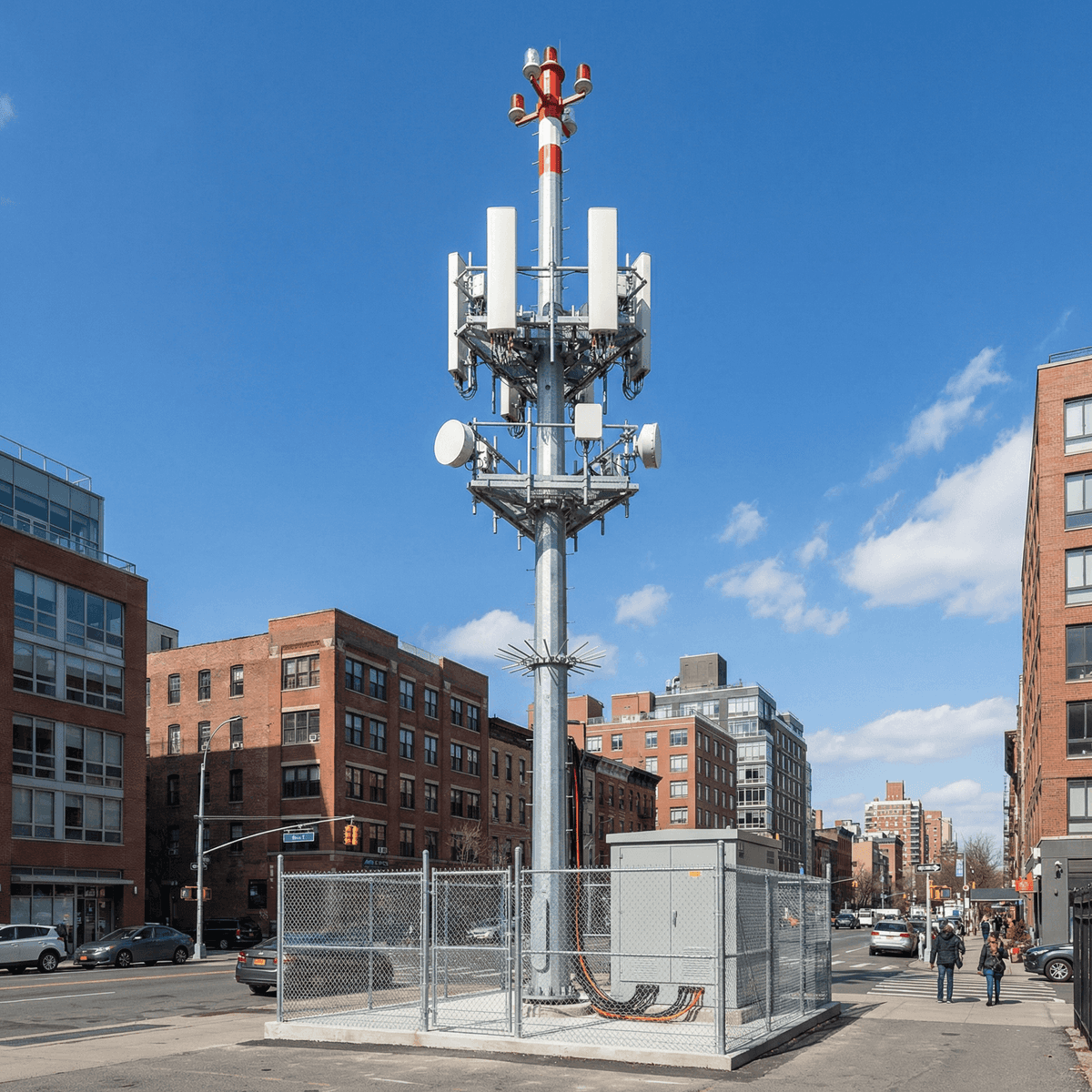
A telecom emergency power system usually includes a tower structure, DC power system, rectifier, battery bank, ATS or controller, optional solar PV, and a backup generator. The tower may be a 40 m monopole for industrial coverage, a 15 m suburban monopole, or a 12 m distribution telecom shared pole if the corridor already includes 10 kV distribution assets. The power architecture must match the radio load, autonomy target, wind regime, and site access conditions.
According to the International Energy Agency, "energy security and system resilience are becoming more important as power systems electrify and digitalize." That matters for telecom because a 2-6 kW critical load can become a business continuity issue within minutes if rectifier or generator backup is undersized. According to IRENA (2024), solar and storage continue to improve project economics where fuel transport costs are high, which directly affects remote and emergency telecom sites.
SOLAR TODO typically sees buyers compare four practical options for emergency sites:
- Diesel generator only
- Battery backup with grid recharge
- Solar plus battery without generator for short-duration critical loads
- Solar plus battery plus diesel hybrid for high-resilience sites
The correct selection depends on five numbers: average load in kW, outage duration in hours, solar resource, fuel delivery cost per liter, and service access frequency per month. If one of those numbers is wrong, the site may be cheap on paper and expensive in operation.
Fuel Savings vs Alternatives
Diesel-only sites often burn 0.25-0.35 liters per kWh at partial load, while hybrid solar-battery systems can cut generator runtime by 50-90% and sharply reduce refueling trips.
Fuel savings should be measured against delivered energy, not nameplate generator size. A 10 kVA generator serving a 3 kW telecom load rarely operates at its best specific fuel consumption point. At low loading, fuel burn per kWh rises, wet stacking risk increases, and maintenance intervals become less efficient. That is why many emergency sites with 2-5 kW loads spend more on logistics than on the generator itself over 5 years.
Sample deployment scenario (illustrative): a site with a 3 kW average critical load needs 72 kWh per day. If supplied by diesel at 0.30 L/kWh, daily fuel use is about 21.6 liters. Over a 30-day emergency-heavy month, that becomes 648 liters. If a solar-battery hybrid offsets 60% of energy and the generator supplies only 40%, fuel drops to about 259 liters, saving 389 liters in that month.
According to NREL (2024), hybridization improves dispatch efficiency when storage reduces generator cycling and allows the generator to run closer to efficient loading bands. According to IEA (2023), backup power resilience is increasingly tied to digital monitoring and distributed flexibility, not only installed genset capacity. In practical terms, fuel savings come from fewer runtime hours and better runtime quality.
Typical option comparison
The table below summarizes the trade-offs that matter most for procurement managers and EPC teams.
| Power option | Typical autonomy | Fuel use | Capex level | Opex level | Best use case |
|---|---|---|---|---|---|
| Diesel only | As long as fuel lasts | High | Low | High | Short-term emergency with easy refueling |
| Battery only | 4-12 hours typical | None on site | Medium | Low | Urban grid sites with short outages |
| Solar + battery | 6-24 hours depending on PV and load | None or very low | Medium-High | Low | Sunny sites with moderate critical load |
| Solar + battery + diesel hybrid | 24-72+ hours with fuel reserve | Medium-Low | High | Medium-Low | Disaster-prone or remote emergency sites |
The diesel-only option usually wins on first cost but loses on lifetime fuel spend. Battery-only works well where outages are under 4-8 hours and recharge is reliable. Solar plus battery works when daily irradiance supports at least part of the load profile. The hybrid option is usually the best balance for emergency sites that need 24-72 hours of resilience without daily generator operation.
SOLAR TODO recommends evaluating fuel savings in three layers:
- Direct fuel burn reduction in liters per day
- Indirect savings from fewer maintenance visits every 250-500 runtime hours
- Risk reduction from fewer emergency refueling trips during blocked-road conditions
Tower and Power Configuration Guide
Emergency telecom sites usually pair a 2-6 kW critical load with either a 15 m or 40 m monopole, while joint-use corridors may use a 12 m shared pole carrying 10 kV distribution plus 3 telecom antennas.
The tower structure affects power selection more than many buyers expect. A 40 m monopole can support 4-carrier colocation, 12 antennas, and 2 microwave dishes under a 50 m/s design wind condition. That means the radio load, transmission load, and auxiliary load can be materially higher than on a 15 m suburban monopole carrying 3 antennas. More equipment means more DC demand, more battery capacity, and usually a larger backup source.
The 40 m Monopole Industrial Zone Coverage Slip-Joint uses equal-length tapered steel tube sections, a slip-joint connection, 3 platforms, and a concrete stub foundation with about a 3 m footprint. For emergency industrial coverage, that compact footprint matters where land is constrained but uptime requirements are strict. A 30-year design life also aligns better with hybrid power investments than a short-cycle temporary structure.
The 12 m Distribution Telecom Shared Pole serves a different case. It is a hot-dip galvanized steel round joint-use pole for 10 kV distribution and 1 antenna platform supporting up to 3 telecom antennas under a 40 m/s design wind condition. For roadside or peri-urban emergency restoration, this can reduce corridor occupation by about 30-50% versus separate power and telecom structures.
How to size the emergency power block
A practical sizing sequence is simple:
- Define critical telecom load in kW, usually 2-6 kW for a single emergency macro or relay site.
- Set autonomy target, usually 8, 24, 48, or 72 hours.
- Separate essential and non-essential loads, such as cooling, lighting, and auxiliary devices.
- Size battery usable energy with depth-of-discharge and temperature derating included.
- Add solar PV if daytime fuel displacement is possible.
- Size generator for recharge plus live load, not only live load.
Sample deployment scenario (illustrative): a 4 kW critical load with 12 hours battery autonomy needs 48 kWh usable storage. If the battery system is limited to 80% usable depth of discharge, installed nominal storage rises to about 60 kWh. If the site also wants generator recharge within 6 hours while supporting 4 kW live load, generator sizing must cover both recharge power and active telecom demand.
The International Energy Agency states, "Resilience is not only about supply availability but also about the ability to recover quickly from disruptions." For telecom towers, that means restart logic, battery reserve margins, and fuel logistics should be designed together, not procured as separate line items.
EPC Investment Analysis and Pricing Structure
For emergency telecom sites, EPC turnkey delivery usually bundles structure, foundation, power system, controls, and commissioning into one scope, while hybrid systems often reach 3-6 year payback from fuel and maintenance savings.
A B2B buyer should separate price from scope before comparing quotations. A low equipment price may exclude batteries, ATS panels, DC distribution, remote monitoring, civil works, or commissioning. That creates change orders later. SOLAR TODO therefore advises buyers to request a scope matrix with mechanical, electrical, logistics, and commissioning boundaries clearly listed.
What EPC turnkey delivery includes
A typical EPC turnkey package for an emergency telecom tower site may include:
- Tower supply: 40 m monopole, 15 m monopole, or 12 m shared pole
- Foundation design inputs and anchor or stub details
- Rectifier system, DC distribution, and battery bank
- Hybrid controller, ATS, generator interface, and alarms
- Solar PV array, mounting structure, and combiner if specified
- Cable routing, earthing, lightning protection, and labeling
- Installation supervision, testing, and commissioning
- Remote monitoring setup for battery SOC, generator runtime, and site alarms
Three-tier pricing model
Use this commercial structure when comparing offers:
| Pricing tier | What it includes | Commercial use |
|---|---|---|
| FOB Supply | Ex-works or port supply of tower, power equipment, and accessories | Best for buyers with local freight and installation teams |
| CIF Delivered | FOB scope plus ocean freight and insurance to destination port | Best for importers managing inland transport and site works |
| EPC Turnkey | Delivered equipment plus civil, erection, electrical integration, testing, and commissioning | Best for multi-site rollout with single-point responsibility |
Volume pricing guidance for fleet procurement:
- 50+ units: 5% discount
- 100+ units: 10% discount
- 250+ units: 15% discount
Payment terms commonly used:
- 30% T/T deposit + 70% against B/L
- 100% L/C at sight
Financing is available for large projects above $1,000K, subject to project scope, buyer profile, and country risk review. For quotation support, buyers can contact [email protected] or discuss project requirements with SOLAR TODO through the standard inquiry process.
ROI logic for emergency sites
ROI should include more than fuel. Compare annual diesel cost, preventive maintenance, emergency callouts, battery replacement cycle, and outage penalty cost. In many remote sites, delivered fuel cost is 20-50% higher than pump price once transport and security are included. That is why a hybrid system with higher capex can still show faster payback than expected.
Sample deployment scenario (illustrative): if a diesel-only site burns 6,000 liters per year and a hybrid configuration cuts usage by 60%, annual savings equal 3,600 liters. At a delivered fuel cost of $1.20 per liter, fuel savings alone are $4,320 per year. Add reduced maintenance and truck rolls, and a hybrid premium may pay back in about 3-6 years depending on battery size and solar fraction.
Selection Guide by Emergency Site Type
Sites with blocked access, 48-72 hour outage risk, or fuel theft exposure usually justify solar-battery-diesel hybrids, while urban sites with outages under 8 hours may only need battery backup.
Procurement teams should classify sites before issuing RFQs. A single standard design rarely fits all emergency scenarios. The correct approach is to group sites by outage duration, access difficulty, load criticality, and available solar resource.
Recommended decision matrix
| Site condition | Outage profile | Recommended solution | Why |
|---|---|---|---|
| Urban rooftop or roadside | 1-8 hours | Battery backup | Lowest fuel dependency and simple recharge |
| Suburban macro site | 4-24 hours | Battery + diesel | Lower capex than full hybrid with strong resilience |
| Remote sunny site | 8-48 hours | Solar + battery | Good fuel displacement where logistics are expensive |
| Disaster-prone industrial site | 24-72+ hours | Solar + battery + diesel hybrid | Best resilience and lower refueling risk |
| Joint-use utility corridor | 4-24 hours | 12 m shared pole + battery/diesel | Combines 10 kV and telecom on one structure |
For industrial campuses, logistics parks, and refineries, the 40 m monopole is often the right structural platform because colocation and microwave backhaul loads can grow over 2-5 years. For suburban fill-in coverage, a 15 m monopole may be enough and can reduce erection time by about 20-35% compared with many low-height lattice alternatives. For rights-of-way with electrical infrastructure already present, the 12 m shared pole can simplify corridor use.
According to BloombergNEF (2024), battery economics continue to improve for distributed applications, while IRENA (2024) reports that solar plus storage is increasingly competitive where diesel generation has high operating costs. For emergency telecom sites, the practical conclusion is simple: if fuel delivery is uncertain or expensive, hybridization usually becomes the lower-risk choice.
FAQ
Emergency telecom sites usually achieve the best balance with 24-72 hours of autonomy, 4-12 hours of battery reserve, and hybrid diesel reduction of 50-90% when solar resource and logistics support it.
Q: What is the best power solution for an emergency telecom tower site? A: The best solution depends on outage duration, site access, and load size. For sites facing 24-72 hour disruptions, a solar-battery-diesel hybrid is often the most practical choice because it reduces fuel use by 50-90% while keeping generator backup available for extended events.
Q: How much fuel can a hybrid telecom power system save compared with diesel-only backup? A: A hybrid system can often cut fuel use by 50-90%, depending on solar contribution, battery size, and generator dispatch logic. Savings are highest where daytime solar covers a large share of a 2-6 kW telecom load and where batteries reduce low-load generator runtime.
Q: When is diesel-only still the right choice for emergency sites? A: Diesel-only still fits sites with short deployment windows, very low capex budgets, or reliable refueling access within 12-24 hours. It is usually less attractive for remote or disaster-prone locations because fuel logistics, maintenance frequency, and outage risk rise over time.
Q: How much battery autonomy should an emergency telecom site have? A: Many sites start with 4-12 hours of battery autonomy for critical DC loads, but high-risk sites may require 24 hours or more. The right value depends on load profile, temperature derating, recharge strategy, and whether the battery is bridging to generator start or carrying a major share of daily energy.
Q: What tower types are relevant for emergency telecom power planning? A: Common options include a 15 m monopole for suburban coverage, a 40 m monopole for industrial and colocated loads, and a 12 m distribution telecom shared pole for 10 kV plus telecom corridors. Tower height and antenna count directly affect radio load, battery size, and backup generator requirements.
Q: How should buyers compare FOB, CIF, and EPC pricing for tower power projects? A: FOB covers supplied equipment only, CIF adds freight and insurance to port, and EPC Turnkey includes installation, integration, testing, and commissioning. For multi-site emergency programs, EPC often gives better cost control because scope gaps in civil and electrical work are reduced.
Q: What are the standard payment terms for emergency telecom tower projects? A: Common terms are 30% T/T deposit plus 70% against B/L, or 100% L/C at sight. For larger programs above $1,000K, financing may be available subject to project review, technical scope, and buyer credit profile.
Q: What maintenance savings come from reducing generator runtime? A: Lower runtime reduces oil changes, filter replacement, and emergency service visits tied to 250-500 hour service intervals. On dispersed fleets, remote monitoring plus hybrid dispatch can cut truck rolls by about 20-40%, which matters when access roads are long or weather-sensitive.
Q: How do I calculate payback for a hybrid emergency telecom site? A: Start with annual liters of diesel saved, then add avoided maintenance, fewer refueling trips, and lower outage risk cost. Many hybrid telecom sites recover the extra capex in about 3-6 years, especially where delivered fuel cost is far above local pump price.
Q: What standards should be checked for telecom tower and power system compliance? A: Tower structures are commonly checked against TIA-222-H or EN 1993-3-1, while line and environmental loading may reference IEC 60826. Power interfaces may require IEEE 1547, and batteries commonly reference UL 1973 or IEC 62619 depending on market and system design.
References
- NREL (2024): PVWatts and distributed energy analysis methods used for solar production and hybrid system evaluation.
- IEA (2023): Energy security and resilience reporting relevant to backup power, distributed flexibility, and critical infrastructure.
- IRENA (2024): Renewable power and storage cost trends showing improved competitiveness versus diesel-based generation.
- IEEE 1547-2018 (2018): Standard for interconnection and interoperability of distributed energy resources with electric power systems.
- IEC 60826 (2017): Design criteria of overhead transmission lines, commonly referenced for environmental loading methodology.
- TIA-222-H (2017): Structural standard for antenna supporting structures and antennas.
- UL 1973 (2022): Safety standard for stationary batteries and auxiliary power applications.
- EN 1993-3-1 (2006): Eurocode requirements for towers, masts, and chimneys, including steel tower structures.
Conclusion
For emergency telecom sites needing 24-72 hours of uptime, hybrid solar-battery-diesel systems usually deliver the best fuel savings, cutting diesel use by 50-90% while reducing truck rolls and restart risk. For buyers comparing 40 m monopoles, 15 m monopoles, or 12 m shared poles, SOLAR TODO recommends selecting structure and power architecture together so lifetime OPEX, not only day-1 capex, drives the decision.
About SOLARTODO
SOLARTODO is a global integrated solution provider specializing in solar power generation systems, energy-storage products, smart street-lighting and solar street-lighting, intelligent security & IoT linkage systems, power transmission towers, telecom communication towers, and smart-agriculture solutions for worldwide B2B customers.
About the Author

SOLARTODO Editorial Team
Solar Energy & Infrastructure Expert Team
SOLAR TODO is a professional supplier of solar energy, energy storage, smart lighting, smart agriculture, security systems, communication towers, and power tower equipment.
Our technical team has over 15 years of experience in renewable energy and infrastructure, providing high-quality products and solutions to B2B customers worldwide.
Expertise: PV system design, energy storage optimization, smart lighting integration, smart agriculture monitoring, security system integration, communication and power tower supply.
Cite This Article
SOLARTODO Editorial Team. (2026). fuel savings vs Alternatives: Telecom Tower Power…. SOLARTODO. Retrieved from https://solartodo.com/knowledge/fuel-savings-vs-alternatives-telecom-tower-power-solutions-selection-guide-for-emergency-sites
@article{solartodo_fuel_savings_vs_alternatives_telecom_tower_power_solutions_selection_guide_for_emergency_sites,
  title = {fuel savings vs Alternatives: Telecom Tower Power…},
  author = {SOLARTODO Editorial Team},
  journal = {SOLARTODO Knowledge Base},
  year = {2026},
  url = {https://solartodo.com/knowledge/fuel-savings-vs-alternatives-telecom-tower-power-solutions-selection-guide-for-emergency-sites},
  note = {Accessed: 2026-10-19}
}
Published: July 12, 2026 | Available at: https://solartodo.com/knowledge/fuel-savings-vs-alternatives-telecom-tower-power-solutions-selection-guide-for-emergency-sites
Subscribe to Our Newsletter
Get the latest solar energy news and insights delivered to your inbox.
View All Articles