Digital Twin and TrafficGPT: Next-Gen intelligent…

Cinn Song
Founder & Chief Solutions Architect
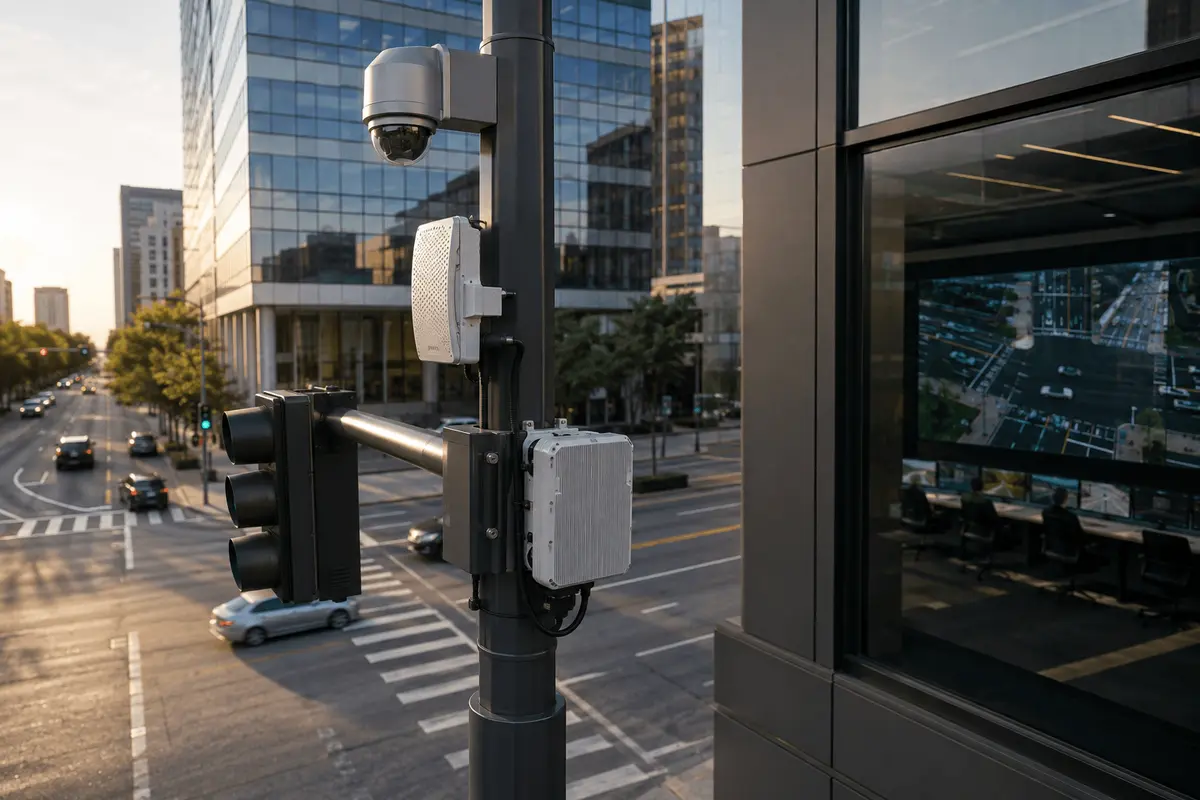
Watch the video
TL;DR
A Digital Twin and TrafficGPT command center helps cities manage intelligent intersections through one live model, 4-8 sensor streams, and AI-assisted recommendations. For 5-20 intersection pilots, buyers should require NTCIP-compatible controllers, NEMA TS 2-2021 cabinets, IP66 equipment, 90 days of baseline data, and EPC pricing that separates FOB, CIF, and turnkey responsibility.
Digital Twin and TrafficGPT command centers connect 4K cameras, radar, V2X, and adaptive signals to cut delay by 10%+ and reduce device silos from 5 systems to 1 intersection platform.
Summary
Digital Twin and TrafficGPT command centers connect 4K cameras, radar, V2X, and adaptive signals to cut delay by 10%+ and reduce device silos from 5 systems to 1 intersection platform.
Key Takeaways
Digital Twin and TrafficGPT programs perform best when 4-8 intersection data streams feed 1 unified command center with verified signal-control interfaces.
- Define 1 intersection operating model before procurement, covering safety, congestion, enforcement, incident response, and maintenance KPIs.
- Connect 4-8 live data sources, including signal controllers, 4K cameras, radar, loop detectors, weather sensors, and V2X roadside units.
- Reduce average delay by 10% or more by using adaptive signal control where traffic demand varies by hour, school schedule, incident, or event.
- Specify NTCIP 1202 v03B and NEMA TS 2-2021 compatibility to keep signal controllers interoperable across 5-10 year upgrade cycles.
- Deploy 1 digital twin per corridor or district before citywide rollout, typically starting with 5-20 intersections and 3 months of baseline data.
- Budget in 3 tiers: FOB Supply, CIF Delivered, and EPC Turnkey, with 5%, 10%, and 15% volume discounts at 50, 100, and 250 units.
- Require cybersecurity, privacy, and data-retention rules from day 1, especially where AI video analytics store events for 7-90 days.
- Validate ROI using annual delay savings, fewer field visits, and 20%-40% lower integration workload versus separate traffic, CCTV, and IoT systems.
Digital Twin and TrafficGPT Command Center Overview
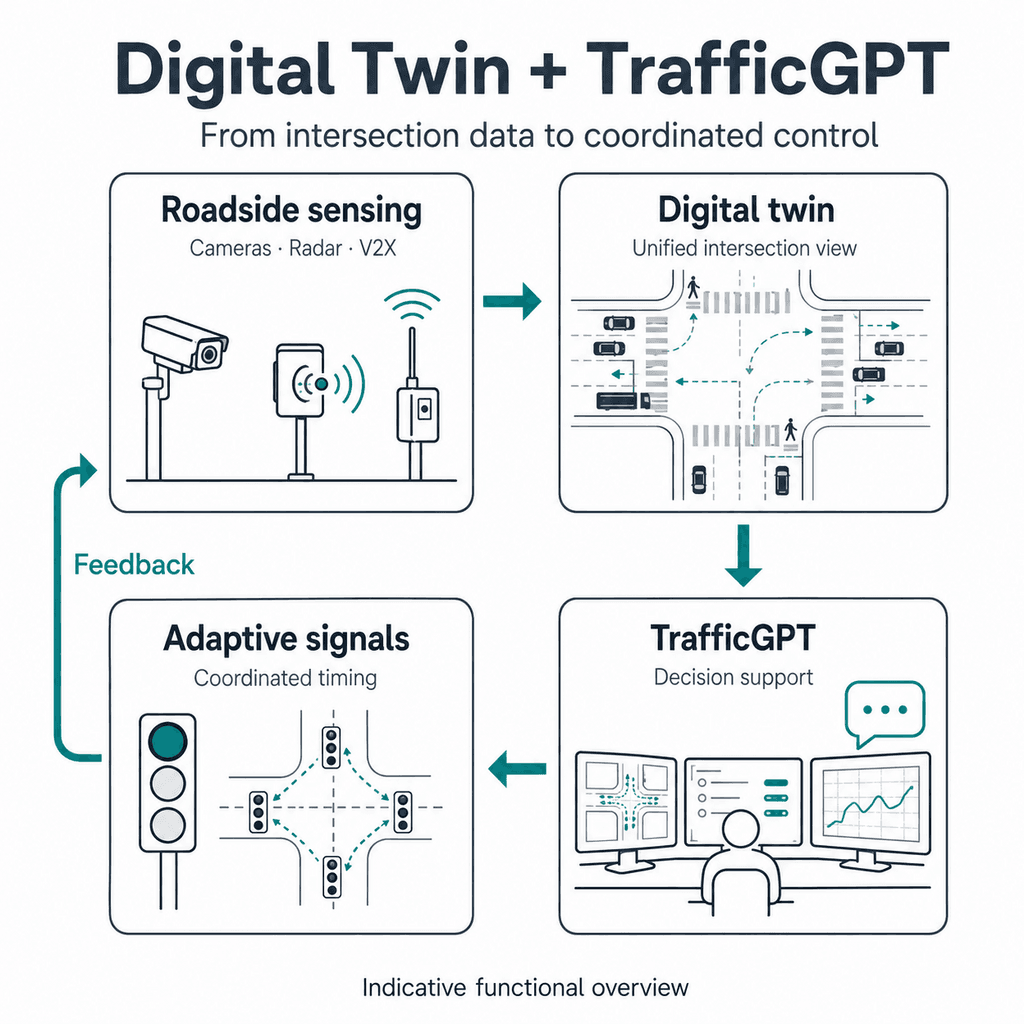
A Digital Twin and TrafficGPT command center gives operators 1 real-time model of 5-20 intersections, using AI to recommend safer timing and response actions.
For B2B decision-makers, the core value is operational consolidation. A conventional intelligent intersection may have separate traffic-signal software, CCTV viewing, incident logs, maintenance tickets, and environmental dashboards. A next-generation command center joins these layers into a live digital twin, then adds a natural-language TrafficGPT assistant that explains conditions, identifies bottlenecks, and recommends actions for engineers and dispatchers.
In SOLARTODO smart traffic projects, the platform is positioned as an offline-quoted infrastructure system, not an online software subscription sold without engineering review. The command center can integrate with smart streetlights, AI cameras, traffic signal controllers, radar, smart traffic signs, solar-powered roadside devices, and city data platforms. SOLARTODO typically supports inquiry, technical configuration, quotation, and project financing for qualified large deployments.
According to FHWA, adaptive signal control technologies improve average performance metrics by 10% or more, with larger gains where previous timing plans are outdated or traffic varies sharply. FHWA states, "Adaptive signal control autonomously adjusts signal timing parameters in real-time," which is the operating principle behind the live control layer.
A digital twin is not only a 3D visualization. It is a synchronized decision model that maps physical assets, sensor feeds, controller status, historical patterns, and predicted flows. TrafficGPT is the operator-facing AI layer that turns those inputs into clear answers: why queue length increased, which phase is failing, what timing plan changed, and whether a field crew or police dispatch is required.
Technical Architecture and Data Flow
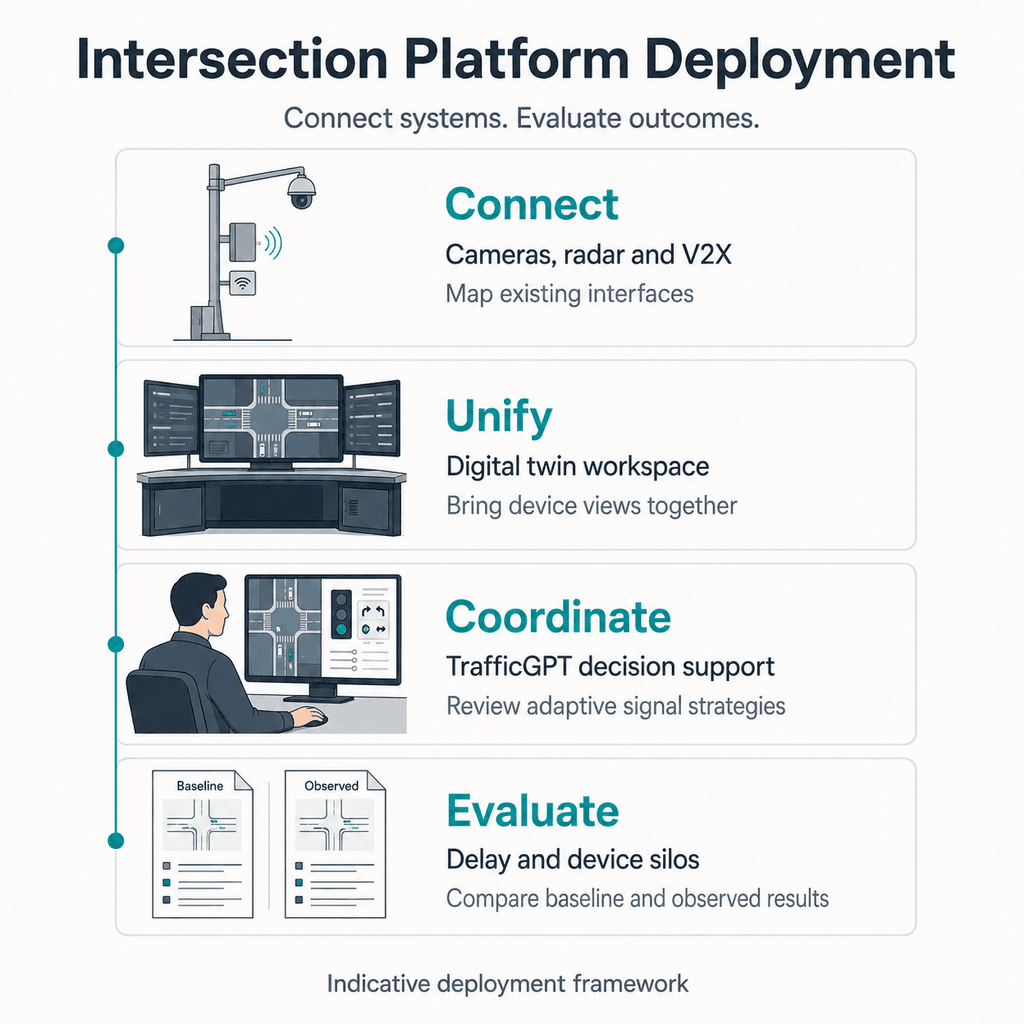
The technical stack combines 1 physical intersection layer, 1 communications layer, 1 digital twin engine, and 1 AI operations layer.
At the field level, a typical intelligent intersection includes signal heads, traffic controllers, pedestrian buttons, 4K AI cameras, millimeter-wave radar, loop detectors, weather sensors, network switches, UPS backup, and optional V2X roadside units. For intersections with solar-supported roadside equipment, battery backup can maintain critical sensing and communications during short grid outages, while grid power remains preferred for signal control.
The communications layer normally uses fiber, 4G/5G, Ethernet, WiFi 6, LoRaWAN, or mixed backhaul. IEEE notes that IEEE 802.11ax, known as WiFi 6, has a theoretical data rate of 9.6 Gbit/s and is designed for dense environments. In practice, command-center designs reserve high-bandwidth links for video, while low-bandwidth telemetry carries controller state, environmental readings, and equipment alarms.
Core Modules
The digital twin engine ingests real-time data every 1-5 seconds for signal state, detector occupancy, queue estimation, and incident alerts. It overlays this with GIS geometry, lane configuration, permitted movements, timing plans, pedestrian phases, bus priority rules, emergency routes, and maintenance status. This creates a shared operational picture for traffic engineers, emergency responders, and infrastructure managers.
TrafficGPT sits above the model as a controlled AI assistant. It should not directly change signal timing without rule-based approvals, audit logs, and role permissions. Instead, it explains, compares, drafts actions, and escalates recommendations. For example, it may report that the northbound left-turn queue exceeded 120 meters for 6 cycles, suggest adding 8 seconds of green time, and show the predicted downstream impact.
Important technical specifications for procurement include:
- Video analytics: 4K camera support, 20x PTZ options, 30 fps streams, and 50 m IR night vision where required.
- Signal interfaces: NTCIP 1202 v03B for actuated traffic signal controller object definitions.
- Cabinet compatibility: NEMA TS 2-2021 traffic controller assemblies with NTCIP requirements.
- Environmental protection: IP66 outdoor enclosures aligned with IEC 60529 ingress protection classifications.
- Network availability: dual backhaul options with 99%+ target uptime for critical corridors.
- Data retention: 7-90 days for events, with shorter retention where privacy rules require minimization.
ISO 37106:2021 says smart city operating models should use technology and data with organizational change to deliver city goals more efficiently. ISO states that smart practices help manage "governance, services, data and systems across the city," which fits the command-center model.
EPC Investment Analysis and Pricing Structure
EPC delivery should define 3 commercial tiers, 50-250 unit volume breaks, and payback from delay reduction plus lower maintenance integration costs.
For municipal agencies, developers, industrial parks, and transport authorities, SOLARTODO structures intelligent intersection projects around Engineering, Procurement, and Construction delivery. EPC turnkey delivery usually includes site survey, intersection design, pole and cabinet configuration, controller integration, communications design, command-center software setup, installation supervision, testing, training, and handover documentation.
The 3-tier pricing model helps procurement teams compare responsibility boundaries:
| Pricing tier | Typical scope | Buyer responsibility | Best fit |
|---|---|---|---|
| FOB Supply | Hardware, software license package, factory test, export packing | Freight, customs, installation, local integration | Experienced EPC contractors buying 20+ intersections |
| CIF Delivered | FOB scope plus international freight and insurance to destination port | Import clearance, inland transport, civil works, commissioning | Municipal buyers with local installation teams |
| EPC Turnkey | Design, supply, delivery, installation supervision, integration, testing, training | Permits, utility coordination, local civil approvals | Cities, campuses, ports, and industrial parks needing 1 accountable supplier |
Volume guidance should be negotiated against the final bill of materials, but planning discounts are normally modeled as 5% for 50+ units, 10% for 100+ units, and 15% for 250+ units. Payment terms are typically 30% T/T deposit plus 70% against bill of lading, or 100% L/C at sight. Financing can be discussed for large projects above USD 1,000K, subject to credit review, country risk, and project documentation.
ROI comes from several measurable categories. According to FHWA, adaptive signal control improves average performance by 10% or more, while coordinated arterial operations have shown travel-time reductions of 8%-15% in published handbook evidence. For a corridor with 50,000 vehicles per day, even a 10% reduction in intersection delay can create large social and fuel savings before counting fewer truck rolls, reduced manual timing studies, and faster incident response.
Compared with separate procurement of traffic software, CCTV software, IoT dashboards, and manual incident reporting, an integrated command center can reduce system-integration workload by roughly 20%-40%. The actual payback period often falls in the 3-6 year range for congested corridors, while safety-critical sites may justify investment through incident-response and enforcement requirements rather than energy savings alone. Contact [email protected] for project configuration and offline quotation.
Applications, Use Cases, and Selection Guide
The best first deployments cover 5-20 high-value intersections where delay, crashes, emergency access, or special-event traffic create measurable losses.
A strong pilot site has variable demand, unreliable travel times, visible queues, and enough communications capacity for real-time data. Examples include CBD corridors, BRT approaches, airport access roads, ports, logistics parks, school zones, stadium districts, industrial estates, border crossings, and mixed-use development entrances. For these sites, TrafficGPT can help non-specialist operators understand signal behavior without waiting for a senior traffic engineer.
According to the U.S. ITS Deployment Evaluation database, adaptive signal pilots have reported up to 51% weekday travel-time savings in selected Arizona locations and over 9% travel-time reduction across eight Florida corridors. These results should not be copied blindly into business cases, but they show why adaptive control and digital operations are credible for sites with variable congestion.
| Option | Conventional ITS | Digital Twin Command Center | Digital Twin + TrafficGPT |
|---|---|---|---|
| Operator view | Separate CCTV and signal screens | 1 synchronized live model | 1 model plus natural-language answers |
| Data sources | 2-4 systems | 4-8 systems | 4-8 systems plus historical knowledge base |
| Signal optimization | Manual or scheduled | Simulation-assisted | AI-assisted recommendations with approval logs |
| Incident response | Phone and video review | Event timeline and asset map | Suggested response plan in under 60 seconds |
| Maintenance | Reactive alarms | Asset health and fault location | Root-cause suggestions and spare-part prompts |
| Best deployment size | 1-5 intersections | 5-50 intersections | 10-250+ intersections with trained operators |
Selection should begin with controller interoperability, not dashboard appearance. If the signal controller, detector, and camera interfaces are closed or undocumented, AI cannot reliably operate the intersection. Procurement teams should require open APIs, NTCIP support where applicable, cybersecurity documentation, role-based access control, and exportable event logs.
SOLARTODO can package the command center with smart poles, AI security cameras, smart traffic signal systems, solar streetlights, and roadside communications. For phased deployment, SOLARTODO recommends a 90-day baseline period, a 5-20 intersection pilot, and a second-stage corridor expansion after performance metrics are verified.
Compliance, Cybersecurity, and Operational Governance
A compliant command center needs 5 control layers: standards alignment, cybersecurity, privacy, human approval, and audited change management.
The main risk in AI-assisted traffic operations is not that the dashboard lacks intelligence; it is that authority, accountability, and fail-safe behavior are unclear. TrafficGPT should explain and recommend, while approved traffic engineers or rule-based policies control timing-plan activation. Every recommendation should store the input data, suggested action, user approval, controller command, and rollback state.
IEC 60529 supports enclosure selection through IP Code classifications for dust and water ingress. NEMA TS 2-2021 covers traffic controller assemblies used to facilitate safe movement of pedestrians and vehicles, and NTCIP 1202 v03B standardizes objects for actuated traffic signal controller units. These standards reduce vendor lock-in and simplify maintenance when agencies operate mixed controller fleets.
Cybersecurity requirements should include encrypted communications, signed firmware, segmented networks, MFA for administrators, least-privilege roles, and 24/7 alarm logging. For privacy, video analytics should minimize personally identifiable data, mask faces or plates where not required, and define retention windows before operation starts. If a project includes access control or restricted-area equipment, UL 294 Ed. 8-2023 is relevant because it defines requirements for access control system construction, performance, and operation.
The International Energy Agency calls Energy Technology Perspectives its "clean energy technology guidebook," and the same systems-thinking applies to digital infrastructure. Traffic command centers should be evaluated as long-life public assets, with 10-year upgrade paths, modular hardware replacement, and documented data ownership.
FAQ
A complete procurement FAQ should answer at least 10 questions covering architecture, costs, standards, installation, AI control, maintenance, and warranty terms.
Q: What is a Digital Twin and TrafficGPT command center for intersections? A: It is an integrated traffic operations platform that mirrors 5-20 intersections in real time and adds an AI assistant for analysis. The digital twin shows signal phases, queues, devices, incidents, and asset health, while TrafficGPT explains causes, drafts actions, and supports engineer-approved timing decisions.
Q: How does TrafficGPT differ from conventional adaptive signal control? A: Adaptive signal control changes timing using detector data and algorithms, often improving performance by 10% or more. TrafficGPT adds a natural-language operations layer that explains why congestion happened, compares scenarios, summarizes incidents, and recommends actions without replacing approved controller logic or human authority.
Q: What data sources are required for a reliable intersection digital twin? A: A practical system needs 4-8 data sources, including controller status, phase timing, detector occupancy, video analytics, radar counts, weather, incident reports, and maintenance alarms. Higher-quality data improves queue estimation, fault diagnosis, and prediction accuracy, especially during peak periods or non-recurring events.
Q: Can the command center directly control traffic lights? A: It can integrate with signal controllers, but direct control should require permissions, rules, and audit logs. Best practice is for TrafficGPT to recommend timing changes, show expected effects, and let authorized engineers or predefined policies approve activation, rollback, or emergency response plans.
Q: How much does EPC turnkey delivery include? A: EPC turnkey delivery typically includes survey, design, hardware supply, communications planning, installation supervision, controller integration, testing, training, and handover. SOLARTODO separates FOB Supply, CIF Delivered, and EPC Turnkey pricing so buyers can choose whether local contractors or SOLARTODO handle deployment responsibility.
Q: What pricing discounts apply for volume projects? A: Planning guidance is 5% discount for 50+ units, 10% for 100+ units, and 15% for 250+ units, subject to final configuration. Standard payment terms are 30% T/T plus 70% against bill of lading, or 100% L/C at sight, with financing available above USD 1,000K.
Q: What standards should procurement teams specify? A: Specify NTCIP 1202 v03B for actuated signal controller objects, NEMA TS 2-2021 for controller assemblies, and IEC 60529 for enclosure IP ratings. Projects with access-control components may also reference UL 294 Ed. 8-2023 for construction, performance, and operation requirements.
Q: How long does installation and commissioning take? A: A 5-20 intersection pilot typically needs 8-14 weeks after final design approval, depending on civil works, controller access, and communications readiness. Commissioning should include factory acceptance testing, site acceptance testing, 30-90 days of baseline comparison, and operator training before performance claims are finalized.
Q: What ROI can a city expect from intelligent intersections? A: ROI depends on traffic volume, baseline delay, local labor cost, and system scope, but congested corridors often justify payback in 3-6 years. Benefits include 10%+ delay reduction potential, fewer field visits, faster incident response, and 20%-40% lower integration workload versus separate systems.
Q: How is cybersecurity handled in an AI traffic command center? A: Cybersecurity should include encrypted links, role-based access, MFA, network segmentation, signed firmware, and immutable logs for every control action. TrafficGPT should not bypass controller safeguards, and every AI recommendation should be traceable to source data, user approval, and rollback procedures.
Q: Can SOLARTODO support solar-powered roadside devices? A: Yes, SOLARTODO can combine smart traffic systems with solar streetlights, solar-powered cameras, roadside sensors, and battery-supported communications. Signal controllers usually remain grid-powered for regulatory reliability, while solar backup is useful for monitoring devices, remote poles, and locations with weak utility access.
Q: What warranty and maintenance model is typical? A: Warranty terms depend on the bill of materials, but command-center projects should define hardware warranty, software support, spare parts, and SLA response times separately. Preventive maintenance usually includes quarterly remote checks, annual field inspection, camera cleaning, firmware review, and battery testing where backup power is installed.
References
- IEC 60529:1989+A1:1999+A2:2013 (2013): Degrees of protection provided by enclosures under the IP Code, relevant to outdoor roadside equipment. — https://webstore.iec.ch/
- IEEE 802.11ax (2021): WiFi 6 wireless LAN standard supporting dense network environments and theoretical 9.6 Gbit/s data rates. — https://standards.ieee.org/ieee/1547/7382/
- UL 294 Ed. 8 (2023): Access Control System Units standard covering construction, performance, and operation requirements for access control equipment. — https://www.ul.com/ The reference base combines 7 authoritative traffic, smart city, communications, safety, and energy organizations relevant to intelligent intersection procurement.
- [FHWA] (2024): Adaptive Signal Control Technologies guidance reports that ASCT can improve average performance metrics by 10% or more. https://www.fhwa.dot.gov/innovation/everydaycounts/edc-1/asct-faqs.cfm
- [FHWA Office of Operations] (2008): Traffic Signal Timing Manual, Chapter 9, explains real-time adaptive signal control and performance impacts. https://ops.fhwa.dot.gov/publications/fhwahop08024/chapter9.htm
- [NTCIP] (2023): NTCIP 1202 v03B defines object definitions for actuated traffic signal controller units. https://www.ntcip.org/document-numbers-and-status/
- [NEMA] (2021): NEMA TS 2-2021 covers traffic controller assemblies with NTCIP requirements for pedestrian and vehicle signal equipment. https://webstore.ansi.org/standards/nema/nemats2021-2456307
- [ISO] (2021): ISO 37106:2021 provides guidance for smart city operating models using technology, data, and organizational change. https://www.iso.org/standard/82854.html
- [IEC] (2013): IEC 60529:1989+A1:1999+A2:2013 classifies enclosure ingress protection under the IP Code. https://webstore.iec.ch/en/publication/2452
- [IEEE] (2021): IEEE 802.11ax, known as WiFi 6, supports dense wireless networking with a theoretical 9.6 Gbit/s rate. https://standards.ieee.org/beyond-standards/the-evolution-of-wi-fi-technology-and-standards/
- [UL] (2023): UL 294 Ed. 8 defines access control system unit requirements for construction, performance, and operation. https://webstore.ansi.org/standards/ul/ul294ed2023
Conclusion
Digital Twin and TrafficGPT command centers are strongest where 10%+ delay reduction, 5-20 intersection pilots, and standards-based controller integration can be verified.
The bottom line: for smart traffic projects above 5 intersections, SOLARTODO recommends a digital twin pilot with NTCIP-compatible controllers, AI-assisted operations, 90 days of baseline data, and EPC pricing reviewed before citywide expansion.
About SOLARTODO
SOLARTODO is a global integrated solution provider specializing in solar power generation systems, energy-storage products, smart street-lighting and solar street-lighting, intelligent security & IoT linkage systems, power transmission towers, telecom communication towers, and smart-agriculture solutions for worldwide B2B customers.
About the Author

Cinn Song
Founder & Chief Solutions Architect
Cinn Song founded SOLARTODO LIMITED and leads its smart-city infrastructure engineering — from solar, storage and integrated smart poles to the company's push into physical-AI city edge nodes: pole-mounted edge computing, vertical LLMs for smart cities, drone-based O&M with autonomous battery swapping, robotic maintenance, and high-speed counter-UAS interception. Since 2010, he has directed turnkey EPC + BOT delivery across 50+ countries, including telecom monopole supply for national grid operators, off-grid solar street-lighting for African municipalities, and integrated smart-pole programs for Gulf smart cities.
Cite This Article
Cinn Song. (2026). Digital Twin and TrafficGPT: Next-Gen intelligent…. SOLARTODO. Retrieved from https://solartodo.com/knowledge/digital-twin-and-trafficgpt-next-gen-intelligent-intersection-command-center
@article{solartodo_digital_twin_and_trafficgpt_next_gen_intelligent_intersection_command_center,
  title = {Digital Twin and TrafficGPT: Next-Gen intelligent…},
  author = {Cinn Song},
  journal = {SOLARTODO Knowledge Base},
  year = {2026},
  url = {https://solartodo.com/knowledge/digital-twin-and-trafficgpt-next-gen-intelligent-intersection-command-center},
  note = {Accessed: 2026-09-08}
}
Published: September 8, 2026 | Available at: https://solartodo.com/knowledge/digital-twin-and-trafficgpt-next-gen-intelligent-intersection-command-center
Subscribe to Our Newsletter
Get the latest solar energy news and insights delivered to your inbox.
View All Articles