Complete Guide to Commercial Solar PV Systems for…

SOLARTODO Editorial Team
Solar Energy & Infrastructure Expert Team
Watch the video
TL;DR
For industrial parks, commercial solar PV works best when system size, utility interconnection, and tariff structure are planned together. A 100kW system can generate 150-190MWh per year at a 17-22% capacity factor, and many projects reach 5-9 year payback. Net metering, demand-charge reduction, and optional 200kWh storage often determine whether ROI is strong or only average.
Commercial solar PV for industrial parks typically delivers 17-22% capacity factor, 150-190MWh/year per 100kW, and 5-9 year payback when net metering, demand-charge reduction, and proper grid interconnection design are combined in one project plan.
Summary
Commercial solar PV for industrial parks typically delivers 17-22% capacity factor, 150-190MWh/year per 100kW, and 5-9 year payback when net metering, demand-charge reduction, and proper grid interconnection design are combined in one project plan.
Key Takeaways
- Size PV using 1,200-1,900kWh/kWp annual yield benchmarks and match array capacity to at least 60-90% of daytime industrial load.
- Verify interconnection early because utility studies can take 30-120 days and may require IEEE 1547-2018 compliant protection and export controls.
- Use high-efficiency N-type TOPCon modules at 22.5-24.5% efficiency when roof area is limited and transformer capacity is constrained.
- Add 200kWh storage per 100kW PV block where peak shaving or backup is needed, especially for evening loads and unstable grids.
- Compare net metering, net billing, and self-consumption tariffs because export credits can change project payback by 1-3 years.
- Model ROI with at least 25 years of module life, less than 1.0% first-year degradation, and less than 0.4% annual degradation.
- Specify IEC 61215, IEC 61730, and UL or local grid-code compliance to reduce procurement risk and improve lender acceptance.
- Negotiate EPC pricing by volume, where 50+ units may reduce supply cost by 5%, 100+ by 10%, and 250+ by 15%.
Commercial Solar PV Systems for Industrial Parks: What Decision-Makers Need to Know
Commercial solar PV systems in industrial parks usually achieve 17-22% capacity factor and can cut purchased daytime electricity by 20-60% when interconnection, tariff structure, and load profile are evaluated together.
Industrial parks are good candidates for solar because many facilities run stable daytime loads between 8 and 16 hours per day. That load shape aligns with PV production better than residential demand. According to NREL (2024), PV yield modeling based on irradiance, tilt, and losses can estimate annual output with practical accuracy for pre-feasibility decisions. For procurement managers, the main issue is not whether solar works, but whether the interconnection path, export rule, and commercial tariff support the expected savings.
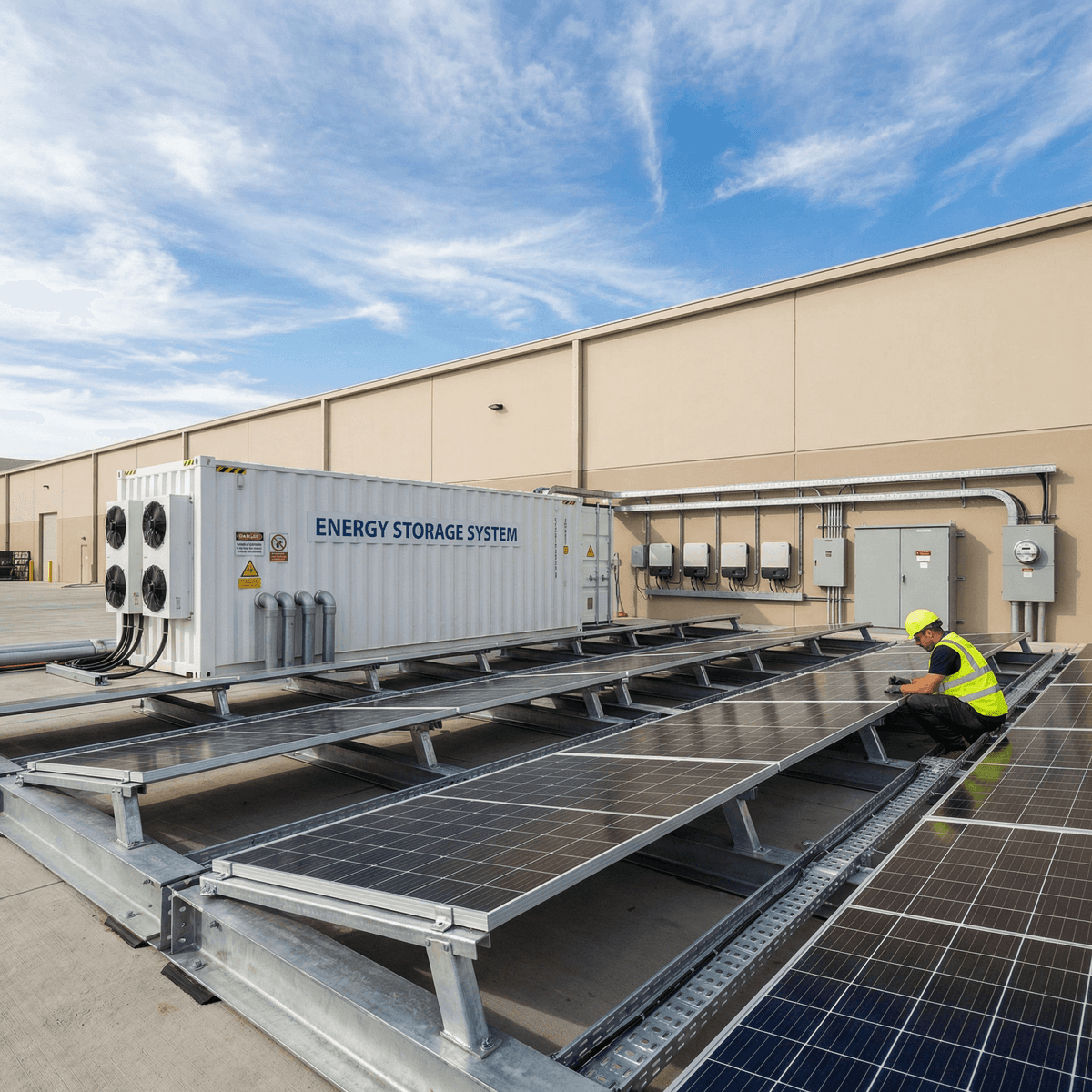
A typical industrial park project can be rooftop, carport, or ground-mount, depending on land use, roof loading, and internal distribution voltage. In many cases, systems start from 100kW blocks and scale into multi-megawatt portfolios. The SOLAR TODO 100kW + 200kWh Solar+Storage Commercial package is one practical reference point for phased deployment because it combines 100kWp PV with 200kWh LFP storage and an EPC turnkey budget of USD 79,200 to USD 101,200.
The International Energy Agency states, "Solar PV is expected to account for the largest share of renewable capacity expansion," which matters for industrial buyers because utility procedures and equipment standards are now more mature than they were 5 years ago. The International Renewable Energy Agency states, "Solar photovoltaic power remains one of the most competitive sources of new electricity," and that directly supports long-term industrial energy cost planning.
Grid Interconnection Requirements and Project Development Path
Grid interconnection for industrial solar usually requires 30-120 days of utility review and must address protection settings, anti-islanding, transformer loading, and export limits before procurement is finalized.
For industrial parks, interconnection is the first technical gate. A project may look attractive on paper, but if the utility feeder is saturated or reverse power flow is restricted, the financial model changes immediately. According to IEEE 1547-2018, distributed energy resources must meet defined interoperability and ride-through requirements. That means the inverter, protection relay logic, and plant controller must be selected with the local utility rule in mind.
Typical interconnection workflow
A standard workflow includes desktop assessment, single-line diagram preparation, utility application, technical review, possible impact study, approval, installation, witness testing, and permission to operate. For systems above 100kW, utilities often request transformer data, short-circuit contribution analysis, anti-islanding settings, and export control logic. Review periods commonly range from 30 to 120 days, but complex feeders can take longer.
Key technical checks before application
Industrial park owners should verify available transformer capacity, point of common coupling voltage, fault current limits, and whether the tariff allows full export, zero export, or limited export. If the site has large motors, variable frequency drives, or harmonic-sensitive equipment, the inverter specification should also be checked against local power quality requirements. IEEE 1547-2018 and utility-specific interconnection manuals usually define voltage, frequency, and disconnection thresholds.
Why storage changes the interconnection strategy
Battery storage can reduce export spikes and help keep the project within feeder limits. A 100kW PV plant with 200kWh storage can absorb midday surplus and shift discharge into evening production hours or peak tariff windows. That can simplify approval where the utility accepts self-consumption projects more easily than high-export projects. SOLAR TODO often discusses this point early because it affects inverter topology, switchgear sizing, and return on investment.
System Design, Technical Specifications, and Performance Benchmarks
Industrial park PV systems commonly use 100kW to 1MW blocks, 22.5-24.5% efficient N-type TOPCon modules, and optional 200kWh storage increments to balance self-consumption, export, and backup needs.
Module choice matters when roof area is limited. N-type TOPCon modules now commonly reach 22.5% to 24.5% efficiency, which helps industrial roofs produce more kWh per square meter. According to mainstream market trackers cited in the product data, TOPCon holds roughly 60% of module market share in the 2025-2026 period. For B2B buyers, that means supply depth is better and bankability discussions are easier than with niche technologies.
Battery choice also matters. LFP chemistry is widely used because of thermal stability, cycle life, and commercial acceptance. In a 100kW + 200kWh configuration, the battery is not large enough for full-day off-grid operation, but it is effective for 2 common industrial tasks: peak shaving and short-duration backup. If the site has evening demand between 30kW and 80kW, a 200kWh battery can shift a meaningful share of solar energy into higher-value hours.
According to NREL PVWatts methodology, a 100kW PV system in good solar regions can generate about 150MWh to 190MWh per year, equivalent to a 17% to 22% capacity factor. First-year module degradation below 1.0% and annual degradation below 0.4% are now common for premium N-type products. That supports 25+ years of mechanical service life and retained output around 87.4% at year 30 under mainstream warranty terms.
Comparison of common industrial park configurations
| Configuration | Typical Use Case | Annual PV Output | Storage Role | Budget Guidance |
|---|---|---|---|---|
| 100kW PV only | Daytime self-consumption | 150-190MWh | None | Lower capex |
| 100kW + 200kWh | Peak shaving + backup | 150-190MWh | 2-4 hour shifting | USD 79,200-101,200 EPC turnkey |
| 500kW PV only | Multi-tenant industrial roof | 750-950MWh | None | Site dependent |
| 1MW PV + storage | Export-managed industrial park | 1.5-1.9GWh | Grid support + tariff optimization | Site dependent |
Core design parameters procurement teams should request
- Module efficiency: 22.5-24.5%
- First-year degradation: less than 1.0%
- Annual degradation: less than 0.4%
- Battery chemistry: LFP
- Grid compliance: IEEE 1547-2018 or local equivalent
- Module standards: IEC 61215 and IEC 61730
- Plant life assumption: 25-30 years
- Capacity factor target: 17-22%
Net Metering, Net Billing, and Industrial Park Savings Models
Net metering can improve industrial solar payback by 1-3 years, but the exact value depends on whether exported kWh are credited at retail rate, avoided-cost rate, or time-of-use rate.
Many industrial buyers use the term net metering broadly, but project returns depend on the exact compensation method. Under classic net metering, exported energy may receive a near-retail credit. Under net billing, exports are often credited at a lower rate while imports remain billed at retail or time-of-use rates. Under self-consumption models, the highest value often comes from directly using solar behind the meter rather than exporting it.
For industrial parks, demand charges can be as important as energy charges. If the utility bill includes a monthly peak demand component in kW, storage may create more value than extra PV export. A battery that reduces a 500kW monthly peak by 50kW can produce savings that are not visible in a simple kWh-only model. This is why tariff analysis should include energy charge, demand charge, fixed charge, and export credit structure.
Sample deployment scenario (illustrative): an industrial facility using 900MWh/year with a strong daytime load may install 500kW PV and offset 25-45% of annual grid purchases, depending on irradiance and weekend operations. If export credits are weak, adding storage can improve self-consumption ratio and reduce demand peaks. If export credits are strong, the same site may prioritize larger PV first and storage later.
According to IEA PVPS (2024), commercial and industrial solar adoption continues to expand where policy frameworks reduce interconnection uncertainty. According to IRENA (2024), solar remains among the lowest-cost new power sources globally, but project economics still depend on local tariff design. SOLAR TODO should therefore be evaluated not only on module wattage and battery size, but also on how the proposed control strategy fits the utility billing structure.
EPC Investment Analysis and Pricing Structure
A commercial industrial park solar project is usually bankable when EPC scope, three-tier pricing, and tariff-driven ROI are defined before contract signature, with typical payback often falling in the 5-9 year range.
EPC means Engineering, Procurement, and Construction. In practical terms, turnkey delivery should include system design, structural review, bill of materials, module and inverter supply, protection devices, mounting system, cable schedule, installation, testing, commissioning, and handover documents. For industrial parks, the EPC package should also define the single-line diagram, SCADA or monitoring scope, and utility interconnection support.
Three-tier pricing structure
| Pricing Model | What It Includes | Best For |
|---|---|---|
| FOB Supply | Equipment only at port of loading | EPC contractors with local installation teams |
| CIF Delivered | Equipment plus freight and insurance to destination port | Importers managing customs and local works |
| EPC Turnkey | Equipment, engineering, installation, testing, and commissioning | Owners seeking single-point responsibility |
For reference, the SOLAR TODO 100kW + 200kWh Solar+Storage Commercial package sits in an EPC turnkey budget range of USD 79,200 to USD 101,200. Actual pricing depends on structure type, cable run length, switchgear, civil works, and local grid code requirements. For portfolio procurement, volume guidance can improve budgeting discipline: 50+ units may reduce supply pricing by 5%, 100+ units by 10%, and 250+ units by 15%.
ROI and savings logic
Industrial ROI should be modeled using annual yield, self-consumption ratio, export compensation, demand-charge reduction, O&M cost, and degradation. A 100kW system producing 150-190MWh/year can create strong savings where grid electricity is expensive or diesel backup is common. If the tariff is favorable and daytime load is stable, simple payback often falls between 5 and 9 years. If export is restricted and self-consumption is low, payback extends unless storage or load shifting is added.
Payment terms and financing
Standard payment terms should be clear at quotation stage. Common structures include 30% T/T in advance and 70% against B/L, or 100% L/C at sight for qualified transactions. Financing may be available for large projects above USD 1,000K, subject to project profile, buyer credit, and jurisdiction. For EPC and commercial pricing discussions, buyers can contact [email protected].
Warranty and O&M checkpoints
Procurement teams should request module performance warranty, product warranty, inverter warranty, battery warranty, and expected response time for spare parts. O&M planning should include inspection intervals, inverter diagnostics, combiner checks, thermal scanning, and battery management review. A practical inspection cycle is every 6 to 12 months, with more frequent checks in dusty or corrosive environments.
How to Select the Right Commercial PV Architecture for an Industrial Park
The best industrial park solar architecture usually matches 60-90% of daytime load first, then adds export or storage only after tariff and interconnection limits are confirmed.
Selection starts with load data. At least 12 months of interval billing data is preferred, and 15-minute or 30-minute demand data is better than monthly totals. Without that data, the project may be oversized for export-limited feeders or undersized for demand-charge reduction. Roof condition, structural reserve, and transformer headroom should be checked before finalizing module quantity.
A phased deployment approach often reduces risk. Phase 1 may install 100kW to 500kW on the best roof zones with zero-export control. Phase 2 may add storage after 3 to 6 months of operating data confirm the actual self-consumption ratio. This approach helps industrial park operators avoid buying battery capacity that does not yet have a clear tariff value.
SOLAR TODO can fit this phased logic because the product range covers PV-only and solar-plus-storage configurations. For multi-tenant parks, metering architecture also matters. Owners should decide whether the plant offsets common-area loads, a single anchor tenant, or multiple tenants through sub-metering and internal energy allocation rules.
FAQ
A well-designed industrial park solar project usually needs 100kW to 1MW blocks, 30-120 days of interconnection review, and 5-9 years of payback modeling to support approval.
Q: What size commercial solar PV system is suitable for an industrial park? A: The right size depends on daytime load, roof area, and export rules. Many industrial parks start with 100kW to 500kW blocks and expand after operating data is collected. A good planning rule is to match 60-90% of stable daytime demand first, then evaluate whether export or storage adds more value.
Q: How long does grid interconnection usually take for an industrial solar project? A: Utility review often takes 30 to 120 days, depending on system size, feeder conditions, and local procedures. Projects above 100kW may require impact studies, protection review, and witness testing. Early submission of single-line diagrams, inverter data, and export-control logic usually shortens delays.
Q: What is the difference between net metering and net billing for industrial users? A: Net metering usually credits exported electricity closer to the retail tariff, while net billing often credits exports at a lower rate. For industrial users, that difference can change payback by 1 to 3 years. If export compensation is weak, self-consumption and battery peak shaving usually become more important.
Q: How much electricity can a 100kW commercial PV system generate each year? A: A 100kW system commonly produces about 150MWh to 190MWh per year in good solar regions. Actual output depends on irradiance, temperature, shading, tilt, and downtime. Using NREL PVWatts or equivalent bankable modeling is the standard way to estimate this before procurement.
Q: When does battery storage make sense in an industrial park project? A: Storage makes sense when the site faces demand charges, weak export credits, or frequent outages. A 200kWh battery paired with 100kW PV can shift midday surplus into evening use and reduce short-duration peaks. It is usually more valuable for tariff optimization than for full-day backup.
Q: What standards should commercial solar equipment comply with? A: Modules should at least comply with IEC 61215 and IEC 61730, while interconnection equipment should align with IEEE 1547-2018 or the local grid code. Depending on market, UL standards may also apply. These certifications reduce technical risk and help with insurer, lender, and utility acceptance.
Q: What is included in EPC turnkey delivery for commercial solar? A: EPC turnkey delivery normally includes engineering, equipment supply, installation, testing, commissioning, and handover documentation. For industrial parks, it should also define interconnection support, plant monitoring, and protection coordination. Clear scope boundaries are important because switchgear upgrades and civil works can materially affect final cost.
Q: What are typical payment terms for B2B solar procurement? A: Common payment terms are 30% T/T in advance and 70% against B/L, or 100% L/C at sight. For larger projects above USD 1,000K, financing may be available subject to project review. Buyers should confirm currency, Incoterms, warranty terms, and spare-parts scope before issuing a purchase order.
Q: How should industrial parks compare FOB, CIF, and EPC pricing? A: FOB is best when the buyer has a local EPC team and wants equipment-only pricing. CIF adds freight and insurance to the destination port, which helps import planning. EPC turnkey is usually preferred when the owner wants one responsible party for design, installation, testing, and commissioning.
Q: What maintenance does a commercial PV system need after commissioning? A: Commercial PV systems need periodic inspections, inverter diagnostics, cable and combiner checks, mounting review, and cleaning based on site conditions. A 6- to 12-month inspection cycle is common. In dusty industrial zones, performance losses from soiling can justify more frequent cleaning and thermal inspection.
Q: How do industrial parks improve ROI if export is restricted? A: The first step is to increase self-consumption by matching PV output to daytime process loads. The second step is to add storage or operational load shifting to reduce curtailment and demand peaks. In export-limited sites, these two measures often improve ROI more than simply installing a larger PV array.
Q: Why consider SOLAR TODO for industrial park solar projects? A: SOLAR TODO offers B2B-focused solar and storage configurations that fit phased industrial deployment, including a 100kW + 200kWh commercial reference package. That helps buyers compare PV-only and hybrid options under one procurement discussion. The useful approach is to align the equipment package with interconnection rules and tariff structure, not just nameplate capacity.
References
Authoritative guidance for industrial park solar should rely on standards and public technical sources, with at least 5 references covering performance, safety, and interconnection.
- NREL (2024): PVWatts Calculator methodology and solar resource modeling used for pre-feasibility and annual energy yield estimation.
- IEEE (2018): IEEE 1547-2018 standard for interconnection and interoperability of distributed energy resources with electric power systems.
- IEC (2021): IEC 61215-1:2021 for crystalline silicon PV module design qualification and type approval.
- IEC (2023): IEC 61730-1:2023 for photovoltaic module safety qualification and construction requirements.
- IEA PVPS (2024): Trends in Photovoltaic Applications report covering market deployment, policy, and commercial PV adoption.
- IRENA (2024): Renewable power cost and competitiveness publications supporting solar economic benchmarking.
- UL (2023): UL certification framework relevant to PV modules, inverters, and electrical safety in applicable markets.
Conclusion
Industrial park solar delivers the best result when 100kW-to-1MW sizing, 30-120 day interconnection planning, and tariff-specific net metering analysis are handled together from the start.
Bottom line: a commercial PV system that produces 150-190MWh per 100kW and targets 60-90% daytime load coverage can reach a 5-9 year payback in many markets, and SOLAR TODO is best evaluated through a full EPC and tariff-fit review rather than equipment price alone.
About SOLARTODO
SOLARTODO is a global integrated solution provider specializing in solar power generation systems, energy-storage products, smart street-lighting and solar street-lighting, intelligent security & IoT linkage systems, power transmission towers, telecom communication towers, and smart-agriculture solutions for worldwide B2B customers.
Further Reading
About the Author

SOLARTODO Editorial Team
Solar Energy & Infrastructure Expert Team
SOLAR TODO is a professional supplier of solar energy, energy storage, smart lighting, smart agriculture, security systems, communication towers, and power tower equipment.
Our technical team has over 15 years of experience in renewable energy and infrastructure, providing high-quality products and solutions to B2B customers worldwide.
Expertise: PV system design, energy storage optimization, smart lighting integration, smart agriculture monitoring, security system integration, communication and power tower supply.
Cite This Article
SOLARTODO Editorial Team. (2026). Complete Guide to Commercial Solar PV Systems for…. SOLARTODO. Retrieved from https://solartodo.com/knowledge/complete-guide-to-commercial-solar-pv-systems-for-industrial-parks-from-grid-interconnection-to-net-metering-benefits
@article{solartodo_complete_guide_to_commercial_solar_pv_systems_for_industrial_parks_from_grid_interconnection_to_net_metering_benefits,
  title = {Complete Guide to Commercial Solar PV Systems for…},
  author = {SOLARTODO Editorial Team},
  journal = {SOLARTODO Knowledge Base},
  year = {2026},
  url = {https://solartodo.com/knowledge/complete-guide-to-commercial-solar-pv-systems-for-industrial-parks-from-grid-interconnection-to-net-metering-benefits},
  note = {Accessed: 2026-10-19}
}
Published: July 5, 2026 | Available at: https://solartodo.com/knowledge/complete-guide-to-commercial-solar-pv-systems-for-industrial-parks-from-grid-interconnection-to-net-metering-benefits
Subscribe to Our Newsletter
Get the latest solar energy news and insights delivered to your inbox.
View All Articles