All-in-one Solar Streetlights ROI for Village Roads

SOLAR TODO
Solar Energy & Infrastructure Expert Team
Watch the video
TL;DR
For village roads, all-in-one solar streetlights usually provide the fastest ROI when grid extension is costly or unreliable. Most projects use 30W-60W fixtures on 6-8 m poles, deploy quickly with minimal wiring, and achieve payback in 3-6 years by avoiding trenching, electricity bills, and high maintenance logistics.
All-in-one solar streetlights can cut village-road lighting CAPEX by 30-60% versus grid extension, deploy in 1-2 days for 20 poles, and typically reach payback in 3-6 years when replacing diesel or trench-heavy AC lighting.
Summary
All-in-one solar streetlights can cut village-road lighting CAPEX by 30-60% versus grid extension, deploy in 1-2 days for 20 poles, and typically reach payback in 3-6 years when replacing diesel or trench-heavy AC lighting.
Key Takeaways
- Prioritize all-in-one solar streetlights for village roads where grid extension exceeds 200-500 m, because trenching and cabling often drive 30-60% higher project cost than standalone systems.
- Size systems for 12 hours nightly operation with 3-8 rainy days autonomy, using LiFePO4 batteries rated for 2,000+ deep cycles to protect ROI in weak-grid or off-grid areas.
- Select 6-8 m poles and 30W-60W luminaires for low-speed village roads, where practical spacing often falls in the 20-35 m range depending on road width and illumination target.
- Compare FOB, CIF, and EPC pricing before procurement; for small village-road projects, turnkey delivery usually improves schedule control even if unit pricing is 15-30% above FOB supply.
- Reduce installation time to 15-30 minutes per pole after civil works by using all-in-one designs that integrate panel, battery, controller, and luminaire into one assembly.
- Model savings against diesel or grid-powered alternatives; village-road projects commonly achieve 3-6 year payback and 10-year lifecycle savings of 25-45% when maintenance logistics are included.
- Verify compliance with IEC 60598, IEC 62124, and battery safety requirements, and require MPPT charging above 98% efficiency plus LED efficacy above 170 lm/W for stronger long-term performance.
- Use dimming profiles such as 100% for 4-5 hours and 50% afterward to extend battery reserve by 20-40% without materially reducing road safety in low-traffic periods.
Why All-in-one Solar Streetlights Deliver Fast ROI on Village Roads
All-in-one solar streetlights typically achieve 3-6 year payback on village roads because they eliminate trenching, reduce installation labor by 20-40%, and operate for 12 hours nightly without monthly electricity bills.
Village roads present a specific infrastructure problem: lighting is needed for safety, transport continuity, and community activity, but grid extension is often expensive, slow, and unreliable. In many rural projects, the cost of poles is not the main budget issue; cabling, trench excavation, utility coordination, and transformer upgrades can dominate total CAPEX. That is why standalone lighting often produces a faster investment case than conventional AC systems.
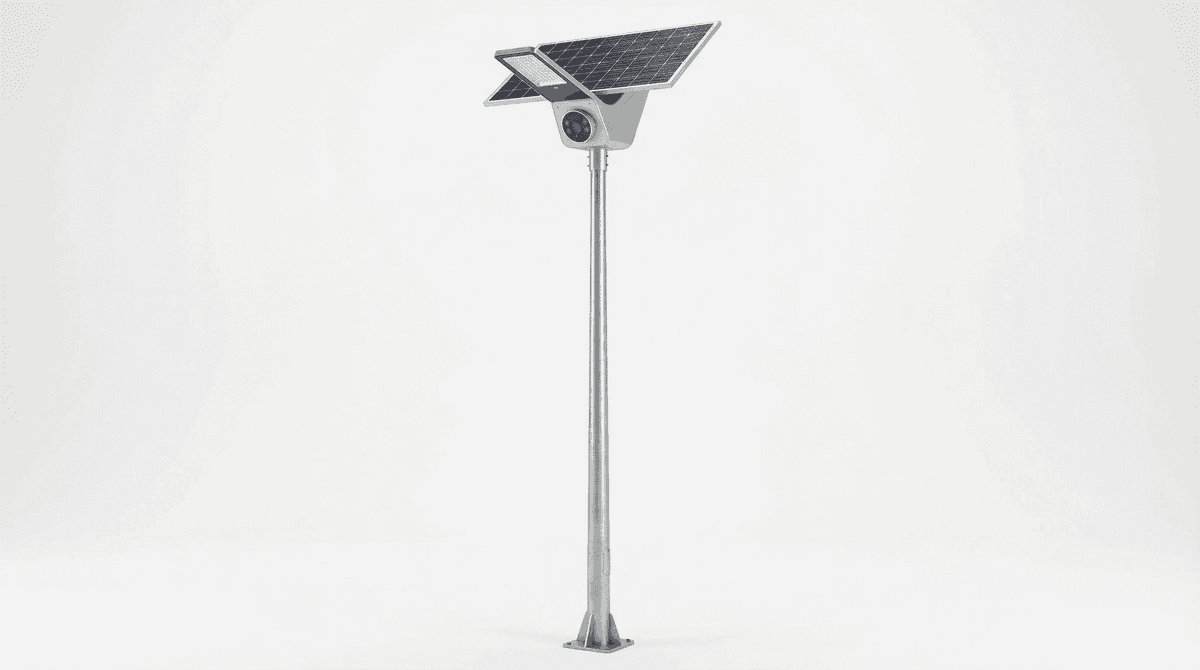
An all-in-one solar streetlight combines the solar module, LiFePO4 battery, LED luminaire, controller, and mounting structure into a compact unit. This architecture shortens deployment time, reduces wiring points, and simplifies maintenance planning for village authorities, EPC contractors, NGOs, and rural developers. For low-to-medium traffic roads, it is often the most practical lighting format when the objective is rapid installation with predictable operating cost.
According to IRENA (2024), renewable power technologies continue to improve cost competitiveness globally, and distributed systems are increasingly relevant where grid access is weak or delayed. The International Energy Agency states, "Solar PV is today the cheapest source of electricity in many parts of the world," a conclusion that supports rural lighting projects where avoided grid cost is part of the ROI equation. For village roads, the value is not only energy cost avoidance but also faster commissioning and lower service complexity.
SOLAR TODO uses this logic in B2B project planning by matching pole height, battery reserve, and lighting profile to the actual road class rather than oversizing every installation. For buyers evaluating village-road projects, the ROI case improves when the design is based on traffic density, road width, rainy-day autonomy, and maintenance access instead of nominal wattage alone.
Technical Sizing and Performance Factors
Correctly sized all-in-one solar streetlights for village roads usually use 30W-60W LEDs, 6-8 m poles, and 3-5 rainy days autonomy, balancing illumination coverage, battery reserve, and procurement cost.
The technical performance of an all-in-one solar streetlight depends on four linked variables: load, generation, storage, and control strategy. For village roads, the typical objective is not highway-class lux levels but safe, consistent illumination for pedestrians, motorcycles, bicycles, and low-speed vehicles. That means designers should focus on useful coverage and reserve energy rather than simply selecting the highest wattage.
A practical village-road design often starts with these ranges:
- LED power: 30W-60W
- Pole height: 6-8 m
- Solar module: sized to local irradiance and nightly load
- Battery: LiFePO4 with 2,000+ deep cycles
- Operation: 10-12 hours per night
- Autonomy: 3-5 rainy days for standard rural roads, up to 7-8 days in monsoon regions
- LED efficacy: above 170 lm/W
- Controller: MPPT above 98% conversion efficiency
According to NREL (2024), solar resource and system design assumptions materially affect annual energy yield, which is why a village-road project in a 5.0 peak-sun-hour region can be sized differently from one in a 3.8 peak-sun-hour region. A design copied from another country may underperform if local irradiance, shading, or rainy-season duration is ignored. This is one of the main reasons some low-cost projects fail early.
Integrated architecture versus split architecture
All-in-one systems are best when the priority is speed, simpler logistics, and lower installation complexity. Split systems are often better for higher wattages, taller poles, or harsh thermal conditions because they allow better component separation and angle optimization.
For village roads, all-in-one units are usually preferred because they reduce field assembly steps. A contractor can install poles, mount the luminaire body, set the angle, and commission the system with minimal wiring. Compared with split systems, this can reduce on-site labor hours significantly in dispersed rural projects where crews lose time moving between locations.
Example benchmark from SOLAR TODO product data
The SOLAR TODO 2.5m Residential Courtyard Garden Light 10W is designed for low-height pedestrian areas with 20Wp solar input, 60Wh LiFePO4 storage, 12h/night operation, and 3 rainy-day autonomy. While this model is too small for most village roads, its design logic illustrates the importance of matching mounting height, battery reserve, and lighting task precisely.
At the larger end, the SOLAR TODO 120W Industrial Dual-Arm Split Solar Street Light uses 240Wp TOPCon solar input, 960Wh LiFePO4 storage, a 10 m pole, and 8 rainy days autonomy. This is generally above standard village-road requirements, but it shows how storage and generation scale when the application shifts from pedestrian roads to wider industrial or municipal corridors.
The right village-road all-in-one solution usually sits between those two extremes. In practice, 30W-60W integrated units on 6-8 m poles are the most common commercial balance for rural roads, internal access roads, and community connectors.
EPC Investment Analysis and Pricing Structure
Village-road all-in-one solar streetlight projects usually show the strongest business case when EPC turnkey pricing is compared against full grid-extension cost, with payback commonly landing in the 3-6 year range.
EPC means Engineering, Procurement, and Construction. In a village-road lighting project, turnkey EPC delivery typically includes lighting design, pole and foundation specification, equipment supply, logistics coordination, installation supervision, commissioning, and documentation. For public-sector or donor-funded projects, EPC also reduces interface risk because one party is accountable for system performance and delivery coordination.
For B2B buyers, pricing should always be reviewed in three tiers:
| Pricing Tier | What It Includes | Best For | Cost Position |
|---|---|---|---|
| FOB Supply | Factory supply only, buyer arranges shipping and local works | Experienced importers and EPC firms | Lowest unit price |
| CIF Delivered | Product plus freight and insurance to destination port | Buyers wanting simpler import logistics | Mid-range |
| EPC Turnkey | Supply, engineering, installation scope, commissioning, project coordination | Municipal, NGO, and developer projects | Highest upfront, lowest coordination burden |
A useful procurement rule is to compare total installed cost, not unit lamp price. A cheaper lamp can become the more expensive project if battery reserve is undersized, packaging is weak, or field failure rates rise after 12-24 months. SOLAR TODO typically advises buyers to evaluate delivered lifecycle cost per functioning pole-year rather than ex-factory price alone.
Volume pricing guidance
Volume-based pricing is common in village-road projects because mobilization, packaging, and freight efficiency improve at scale.
- 50+ units: about 5% discount
- 100+ units: about 10% discount
- 250+ units: about 15% discount
Payment terms and financing
Standard B2B payment terms for export projects are usually:
- 30% T/T deposit + 70% against B/L
- 100% L/C at sight for qualified transactions
Financing may be available for large projects above $1,000K, especially where municipal programs, donor frameworks, or phased infrastructure rollouts are involved. For quotation support, buyers can contact cinn@solartodo.com.
ROI model for village roads
A simple ROI calculation compares all-in-one solar streetlights with the realistic alternative, not an idealized one. On village roads, the alternatives are usually:
- Grid-connected AC streetlights with trenching and metering
- Diesel-generator-fed lighting in remote sites
- No lighting, with associated safety and mobility costs
Example indicative comparison for a 50-pole village-road project:
| Metric | All-in-one Solar | Grid-connected AC | Diesel-supported Remote Lighting |
|---|---|---|---|
| Installation time | 1-2 days after civil readiness | 2-6 weeks | 1-3 weeks |
| Trenching/cabling | Minimal | High | Medium |
| Monthly energy bill | Near zero | Ongoing utility cost | High fuel cost |
| Maintenance visits | Low | Medium | High |
| Typical payback basis | 3-6 years | Longer in weak-grid areas | Often under 3 years versus diesel |
| 10-year cost trend | Stable | Utility-tariff dependent | Fuel-price volatile |
If a conventional AC solution requires 300-800 m of cable extension, transformer coordination, and meter installation, all-in-one solar often wins quickly on total project economics. If the comparison is against diesel-supported lighting, the ROI can be even faster because fuel, transport, and generator servicing create a high recurring cost base.
According to IEA (2024), energy access and distributed solutions remain critical in rural infrastructure planning. IRENA states, "Renewables are powering economic opportunity," which is especially relevant where village-road lighting supports evening commerce, school access, and safer transport. These indirect benefits are difficult to monetize precisely, but they strengthen the investment case beyond electricity savings alone.
Deployment, Use Cases, and Selection Guide
For village roads, the best all-in-one solar streetlight choice is usually a 30W-60W system on a 6-8 m pole, spaced about 20-35 m apart according to road width, traffic level, and dimming strategy.
Village-road projects vary widely. Some roads are narrow internal lanes serving pedestrians and motorcycles; others are wider community connectors used by small trucks and agricultural vehicles. The selection process should therefore begin with road function, not product catalog sequence.
Typical use cases include:
- Village entrance roads
- Internal community roads
- Rural school access roads
- Health-clinic approach roads
- Agricultural settlement connectors
- Small market and bus-stop surroundings
- Perimeter and security roads in rural compounds
Selection criteria for procurement teams
Buyers should compare products using the following technical and commercial filters:
- Required illumination zone and road width
- Pole height and spacing target
- Battery chemistry and cycle life
- Solar module efficiency and orientation tolerance
- Controller efficiency and dimming logic
- IP rating and corrosion protection
- Wind resistance and structural integrity
- Warranty scope for LED, battery, controller, and pole
- Spare-parts availability and after-sales response time
For example, the SOLAR TODO 40W Wind-Solar Hybrid Courtyard Split system combines a 40W LED, 60Wp TOPCon solar module, 300W vertical-axis wind turbine, 300Wh LiFePO4 battery, and 6 m galvanized pole with 8-day autonomy. Although it is a hybrid split system rather than an all-in-one village-road unit, it demonstrates a useful principle: when weather variability is high, generation redundancy can materially improve service continuity.
Fast deployment advantages
All-in-one systems are favored in village-road programs because logistics and field execution are simpler.
- Fewer separate components to transport
- Lower risk of wiring errors
- Faster crew training
- Easier phased rollout by district or village cluster
- Reduced theft exposure from external battery boxes
According to IEC 62124 guidance on stand-alone PV system performance, proper system design and testing are essential to field reliability. According to IEC 60598 requirements for luminaires, safety, construction quality, and environmental suitability remain core procurement checks. These standards matter because poor-quality fixtures can erase any apparent ROI advantage through premature failure.
FAQ
Village-road buyers usually ask about payback, sizing, installation speed, maintenance, and warranty terms, and the direct answers below cover the most common 10 procurement questions.
Q: What is the typical ROI for all-in-one solar streetlights on village roads? A: Typical ROI is about 3-6 years for village-road projects, depending on grid-extension cost, diesel replacement value, and local labor rates. Payback is usually fastest where trenching is expensive or the existing grid is unreliable. The strongest cases are remote roads, community connectors, and sites with high maintenance travel cost.
Q: Why do all-in-one solar streetlights deploy faster than conventional AC streetlights? A: They deploy faster because the panel, battery, controller, and luminaire are integrated into one unit, reducing field assembly and wiring work. After foundations and poles are ready, crews can often install and commission each pole in 15-30 minutes. That is a major advantage for dispersed village-road projects.
Q: What wattage is best for a standard village road? A: For most village roads, 30W-60W is the practical range, usually paired with 6-8 m poles. Narrow internal roads may need the lower end, while wider connectors or busier roads may need the upper end. Final sizing should depend on spacing, road width, and required illumination level.
Q: How many rainy days of battery autonomy should a village-road project have? A: A standard design target is 3-5 rainy days autonomy, while monsoon or low-irradiance areas may require 6-8 days. More autonomy improves reliability but increases battery cost and fixture weight. The best design balances seasonal weather risk with project budget and service expectations.
Q: Are all-in-one solar streetlights better than split solar streetlights? A: They are better for fast deployment, simpler installation, and lower field complexity, especially on village roads. Split systems are often better for higher wattages, taller poles, or sites needing better thermal management and adjustable panel angles. The right choice depends on project scale and road class.
Q: What maintenance is required over the project life? A: Maintenance is relatively low and usually includes cleaning the solar surface, checking bracket tightness, verifying battery and controller status, and replacing failed components when needed. LiFePO4 batteries rated for 2,000+ cycles support long service life. A scheduled inspection every 6-12 months is common for rural projects.
Q: How do all-in-one solar streetlights compare with grid-connected lighting on total cost? A: They often cost less on total installed basis when grid extension requires significant trenching, cabling, or transformer work. Even when unit equipment cost is higher than a basic AC luminaire, the avoided civil works and zero electricity bill can produce lower 10-year ownership cost. This is especially true for remote village roads.
Q: What does EPC turnkey delivery include for a village-road project? A: EPC turnkey delivery usually includes engineering, product supply, logistics coordination, installation scope, commissioning, and project documentation. It is designed to reduce interface risk and schedule delays. For public or donor-funded work, EPC also simplifies accountability because one contractor manages the integrated delivery package.
Q: What are the usual export payment terms and financing options? A: Standard terms are typically 30% T/T deposit plus 70% against B/L, or 100% L/C at sight for qualified transactions. Financing may be available for larger projects above $1,000K. Buyers can discuss project structure, phased delivery, and quotation details with SOLAR TODO at cinn@solartodo.com.
Q: What warranty and quality checks should buyers request? A: Buyers should request a clear warranty covering LED module, battery, controller, and structural parts, plus confirmation of relevant IEC or equivalent compliance. It is also important to verify battery cycle life, controller efficiency, corrosion protection, and spare-parts availability. A strong warranty is valuable only if after-sales support and documentation are defined.
Conclusion
All-in-one solar streetlights are usually the fastest-payback village-road lighting option when projects need 30W-60W output, 1-2 day deployment for small batches, and 3-6 year ROI without trenching or monthly electricity bills.
For B2B buyers, the bottom line is simple: if village roads are remote, weak-grid, or expensive to cable, SOLAR TODO all-in-one solar streetlights generally offer the best balance of speed, reliability, and lifecycle cost. The best results come from correct sizing, realistic autonomy targets, and EPC-based comparison against full installed AC alternatives.
References
- NREL (2024): PVWatts and solar resource methodology used for estimating photovoltaic energy production and system performance assumptions.
- IEA (2024): Energy access and distributed energy reporting relevant to rural infrastructure planning and decentralized electrification.
- IRENA (2024): Renewable power cost and deployment analysis supporting the competitiveness of distributed solar solutions.
- IEC 62124 (2017): Photovoltaic stand-alone systems standard covering design verification and performance-related evaluation.
- IEC 60598 (2024): Luminaire safety and construction requirements relevant to outdoor lighting equipment.
- IEEE 1562 (2021): Guide for array and battery sizing in stand-alone photovoltaic systems.
- UL 1973 (2022): Battery system safety standard relevant to stationary and motive auxiliary battery applications.
- IEC 62619 (2022): Safety requirements for secondary lithium cells and batteries for industrial applications.
About SOLARTODO
SOLARTODO is a global integrated solution provider specializing in solar power generation systems, energy-storage products, smart street-lighting and solar street-lighting, intelligent security & IoT linkage systems, power transmission towers, telecom communication towers, and smart-agriculture solutions for worldwide B2B customers.
About the Author

SOLAR TODO
Solar Energy & Infrastructure Expert Team
SOLAR TODO is a professional supplier of solar energy, energy storage, smart lighting, smart agriculture, security systems, communication towers, and power tower equipment.
Our technical team has over 15 years of experience in renewable energy and infrastructure, providing high-quality products and solutions to B2B customers worldwide.
Expertise: PV system design, energy storage optimization, smart lighting integration, smart agriculture monitoring, security system integration, communication and power tower supply.
Cite This Article
SOLAR TODO. (2026). All-in-one Solar Streetlights ROI for Village Roads. SOLAR TODO. Retrieved from https://solartodo.com/knowledge/all-in-one-solar-streetlights-roi-analysis-fast-deployment-roi-for-village-roads
@article{solartodo_all_in_one_solar_streetlights_roi_analysis_fast_deployment_roi_for_village_roads,
  title = {All-in-one Solar Streetlights ROI for Village Roads},
  author = {SOLAR TODO},
  journal = {SOLAR TODO Knowledge Base},
  year = {2026},
  url = {https://solartodo.com/knowledge/all-in-one-solar-streetlights-roi-analysis-fast-deployment-roi-for-village-roads},
  note = {Accessed: 2026-04-18}
}
Published: April 16, 2026 | Available at: https://solartodo.com/knowledge/all-in-one-solar-streetlights-roi-analysis-fast-deployment-roi-for-village-roads
Subscribe to Our Newsletter
Get the latest solar energy news and insights delivered to your inbox.
View All Articles