Advanced Smart Agriculture Monitoring Systems with…

SOLARTODO Editorial Team
Solar Energy & Infrastructure Expert Team
Watch the video
TL;DR
Advanced LoRaWAN smart agriculture monitoring systems help farms manage 30-50 ha with 10-20 sensing points, 10-minute data intervals, and SMS, Email, or App Push alerts. When paired with agronomic action, they can support up to 50% water savings, about 30% pesticide reduction, and 15-25% yield improvement. For B2B buyers, the key decision points are alert accuracy, gateway reliability, EPC scope, and total cost over one full season.
LoRaWAN smart agriculture monitoring systems can cover 30-50 ha with 10-20 sensing points, send alerts in 10-minute intervals, and cut irrigation water use by up to 50% in data-driven operations. This article explains alert logic, ROI, EPC pricing, and performance analysis.
Summary
LoRaWAN smart agriculture monitoring systems can cover 30-50 ha with 10-20 sensing points, send alerts in 10-minute intervals, and cut irrigation water use by up to 50% in data-driven operations. This article explains alert logic, field architecture, ROI, EPC pricing, and performance analysis for B2B buyers.
Key Takeaways
- Deploy LoRaWAN networks across 30-50 ha blocks to collect data from 10-20 field points with 10-minute reporting intervals.
- Set frost, soil moisture, wind, and disease alerts with SMS, Email, and App Push to reduce response delays from hours to minutes.
- Use solar-powered IP67/IP68 field nodes and 1-2 gateways to support year-round monitoring with low maintenance cycles.
- Compare 30 ha tea, 40 ha orchard, and 50 ha desert reclamation configurations before procurement to match sensor density and crop risk.
- Calculate ROI using water savings up to 50%, pesticide reduction near 30%, and yield improvement of 15-25% where agronomic action follows alerts.
- Specify systems that align with ISO 11783, IEEE 1451, and IEC 62368-1 related practices to improve interoperability and device safety review.
- Choose EPC delivery when projects exceed 30 ha or include 500 kW solar, automated irrigation, or multi-zone communications infrastructure.
- Negotiate volume pricing at 50+, 100+, and 250+ units to secure 5%, 10%, and 15% discounts for multi-site rollouts.
LoRaWAN Smart Agriculture Monitoring Overview
LoRaWAN smart agriculture monitoring systems typically cover 30-50 ha per deployment, report every 10 minutes, and improve field response speed by turning manual checks into threshold-based alerts.
Advanced smart agriculture monitoring systems with LoRaWAN are used when a farm needs long-range wireless coverage, low-power field devices, and centralized alarm handling without dense cellular subscriptions at every node. In practical B2B deployments, the value is not the sensor alone; it is the alert workflow that converts temperature, humidity, soil, wind, and water data into actions within 10-30 minutes.
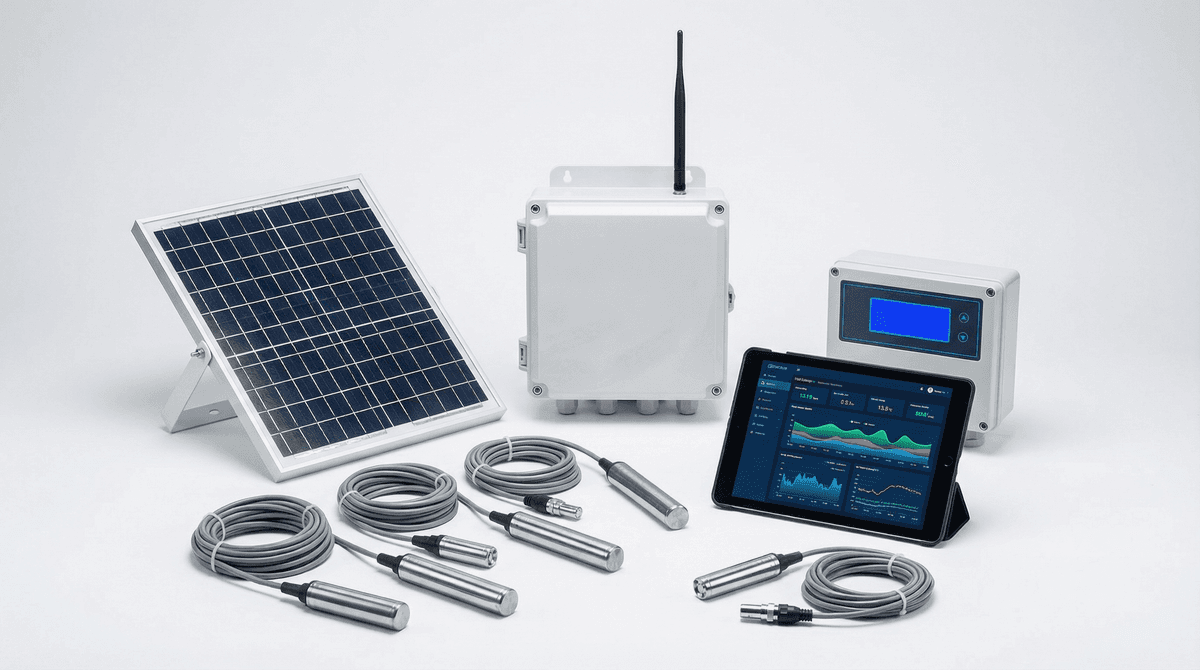
SOLAR TODO supplies several configurations that show how this architecture scales by crop and site condition. The Orchard Frost Early Warning 40ha package supports 40 hectares with 10 field sensing points, LoRaWAN communication, solar-powered outdoor nodes, and SMS + Email + App Push alerts. The Tea Garden Precision Monitoring 30ha package covers 30 hectares with 15 sensors or devices, 10-minute intervals, and AI-based leaf disease detection. The Desert Reclamation Solar+Agriculture 50ha package expands to 50 hectares with 20 sensors, 4G LTE backhaul, automated drip-irrigation control, and a 500 kW solar PV backbone.
According to IRENA (2023), digitalization and control improve renewable-powered infrastructure economics when data reduces operational losses and energy waste. According to the IEA (2024), digital tools in energy and resource systems improve operational visibility and support faster intervention in distributed assets. For agriculture, that means fewer blind spots across 30-50 ha blocks where microclimate differences of 1-3°C can change irrigation timing, frost risk, and disease pressure.
The International Energy Agency states, "Digitalization can make energy systems more connected, intelligent, efficient, reliable and sustainable." That statement also fits irrigation pumping, field weather stations, and remote farm assets where 1 missed alarm can affect a full harvest block. The World Meteorological Organization states that agricultural operations depend on timely, quality-assured weather observations, which is why sensor siting, interval selection, and calibration matter as much as dashboard design.
Alert Systems Architecture and How It Works
A well-designed LoRaWAN alert system combines 1 gateway, 10-20 field devices, and 3 alert channels so operators can act within 10-30 minutes instead of waiting for manual scouting rounds.
The core architecture has four layers: sensing, communication, analytics, and notification. In the sensing layer, field nodes measure air temperature, humidity, wind speed, wind direction, rainfall, solar radiation, atmospheric pressure, evapotranspiration, and soil moisture-temperature values. In the communication layer, LoRaWAN carries low-bandwidth data over long distances, usually several kilometers in open agricultural terrain, while a gateway forwards traffic through Ethernet, Wi-Fi, or 4G LTE depending on site conditions.
In the analytics layer, cloud software applies threshold rules, trend logic, and multi-parameter correlation. A frost alert might trigger when near-surface temperature approaches 0°C to -2.5°C and wind speed remains low, indicating radiation frost conditions. A disease alert may combine leaf wetness, humidity above 85%, and temperature within a fungal growth band for 2-6 hours. A soil moisture alarm may trigger when volumetric water content falls below a crop-specific threshold at root depth, such as 20-30 cm.
Typical alert logic by application
A practical alert engine should use at least 3 rule types: threshold, rate-of-change, and persistence over time. Threshold rules catch immediate events, rate-of-change rules catch fast deterioration, and persistence rules reduce false alarms from short spikes lasting 1-2 minutes.
For orchard frost protection on 40 ha, the alert sequence often starts with warning, action, and critical levels. A warning may be issued at 1.5°C, an action alert at 0.5°C, and a critical alert near -1.5°C, depending on cultivar and bloom stage. The Orchard Frost Early Warning 40ha system also supports wind machine control, which matters because blossom damage can occur within 1-3 hours if canopy temperature drops below crop tolerance.
For tea cultivation on 30 ha, alerts often focus on fungal pressure, irrigation timing, and microclimate shifts across elevation changes of 10-500 m. The Tea Garden Precision Monitoring 30ha system combines weather monitoring, soil sensing, and 1 multispectral leaf scanner to identify stress signatures before visible symptoms emerge. That can shorten disease response by several hours to several days when compared with manual scouting alone.
For desert reclamation on 50 ha, alerts must cover water quality, pump status, irrigation timing, and solar power availability. The Desert Reclamation Solar+Agriculture 50ha package includes 4 water-quality monitoring points, 12 soil probes, 2 gateways, and automated drip-irrigation control. In arid sites where evapotranspiration can exceed 5-10 mm/day, a delayed irrigation alert can waste both water and pumping energy within a single day.
Communication and reliability considerations
LoRaWAN is selected because battery-powered nodes can operate for long periods while sending small data packets every 10 minutes. That is a better fit than high-bandwidth cellular devices when a site has 10-20 sensing points spread across 30-50 ha and only needs telemetry, alarms, and control commands.
Reliability depends on gateway placement, antenna height, packet collision management, and power budgeting. A 1-gateway design may be enough for a compact 30 ha tea garden, while 2 gateways are safer for a 50 ha desert site with terrain variation, structures, or long pump lines. Outdoor devices should meet IP67 or IP68 practice, use corrosion-resistant enclosures, and include solar charging with LFP battery support where grid power is unstable.
According to IEEE 1451 guidance, smart transducer systems benefit from standardized sensor interfaces and metadata handling. According to ISO 11783, agricultural electronics work better when data structures and device communication are interoperable across control environments. For procurement teams, these standards reduce integration risk when linking weather stations, irrigation controllers, and farm management software.
Performance Analysis and Technical Metrics
Performance analysis should track alert accuracy, communication uptime, response time, and agronomic impact using at least 8-12 KPIs over one full season.
B2B buyers should not evaluate a monitoring system only by sensor count. The more useful method is to score field performance in four groups: sensing quality, network quality, alert quality, and operational outcome. A weather station that measures 10 parameters is only valuable if calibration drift, packet loss, and delayed notifications stay within acceptable limits during the season.
Core KPIs for B2B evaluation
Use measurable indicators that procurement, engineering, and operations teams can review monthly. A practical KPI set includes:
- Data capture rate: target above 95% of expected records per 30-day cycle
- Gateway uptime: target above 99% with backup power for 4-12 hours
- Alert latency: target below 60 seconds from cloud trigger to SMS or app notification
- False alarm rate: target below 5-10% after threshold tuning
- Sensor maintenance interval: target 6-12 months depending on probe type
- Irrigation response compliance: target above 85% of alerts acted on within 2 hours
- Water use reduction: target up to 50% in precision-irrigated deployments
- Yield improvement: target 15-25% where agronomic protocols are followed
According to NREL (2024), data quality and interval consistency are central to useful performance modeling in distributed energy systems. The same principle applies to solar-powered agriculture telemetry: if a 10-minute dataset has frequent gaps, evapotranspiration estimates, frost trend detection, and irrigation scheduling become less reliable. According to IEA PVPS (2024), system monitoring is essential for maintaining expected output and identifying underperformance in field assets connected to solar power systems.
Comparison of representative SOLAR TODO configurations
A side-by-side comparison helps buyers match crop risk, communication needs, and budget structure before RFQ issuance.
| Configuration | Coverage | Sensors/Devices | Communications | Key Alerts | Power Basis | Typical Use |
|---|---|---|---|---|---|---|
| Orchard Frost Early Warning 40ha | 40 ha | 10 points | LoRaWAN | Frost, wind, humidity, soil temp | Solar-powered nodes | Apple, citrus frost protection |
| Tea Garden Precision Monitoring 30ha | 30 ha | 15 devices | LoRaWAN | Disease, irrigation, microclimate | Solar-powered outdoor operation | Tea estates with slope variation |
| Desert Reclamation Solar+Agriculture 50ha | 50 ha | 20 sensors | 4G LTE + field links | Irrigation, water quality, pump, weather | 500 kW solar PV + field solar kits | Desert agriculture and reclamation |
The table shows why selection should start with operational risk. If frost loss can reach 20-90% in severe bloom-stage events, orchard operators should prioritize low-latency alerting and active control outputs. If water scarcity is the main risk, a 50 ha package with 7-parameter soil analysis and drip automation may return value faster than a weather-only deployment.
Applications, ROI, and EPC Investment Analysis and Pricing Structure
EPC evaluation should compare FOB Supply, CIF Delivered, and EPC Turnkey pricing because 30-50 ha projects often include civil works, gateway siting, power systems, and commissioning.
Sample deployment scenario (illustrative): a 40 ha orchard using a manual frost watch process may rely on 2-3 staff checks per night during high-risk weeks. A LoRaWAN alert system with 10 sensing points and automated notifications can reduce manual patrol frequency, improve trigger timing for wind machines, and reduce crop loss exposure during 1-3 critical overnight hours. The financial result depends on crop value per hectare, but even a single avoided frost event can materially change annual ROI.
Sample deployment scenario (illustrative): a 50 ha desert reclamation site using weekly manual inspection and fixed irrigation schedules may overwater several zones. If precision control reduces water use by up to 50% and pesticide use by about 30%, while yield improves by 15-25%, the payback period can fall into the 2-5 year range depending on water cost, pumping energy, and crop revenue.
What EPC turnkey delivery includes
EPC means Engineering, Procurement, and Construction under one delivery scope. For smart agriculture, that usually includes site survey, sensor layout, gateway placement, solar power kit sizing, mounting structures, cable routing where needed, cloud setup, alert rule configuration, testing, commissioning, and operator training.
For larger sites, EPC may also include drip-irrigation control integration, pump status monitoring, weather mast installation, and data export to farm management systems. SOLAR TODO typically discusses scope in an offline quotation because terrain, crop type, and communications conditions change the bill of materials. Projects above $1,000K may qualify for financing support subject to project review.
Three-tier pricing explanation
B2B buyers should request quotations in 3 formats so landed cost and execution risk are visible.
| Pricing Tier | What It Includes | Best For | Commercial Notes |
|---|---|---|---|
| FOB Supply | Hardware only at port of loading | Importers with local installers | Lowest ex-works style equipment cost |
| CIF Delivered | Hardware + freight + insurance to destination port | Buyers managing local installation | Better landed-cost visibility |
| EPC Turnkey | Equipment, engineering, installation, commissioning, training | Multi-zone or high-risk projects | Highest upfront cost, lowest coordination burden |
Volume pricing guidance for framework agreements is typically:
- 50+ units: 5% discount
- 100+ units: 10% discount
- 250+ units: 15% discount
Payment terms commonly used are:
- 30% T/T deposit + 70% against B/L
- 100% L/C at sight
For pricing, EPC scope, and warranty review, buyers can contact SOLAR TODO at [email protected] or call +6585559114 for project discussion and offline quotation.
ROI and total cost considerations
ROI should include avoided crop loss, water savings, labor reduction, and energy savings from better pump scheduling. A low-cost sensor package with poor alert accuracy can cost more over 3 years than a higher-spec system with 99% gateway uptime and lower false alarm rates.
According to IRENA (2023), solar-powered infrastructure reduces exposure to fuel and grid instability in remote assets. According to NREL (2024), performance monitoring improves operational decisions when data quality is maintained. For agriculture, that means the best total cost of ownership usually comes from matching sensor density, communications redundancy, and alert logic to the crop risk profile rather than minimizing initial hardware count.
SOLAR TODO should therefore be assessed as a project supplier, not an online marketplace. The correct procurement process is inquiry, technical clarification, offline quotation, and then contract scope confirmation for supply-only or EPC delivery.
Selection Guide for B2B Buyers
The right LoRaWAN monitoring system is selected by matching 4 variables—crop risk, hectare size, control depth, and communications environment—to a 30 ha, 40 ha, or 50 ha architecture.
Procurement managers should start with the operational question, not the sensor catalog. Ask whether the site needs early warning only, or warning plus control. A tea estate may need disease and irrigation alerts every 10 minutes, while an orchard may need frost alerts plus wind machine activation, and a desert site may need water quality, pump telemetry, and solar power supervision in one package.
Engineers should verify at least 6 technical points before RFQ approval:
- Coverage area in hectares and terrain variation
- Number of sensing points per microclimate zone
- Need for 1 or 2 gateways based on line-of-sight and distance
- Alert channels: SMS, Email, App Push, and relay outputs
- Power design: solar node sizing, battery autonomy, and charging margin
- Integration needs for irrigation, pumps, weather APIs, or farm software
Project managers should also define service expectations. A practical service scope includes commissioning, threshold tuning in the first 30-60 days, seasonal recalibration checks, and operator training for alert escalation. Without that 30-60 day tuning period, false alarms often remain high and user confidence drops.
FAQ
A LoRaWAN smart agriculture FAQ should answer coverage, alerts, cost, installation, maintenance, and ROI questions in 40-80 words so procurement teams can compare suppliers quickly.
Q: What is a LoRaWAN smart agriculture monitoring system? A: A LoRaWAN smart agriculture monitoring system is a field network that connects low-power sensors across 30-50 ha and sends data to a cloud platform every 10 minutes. It typically measures weather, soil, and equipment status, then triggers SMS, Email, or App Push alerts when thresholds are exceeded.
Q: How do alert systems improve farm operations compared with manual scouting? A: Alert systems improve operations by reducing response time from hours to minutes and by monitoring conditions 24/7 instead of during 1-2 field visits. For frost, disease, or irrigation events, that time gain can prevent losses that manual scouting may detect too late, especially overnight or across remote zones.
Q: What coverage can LoRaWAN provide on a farm site? A: LoRaWAN can usually support multi-hectare coverage with 1 gateway in open terrain, but real range depends on crops, buildings, elevation, and antenna height. For 30 ha tea gardens, 1 gateway may be enough, while 40-50 ha sites with terrain variation often benefit from 2 gateways for redundancy.
Q: Which alerts are most valuable in orchard and tea applications? A: In orchards, frost alerts, wind alerts, and canopy temperature warnings are usually the highest-value functions during bloom stages. In tea operations, disease pressure alerts, humidity persistence alarms, and soil moisture thresholds are more important because they affect leaf quality, fungicide timing, and irrigation scheduling over 10-500 m elevation changes.
Q: How often should the system send data and alerts? A: A 10-minute interval is a practical default because it balances battery life, network traffic, and operational visibility. Critical alerts should be event-driven and sent immediately, while routine telemetry can remain on 10-minute cycles. Sites with fast-changing frost or pump conditions may need shorter intervals for specific devices.
Q: What maintenance is required for LoRaWAN agriculture systems? A: Most systems need visual inspection, sensor cleaning, battery health checks, and calibration review every 6-12 months depending on probe type and site dust level. Weather stations and soil probes should also be checked after storms, irrigation line work, or harvest operations that may disturb mounting or cable protection.
Q: How is performance measured after installation? A: Performance is measured through KPIs such as data capture rate above 95%, gateway uptime above 99%, alert latency below 60 seconds, and false alarm rate below 5-10%. Agronomic KPIs should also be tracked, including water savings, labor reduction, and yield improvement over one full season.
Q: What is included in EPC turnkey delivery for smart agriculture? A: EPC turnkey delivery usually includes engineering, hardware procurement, installation, gateway and sensor placement, solar power kit setup, cloud configuration, alert rule programming, testing, commissioning, and training. It is the preferred model for 30-50 ha projects that include irrigation control, multiple gateways, or a 500 kW solar power backbone.
Q: How are pricing and payment terms usually structured? A: Pricing is commonly quoted as FOB Supply, CIF Delivered, or EPC Turnkey so buyers can compare equipment cost, landed cost, and full project execution cost. Standard payment terms are often 30% T/T plus 70% against B/L, or 100% L/C at sight, with financing available for projects above $1,000K.
Q: What warranty and service points should buyers check before ordering? A: Buyers should confirm hardware warranty duration, cloud service term, spare parts availability, calibration support, and response time for technical issues. For example, the Desert Reclamation Solar+Agriculture 50ha package includes a 2-year hardware warranty and 1-year professional cloud service, which should be reviewed against project O&M plans.
Q: When should a buyer choose SOLAR TODO for a project? A: A buyer should consider SOLAR TODO when the project needs an integrated package rather than isolated sensors, especially across 30-50 ha with LoRaWAN, solar-powered nodes, cloud alerts, and optional EPC support. SOLAR TODO is suitable for inquiry-based B2B procurement where technical clarification and offline quotation are required.
References
A strong reference set for LoRaWAN agriculture projects should include at least 5 authorities covering weather practice, interoperability, electrical safety, and performance analysis.
- IRENA (2023): Renewable Power Generation Costs in 2022; cost and operational context for renewable-powered remote infrastructure.
- IEA (2024): Digitalisation and Energy-related system analyses; explains how digital tools improve monitoring, efficiency, and operational response.
- NREL (2024): PVWatts and distributed performance modeling resources; useful for solar-powered field node and pump-energy estimation.
- IEA PVPS (2024): Trends in Photovoltaic Applications 2024; monitoring and performance context for PV-supported field systems.
- ISO 11783 (2024): Tractors and machinery for agriculture and forestry — serial control and communications data network; interoperability framework for agricultural electronics.
- IEEE 1451 (2023): Smart transducer interface standards; guidance for sensor interoperability and metadata handling.
- IEC 62368-1 (2023): Audio/video, information and communication technology equipment — safety requirements; relevant to gateway and communications hardware safety review.
- WMO (2023): Guide to Instruments and Methods of Observation; weather observation practice relevant to agricultural monitoring station siting and data quality.
Conclusion
LoRaWAN smart agriculture monitoring systems deliver the most value when 10-20 sensing points, 10-minute data intervals, and multi-channel alerts are matched to a clear agronomic response plan.
For 30-50 ha agricultural projects, SOLAR TODO configurations show that alert-driven monitoring can support up to 50% water savings, about 30% pesticide reduction, and 15-25% yield improvement when field teams act on the data. The bottom line is simple: if your site has frost risk, irrigation variability, or remote operating constraints, a properly specified LoRaWAN system with EPC support is usually the better long-term investment than manual monitoring alone.
About SOLARTODO
SOLARTODO is a global integrated solution provider specializing in solar power generation systems, energy-storage products, smart street-lighting and solar street-lighting, intelligent security & IoT linkage systems, power transmission towers, telecom communication towers, and smart-agriculture solutions for worldwide B2B customers.
About the Author

SOLARTODO Editorial Team
Solar Energy & Infrastructure Expert Team
SOLAR TODO is a professional supplier of solar energy, energy storage, smart lighting, smart agriculture, security systems, communication towers, and power tower equipment.
Our technical team has over 15 years of experience in renewable energy and infrastructure, providing high-quality products and solutions to B2B customers worldwide.
Expertise: PV system design, energy storage optimization, smart lighting integration, smart agriculture monitoring, security system integration, communication and power tower supply.
Cite This Article
SOLARTODO Editorial Team. (2026). Advanced Smart Agriculture Monitoring Systems with…. SOLARTODO. Retrieved from https://solartodo.com/knowledge/advanced-smart-agriculture-monitoring-systems-with-lorawan-alert-systems-and-performance-analysis
@article{solartodo_advanced_smart_agriculture_monitoring_systems_with_lorawan_alert_systems_and_performance_analysis,
  title = {Advanced Smart Agriculture Monitoring Systems with…},
  author = {SOLARTODO Editorial Team},
  journal = {SOLARTODO Knowledge Base},
  year = {2026},
  url = {https://solartodo.com/knowledge/advanced-smart-agriculture-monitoring-systems-with-lorawan-alert-systems-and-performance-analysis},
  note = {Accessed: 2026-09-04}
}
Published: July 5, 2026 | Available at: https://solartodo.com/knowledge/advanced-smart-agriculture-monitoring-systems-with-lorawan-alert-systems-and-performance-analysis
Subscribe to Our Newsletter
Get the latest solar energy news and insights delivered to your inbox.
View All Articles